
The height of your skate shoe creates a fundamental trade-off between ankle mobility and ankle protection. Low-top shoes offer the greatest freedom of movement for technical tricks at the cost of support, while high-tops provide maximum support and impact protection but restrict that same range of motion. Mid-tops exist as a direct compromise between these two extremes.
The ideal skate shoe height is not about finding a "better" shoe, but about aligning the specific balance of mobility and support with your personal style of skateboarding.
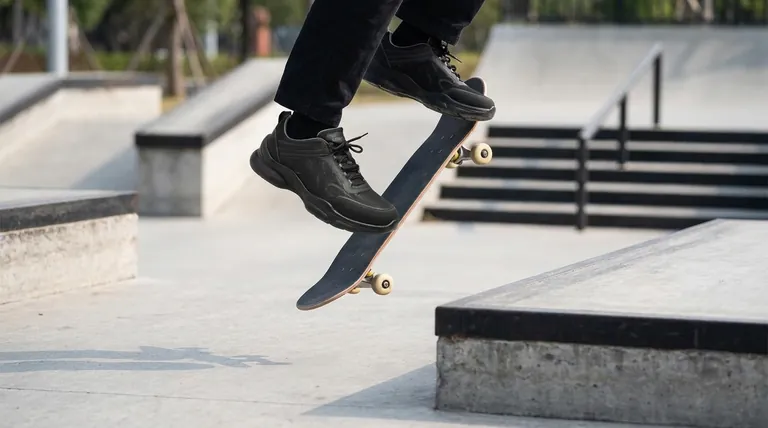
The Core Trade-off: Mobility vs. Support
The primary function of shoe height is to control how much your ankle can flex and how protected it is from impact. Each design prioritizes one end of this spectrum over the other.
Low-Tops: Maximum Freedom
Low-tops are cut below the ankle bone, offering an unrestricted range of motion.
This design is highly favored by technical street skaters who rely on precise and rapid ankle movements for flicking their board during flip tricks.
High-Tops: Maximum Protection
High-tops extend above the ankle, providing significant reinforcement and support.
This added structure helps prevent ankle rolls during high-impact landings, making them a common choice for skaters who ride ramps, bowls, or take on large gaps. They also offer crucial protection from the board hitting your ankle.
Mid-Tops: The Balanced Approach
Mid-tops sit right at the ankle, offering a middle ground between the two other styles.
They provide more support and protection than a low-top without being as restrictive as a high-top, making them a versatile choice for all-around skaters or those who are unsure of their preference.
Understanding the Key Downsides
Choosing a shoe height involves accepting a specific set of limitations. Being aware of these trade-offs is critical for preventing both frustration and injury.
The Risk of Low-Tops
The freedom of a low-top comes at the cost of protection. Your ankles are completely exposed to direct impacts from the board, and there is no structural support to help prevent a sprain on an awkward landing.
The Limitation of High-Tops
The security of a high-top comes at the cost of mobility. The very structure that protects the ankle can feel restrictive, sometimes making the nuanced foot-flick required for complex flip tricks feel clumsy or more difficult.
A Note on Insoles
While separate from shoe height, the thickness of your insole presents a similar trade-off. Thicker insoles provide superior impact absorption for your heels and back but can slightly diminish your direct "board feel," which is crucial for control.
Choosing the Right Height for Your Skating Style
Your decision should be a direct reflection of your primary skateboarding goals.
- If your primary focus is technical street skating: Choose low-tops to maximize the ankle mobility required for intricate flip tricks.
- If your primary focus is vert, bowl, or high-impact skating: Choose high-tops for the essential ankle support and protection needed to prevent injury.
- If you are a beginner or an all-around skater: Start with mid-tops to get a versatile balance of protection and flexibility.
Ultimately, understanding this balance empowers you to select gear that truly enhances your personal approach to skating.
Summary Table:
| Shoe Height | Primary Focus | Key Advantage | Key Limitation |
|---|---|---|---|
| Low-Top | Technical Street Skating | Maximum ankle mobility for flip tricks | Minimal ankle support and impact protection |
| Mid-Top | All-Around / Beginner Skating | Balanced mix of mobility and support | A compromise, not specialized for extremes |
| High-Top | Vert, Bowl, High-Impact Skating | Maximum ankle support and impact protection | Restricted ankle mobility |
Ready to gear up with the perfect skate shoes for your style?
As a large-scale manufacturer, 3515 produces a comprehensive range of footwear for distributors, brand owners, and bulk clients. Our production capabilities encompass all types of shoes and boots, including performance-driven skate shoes designed for durability and function.
Let us help you find or create the ideal skate shoe to match your needs. Contact our team today to discuss your requirements!
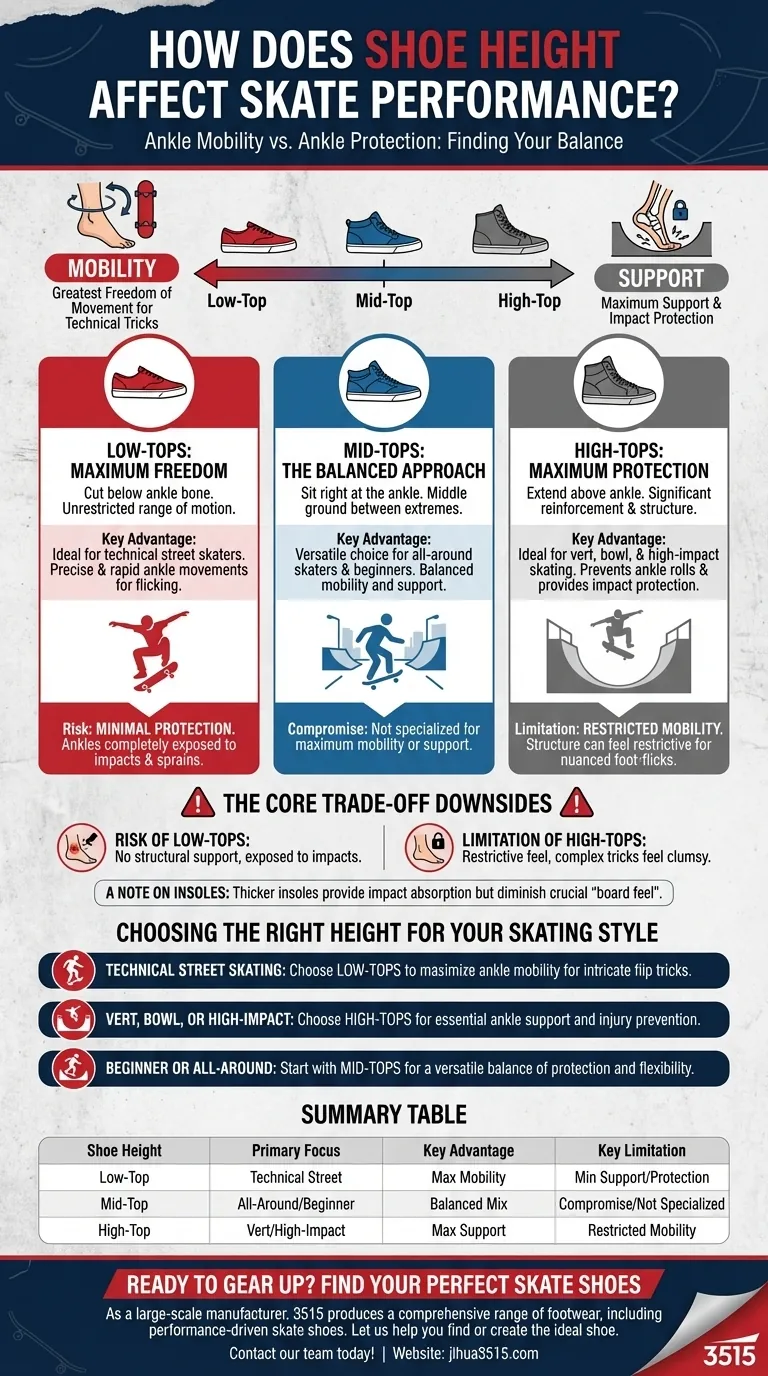
Visual Guide
Related Products
- Wholesale Durable Camouflage Canvas Shoes with High-Traction Cleated Rubber Sole
- Durable High-Traction Canvas Sneakers Wholesale & Custom Manufacturing
- Premium Suede Sport Safety Shoes for Wholesale & Bulk Orders
- Wholesale Durable & Breathable Training Shoes for Custom Brands
- Lightweight Breathable Sneakers with Wet-Traction Grip for Wholesale & Private Label
People Also Ask
- Why is the selection of high-strength fabric materials necessary in the production of canvas shoes and training shoes?
- What are the properties of canvas as a shoe material? A Guide to Lightweight Comfort & Style
- Can canvas shoes be worn in rainy conditions? The Truth About Water Resistance
- What are some examples of vulcanized shoes? Discover the Flexibility and Board Feel of Classic Sneakers
- What are the characteristics of canvas as a shoe material? A Guide to Lightweight, Breathable Footwear



















