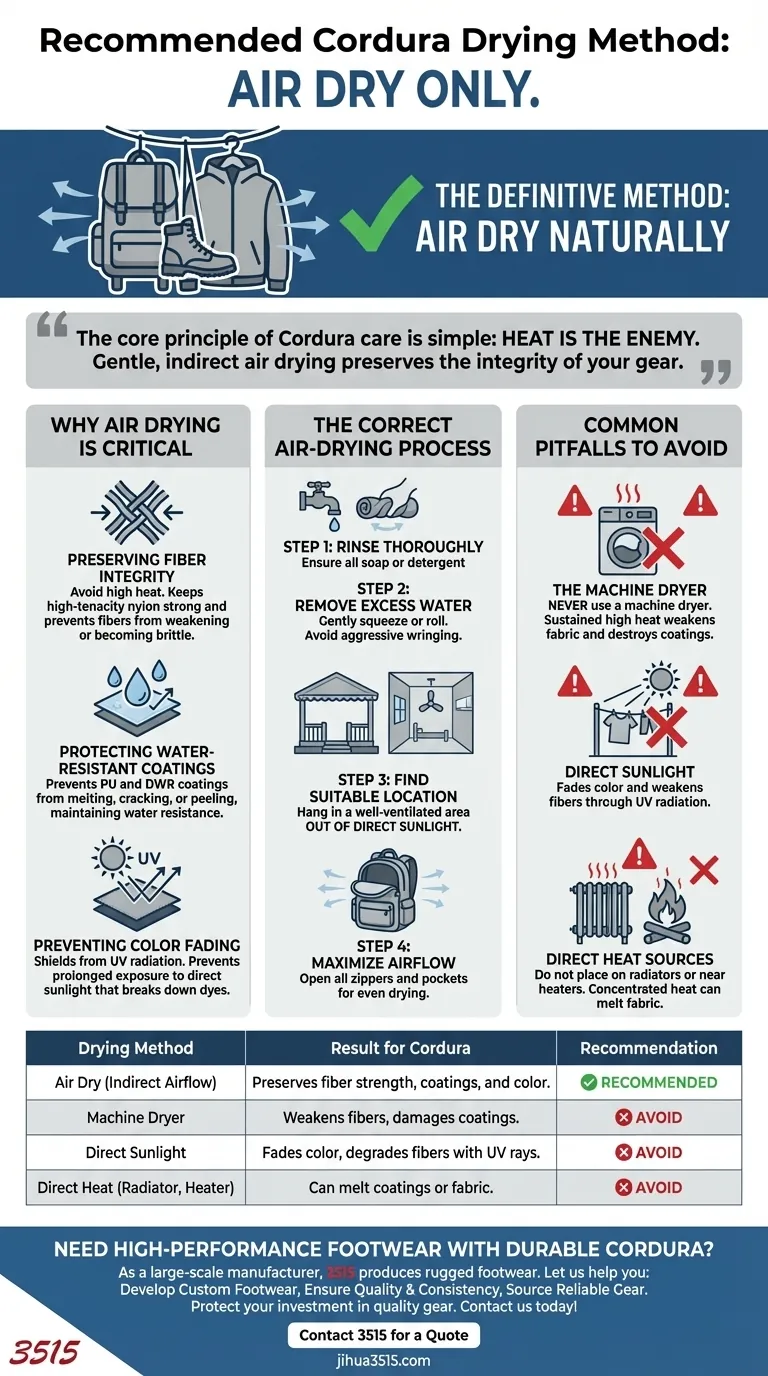
The definitive method for drying any item made from Cordura fabric is to let it air dry naturally. You should specifically avoid using a machine dryer, placing it in direct sunlight, or exposing it to any other source of high heat, as this can permanently damage the fabric's fibers and color.
The core principle of Cordura care is simple: heat is the enemy. Machine dryers and direct sunlight will degrade the nylon fibers and protective coatings, compromising the very durability and performance you rely on. Gentle, indirect air drying is the only method that preserves the integrity of your gear.
Why Air Drying is Critical for Cordura
Cordura is valued for its exceptional strength and abrasion resistance. This performance is a result of its specific nylon fiber construction and often includes special coatings. Improper drying methods directly attack these properties.
Preserving Fiber Integrity
Cordura is a type of high-tenacity nylon. When exposed to the high heat of a machine dryer or concentrated sunlight, these synthetic fibers can weaken, become brittle, and lose their tensile strength over time.
Protecting Water-Resistant Coatings
Many Cordura products are treated with a polyurethane (PU) coating on the inside or a Durable Water Repellent (DWR) finish on the outside. Heat can cause these essential coatings to melt, crack, or peel away, destroying the item's ability to resist water.
Preventing Color Fading
The ultraviolet (UV) radiation from direct sunlight acts as a natural bleach. Prolonged exposure will break down the dyes in the fabric, leading to noticeable and irreversible color fading.
The Correct Air-Drying Process
Properly air drying your gear is simple but requires a bit of patience. Following these steps ensures the best outcome.
Step 1: Rinse Thoroughly
Before drying, ensure all soap or detergent has been completely rinsed from the fabric. Lingering residue can degrade the material and even attract more dirt later on.
Step 2: Remove Excess Water
Gently squeeze or roll the item to remove as much water as possible. Avoid wringing or twisting the fabric aggressively, as this can stress the seams and fibers.
Step 3: Find a Suitable Location
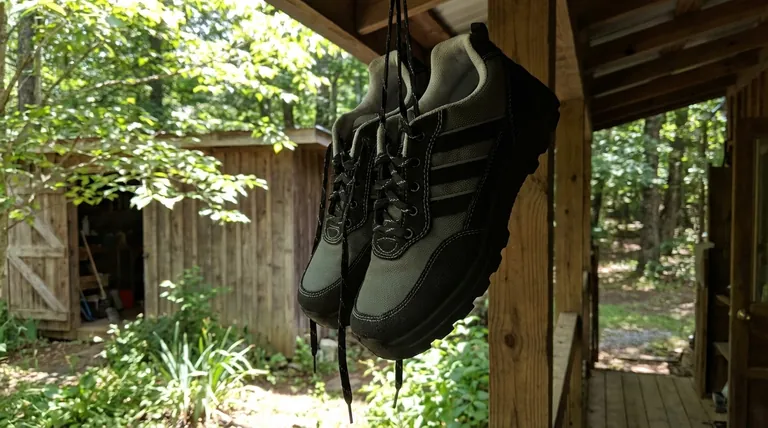
Hang the item in a location with good air circulation but out of direct sunlight. A covered porch, a garage, or an indoor room with a fan are all excellent choices.
Step 4: Maximize Airflow
For items like backpacks or bags, open all zippers, pockets, and compartments. This allows air to circulate freely throughout the interior, ensuring it dries evenly and preventing mildew growth.
Common Pitfalls to Avoid
Mistakes during the drying phase are the most common cause of premature wear and damage to high-performance gear.
The Machine Dryer
Never put Cordura in a machine dryer. The combination of sustained high heat and tumbling action is the fastest way to weaken the fabric and destroy its protective coatings.
Direct Sunlight
Even on a cool day, the UV radiation from the sun is damaging. Drying your gear on a clothesline in direct sun may be fast, but it will shorten its lifespan by fading the color and weakening the fibers.
Direct Heat Sources
Do not try to speed up the process by placing your gear on or near a radiator, space heater, or campfire. Concentrated heat can be even more destructive than a dryer, potentially melting the fabric itself.
How to Apply This to Your Gear
Your approach to care should align with the performance you expect from your equipment.
- If your primary focus is preserving water resistance: Always air dry to protect the DWR and PU coatings from heat, which is their biggest vulnerability.
- If your primary focus is maintaining structural strength: Avoid all forms of high heat, as this is what makes the core nylon fibers brittle and prone to tearing.
- If your primary focus is keeping the color vibrant: Dry your item in the shade to prevent UV rays from bleaching and fading the fabric.
Proper drying is the simplest and most effective step you can take to ensure your Cordura gear performs reliably for years to come.
Summary Table:
| Drying Method | Result for Cordura | Recommendation |
|---|---|---|
| Air Dry (Indirect Airflow) | Preserves fiber strength, coatings, and color | Recommended |
| Machine Dryer | Weakens fibers, damages coatings | Avoid |
| Direct Sunlight | Fades color, degrades fibers with UV rays | Avoid |
| Direct Heat (Radiator, Heater) | Can melt coatings or fabric | Avoid |
Need High-Performance Footwear Made from Durable Fabrics Like Cordura?
As a large-scale manufacturer, 3515 produces a comprehensive range of rugged footwear and boots for distributors, brand owners, and bulk clients. Our production capabilities encompass all types of shoes and boots designed for durability and performance in demanding conditions.
We can help you:
- Develop Custom Footwear: Leverage our expertise with high-tenacity materials like Cordura to create products built to last.
- Ensure Quality & Consistency: Benefit from our large-scale manufacturing standards and rigorous quality control.
- Source Reliable Gear: Get access to a wide range of durable footwear perfect for work, tactical, or outdoor use.
Protect your investment in quality gear from the start. Let's discuss your footwear needs today!
Visual Guide
Related Products
- Lightweight Breathable Sneakers with Wet-Traction Grip for Wholesale & Private Label
- Wholesale Durable Safety Boots Manufacturer Customizable Steel Toe Work Boots
- Durable High-Ankle Tactical Boots Wholesale Manufacturer for Custom & Bulk Orders
- Wholesale Durable Camouflage Canvas Shoes with High-Traction Cleated Rubber Sole
- Lightweight Breathable Training Shoes for Wholesale & Custom OEM Manufacturing
People Also Ask
- Why are breathable sneakers necessary for tropical commuting? Stay Cool and Dry in High Humidity
- What role do lightweight training shoes play in urban traffic? Boost Agility and Reaction for Safer City Navigation
- How do lightweight shoes provide support? The Science of Efficient Cushioning & Stability
- How do lightweight shoes contribute to healthier feet? Reduce Fatigue & Prevent Foot Problems
- How do lightweight shoes improve breathability? Discover the Science of Cool, Dry Feet