
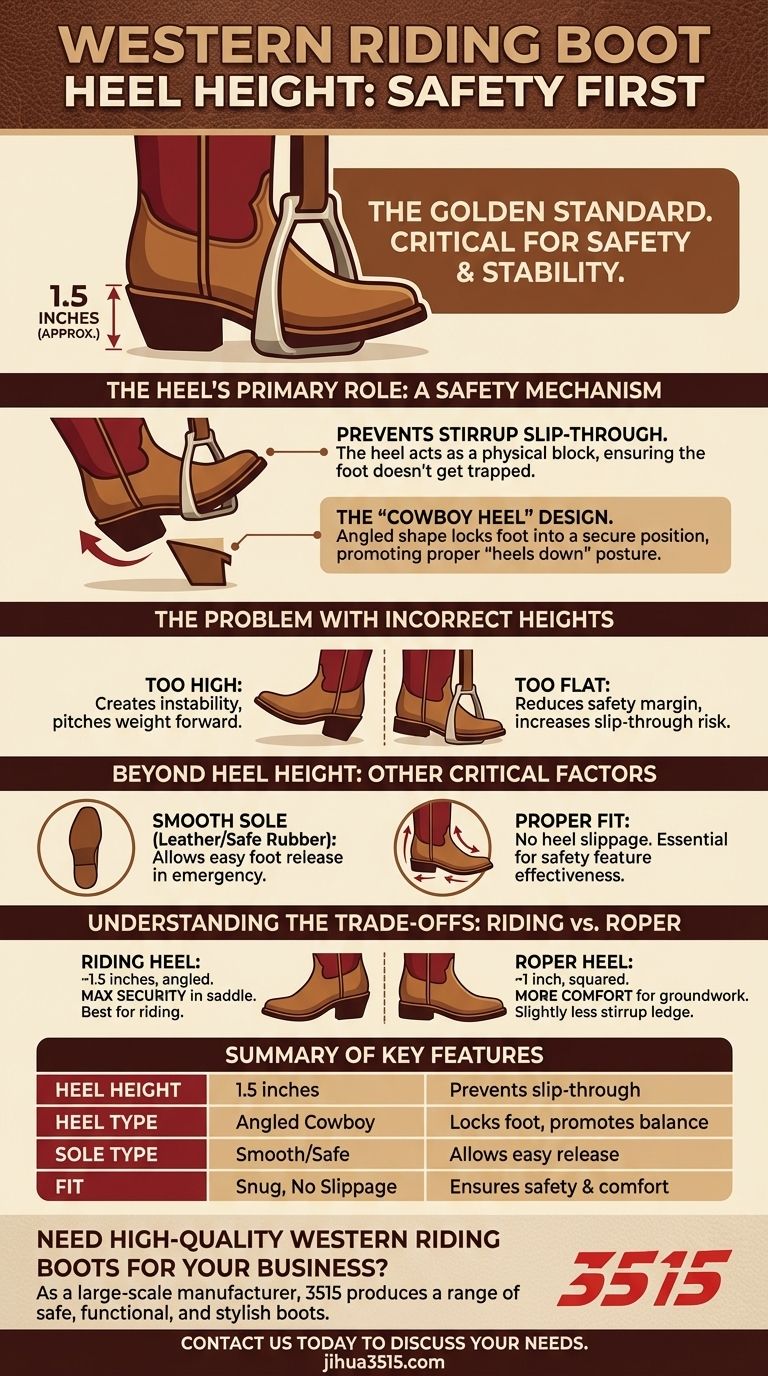
For Western riding, the recommended boot heel height is approximately 1.5 inches. This specific height is not an arbitrary style choice but a critical feature engineered for rider safety, stability, and proper positioning in the saddle. A heel that is too high or too flat fundamentally compromises the boot's function and can create significant risks.
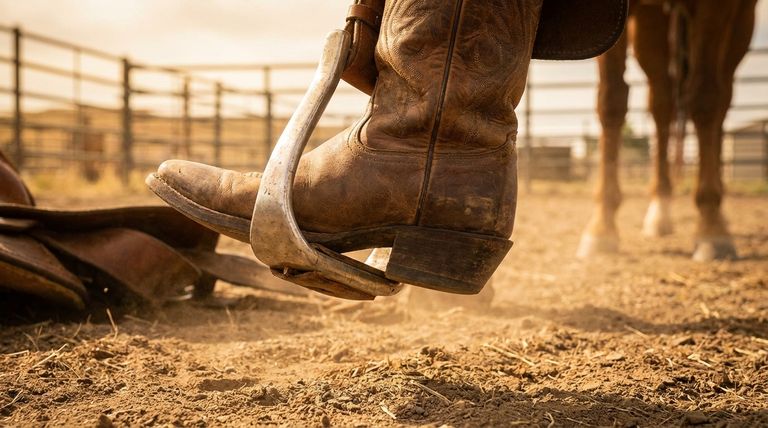
The heel on a Western boot is first and foremost a safety device. Its primary purpose is to create a physical block that prevents the rider's foot from sliding completely through the stirrup, which is essential for maintaining control and preventing a catastrophic accident during a fall.
The Heel's Primary Role: A Safety Mechanism
The design of a Western boot heel is a direct response to the physical demands of riding. It serves as an anchor, ensuring the rider's foot remains correctly and safely positioned.
Preventing Stirrup Slip-Through
The most critical function of the heel is to act as a catch. It provides a solid ledge that rests against the back of the stirrup bar.
This prevents the rider's foot from accidentally sliding too far forward and getting trapped. Should a rider fall, a foot caught in the stirrup is one of the most dangerous situations possible.
The "Cowboy Heel" Design
The traditional "cowboy heel" is not just tall but also distinctly angled. This slanted shape is intentional.
It helps lock the foot into a secure and stable position, promoting proper posture and balance by encouraging the rider to keep their "heels down."
The Problem with Incorrect Heights
A heel that is too high can pitch your weight forward, creating instability and an unbalanced position in the saddle.
Conversely, a flat heel offers a significantly reduced safety margin, increasing the risk of the foot sliding through the stirrup.
Beyond Heel Height: Other Critical Design Factors
While the 1.5-inch heel is the standard, it works in concert with other elements of the boot to ensure safety and performance. A perfect heel on a poorly designed boot is ineffective.
The Importance of the Sole
The sole of the boot is just as important as the heel. Traditionally, slick leather soles are preferred for riding.
This smooth surface allows the foot to slide out of the stirrup easily in an emergency, without catching or gripping. Modern rubber-soled designs can also be safe, provided they are not aggressively lugged.
The Necessity of a Proper Fit
A boot's safety features are only effective if the boot fits correctly. Your foot should not slide around inside the boot.
The heel of your foot must remain snug in the boot's heel cup, the instep and arch must be well-supported, and your toes should have enough room to wiggle slightly.
Understanding the Trade-offs
Not all Western boots are identical. The subtle variations in heel height and shape reflect different priorities and intended uses.
The Riding Heel vs. The Roper Heel
The classic riding heel, at around 1.5 inches with a noticeable angle, is optimized for maximum security in the saddle. This is the standard for most forms of Western riding.
A roper heel is shorter (typically around 1 inch) and squared off. This design is a compromise, offering more comfort and stability for walking and groundwork, making it popular for riders who are frequently dismounting. However, this comes at the cost of a smaller safety ledge for the stirrup.
Making the Right Choice for Your Goal
Selecting the right boot means matching its design to your primary activity.
- If your primary focus is safety and stability while riding: Choose a boot with a traditional "cowboy" heel of approximately 1.5 inches.
- If you need a hybrid boot for both riding and significant groundwork: A roper-style boot with a lower, broader heel may be suitable, but acknowledge the slight reduction in stirrup security.
- Regardless of heel style: Always prioritize a snug, proper fit and a sole that will not get caught in the stirrup.
Ultimately, a good riding boot is a piece of functional equipment where safety dictates design.
Summary Table:
| Feature | Recommended Specification | Why It Matters |
|---|---|---|
| Heel Height | 1.5 inches | Prevents foot from sliding through stirrup, ensuring rider safety. |
| Heel Type | Angled Cowboy Heel | Locks foot into a secure position, promoting balance and stability. |
| Sole Type | Smooth Leather or Safe Rubber | Allows foot to release easily from stirrup in an emergency. |
| Fit | Snug, No Heel Slippage | Ensures safety features function correctly and provides comfort. |
Need High-Quality Western Riding Boots for Your Business?
As a large-scale manufacturer, 3515 produces a comprehensive range of functional and stylish Western boots for distributors, brand owners, and bulk clients. Our production capabilities ensure every pair meets the critical safety standards outlined above, combining expert craftsmanship with durable materials.
Contact us today to discuss your specific needs and leverage our manufacturing expertise to equip your customers with safe, reliable footwear.
Visual Guide
Related Products
- Durable Goodyear Welt Leather Work Boots for Wholesale & Private Label
- Wholesale High-Traction Camo Boots - Custom Manufacturer for Brands
- High-Traction Suede Tactical Boots Wholesale & Custom Manufacturing
- Wholesale Waterproof Tactical Boots Custom Suede & High-Traction Soles
- Durable Military Combat Boots with Water Drainage for Wholesale & OEM
People Also Ask
- What is the difference between full-grain and top-grain leather? Premium Material Guide for Boot Manufacturers
- What are the advantages of leather as an upper material for work boots? Unmatched Durability & Custom Comfort
- Why is it important to waterproof leather work boots? Protect Your Investment and Performance
- How should new leather work boots be broken in? A Guide to Comfort and Durability
- What are the advantages of leather uppers in work boots? Unmatched Durability & Protection


















