
Beyond the Western aesthetic, cowboy boots possess distinct functional advantages rooted in their original design for horseback riding and ranching. These core benefits—protection, durability, and rider safety—translate directly into practical uses for the modern wearer. Their key features include a high leather shaft, a specific heel design for stability, a protective toe, and a convenient laceless construction.
The functional genius of the cowboy boot lies in its purpose-built design for a demanding environment. While these historical features offer clear modern benefits like durability and protection, they also create specific trade-offs in comfort and traction that are critical to understand.
The Anatomy of a Functional Boot
Each element of a classic cowboy boot was engineered to solve a specific problem for a person working on and around horses. These design choices remain relevant today, providing a unique combination of safety and utility.
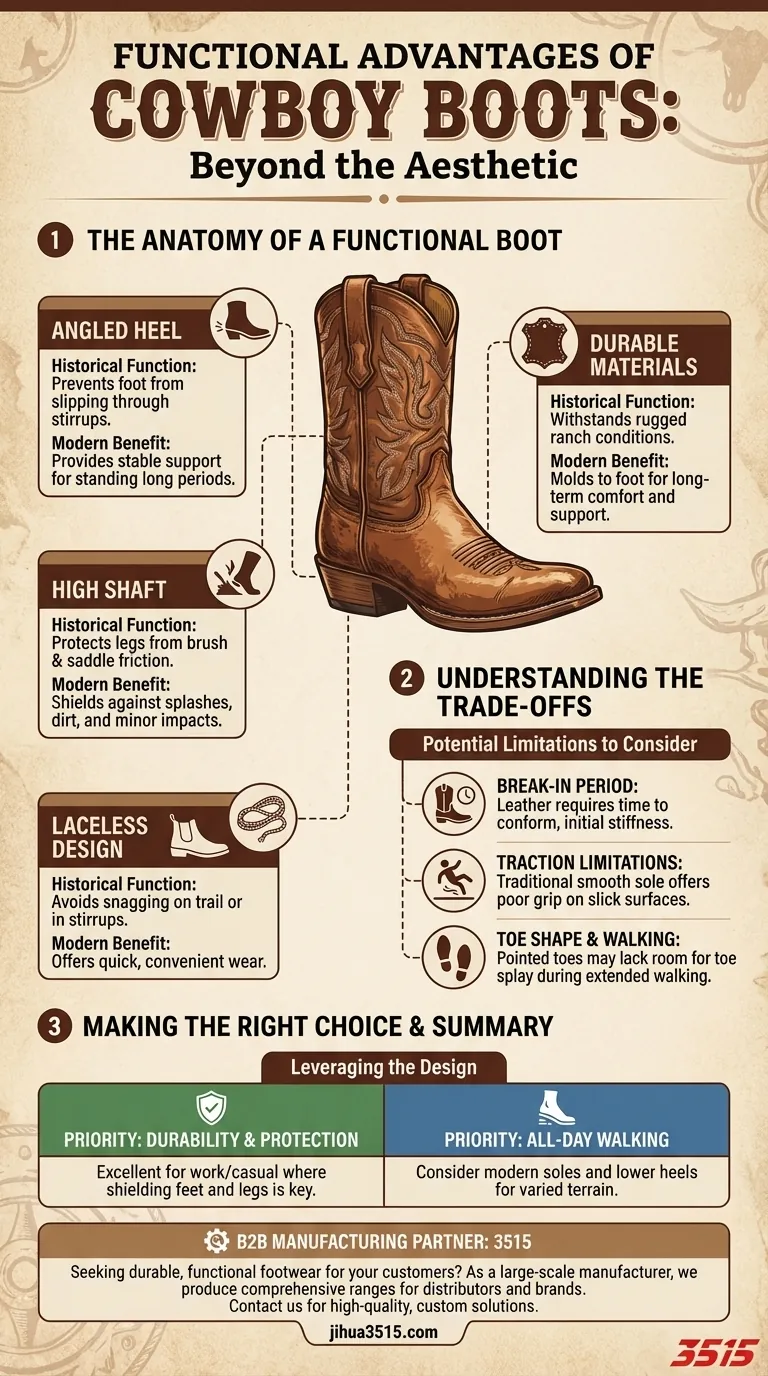
The Angled Heel: More Than Just Height
The most critical functional component is the boot's heel. A traditional riding heel is typically around two inches high and angled forward, a design meant to prevent the rider's foot from slipping through a stirrup.
For modern wear, this underslung heel provides a stable, planted feel when standing for long periods. It creates a secure base of support that many find comfortable and confidence-inspiring.
The High Shaft: A Shield for the Leg
The tall leather shaft, extending up the calf, was designed as a protective shield. It guarded a rider's legs against trail hazards like brush and thorns, as well as from the constant friction of the saddle.
Today, this feature continues to offer excellent protection from splashes, dirt, and minor impacts, making the boot highly functional for both outdoor activities and workshop environments.
The Laceless Design: Speed and Safety
The slip-on, lace-free construction is a deliberate safety feature. Laces can easily snag on branches or, more dangerously, get caught in a stirrup during a fall, dragging the rider.
The modern benefit is pure convenience. This design allows for quick and easy wear while ensuring there are no parts that can come loose or get tangled.
Durable Materials: Built for a Custom Fit
Cowboy boots are traditionally made from high-quality, tough leather, such as cowhide. This material is naturally durable and water-resistant, protecting the feet from the elements.
Over time, the stiff leather molds to the unique shape of your foot. This break-in process results in a customized fit that provides exceptional support for long hours of standing or walking.
Understanding the Trade-offs
No design is perfect for every situation. The features that make a cowboy boot excellent for its intended purpose can become limitations in other contexts.
The Break-in Period
The same durable leather that offers a custom fit requires an initial break-in period. New boots can feel tight and stiff, which may be uncomfortable for the first several wears until the leather conforms to your foot.
Traction Limitations
The traditional smooth leather sole is essential for allowing a rider's foot to easily slide in and out of a stirrup. However, this same feature offers very little grip on slick, wet, or icy surfaces.
The Toe Shape and Walking
While the heel and shaft are functional, the toe shape of a cowboy boot is largely stylistic. An overly pointed toe may not be comfortable for all foot shapes, especially during extended periods of walking where the toes need room to splay.
Making the Right Choice for Your Needs
To decide if a cowboy boot is the right functional choice, consider what you will be asking it to do.
- If your primary focus is durability and protection: The robust leather construction and high shaft make cowboy boots an excellent choice for work or casual wear where shielding your feet and legs is a priority.
- If your primary focus is all-day walking on varied terrain: Be mindful of the smooth sole and angled heel; a modern boot with a rubber sole or a lower, wider "walking" heel might be a better functional fit.
- If your primary focus is convenience and long-term support: The slip-on design and the way the leather molds to your foot offer a unique combination of ease-of-use and customized comfort.
Understanding the purpose behind each design element allows you to leverage the cowboy boot as a functional tool, not just a style statement.
Summary Table:
| Feature | Historical Function | Modern Benefit |
|---|---|---|
| Angled Heel | Prevents foot from slipping through stirrups | Provides stable support for standing |
| High Shaft | Protects legs from brush and saddle friction | Shields against splashes, dirt, and impacts |
| Laceless Design | Avoids snagging on trail or in stirrups | Offers quick, convenient wear |
| Durable Leather | Withstands rugged ranch conditions | Molds to foot for long-term comfort and support |
Looking for durable, functional footwear for your customers? As a large-scale manufacturer, 3515 produces a comprehensive range of cowboy boots designed for distributors, brand owners, and bulk clients. Our production capabilities ensure high-quality materials, precise construction, and custom design options to meet your market needs. Contact us today to discuss how we can support your footwear business with reliable, purpose-built boots!
Visual Guide
Related Products
- High-Traction Suede Tactical Boots Wholesale & Custom Manufacturing
- Wholesale High-Traction Camo Boots - Custom Manufacturer for Brands
- Wholesale Lightweight Tactical Boots Custom Manufacturer for Desert & Combat Use
- Durable Leather Tactical Boots Wholesale & Custom Manufacturing for Brands
- Wholesale Durable Mid-Cut Tactical Boots for Custom & Private Label Brands
People Also Ask
- Why is sequential analysis utilized to evaluate tactical boots? Master Dynamic Boot Development and Ergonomic Performance
- How does the material of tactical boots affect their performance? Choose the Right Material for Your Mission
- How do tactical boots differ from regular boots? Performance, Durability & Design Explained
- How do military uniforms and tactical boots impact the prediction of thermal risk? Essential Safety Insights
- What are the benefits of integrating FES and sEMG into tactical boots? Safety, Reliability & Field-Ready Performance


















