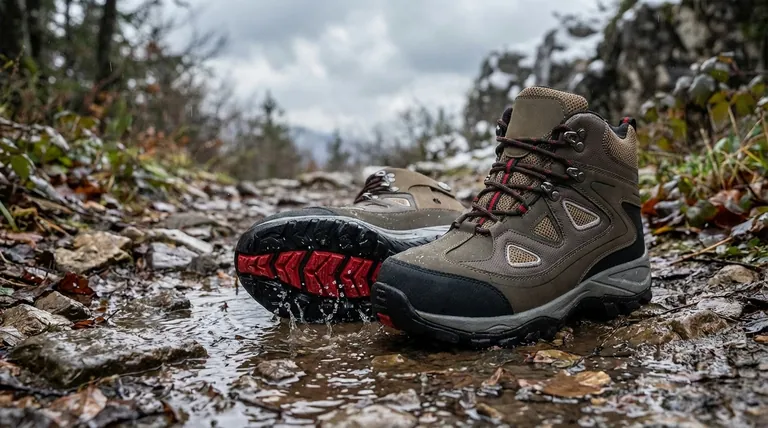
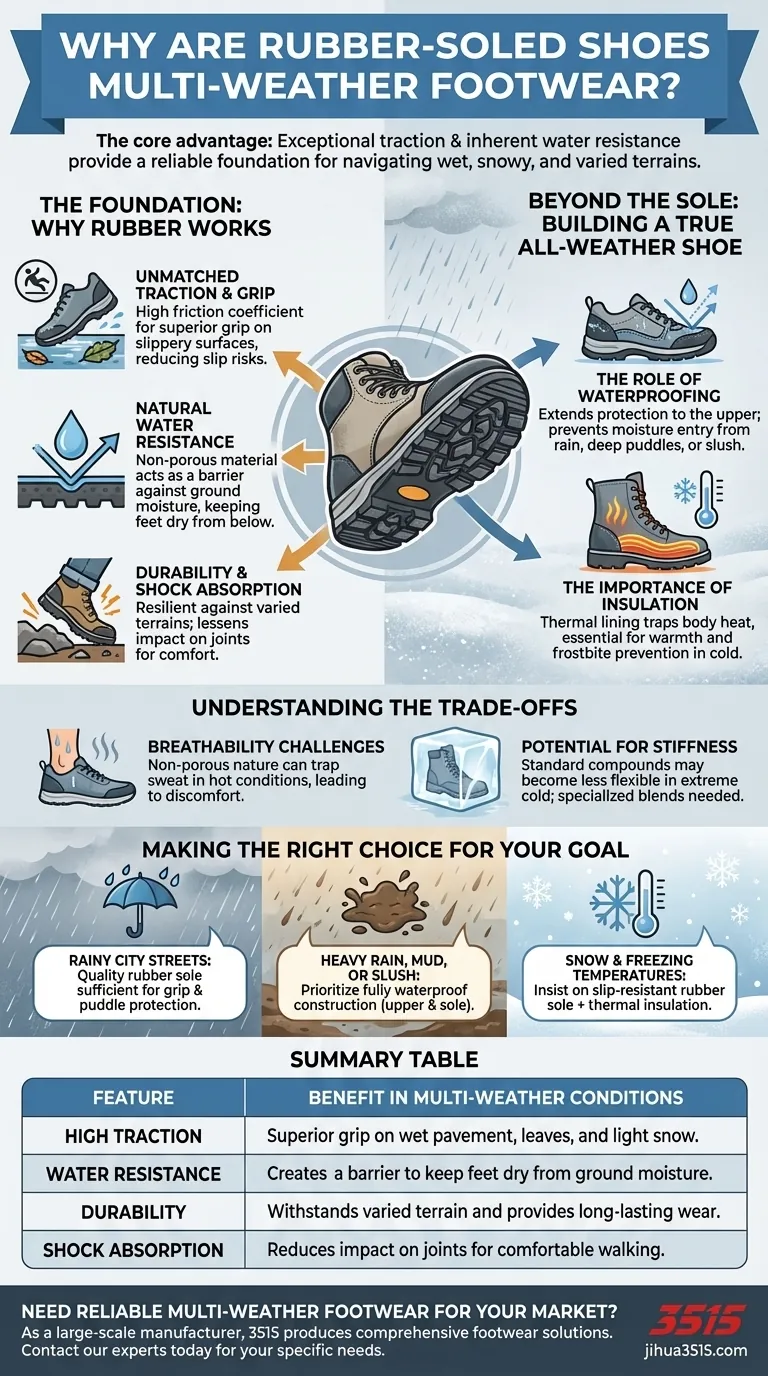
At its core, a rubber sole makes a shoe "multi-weather" because of its two fundamental properties: exceptional traction on slippery surfaces and inherent water resistance. These qualities provide a reliable foundation for navigating everything from wet pavement to snow-covered streets.
While a rubber sole is the critical starting point for all-season footwear, its true multi-weather capability is realized when combined with other features like waterproofing and insulation in the shoe's upper construction.
The Foundation: Why Rubber Works
The effectiveness of rubber as an all-purpose sole material comes down to its physical properties, which directly address the most common challenges presented by inclement weather.
Unmatched Traction and Grip
Rubber has a high coefficient of friction, which gives it a superior ability to grip surfaces.
This physical property is what reduces your chances of slipping on wet pavement, slick leaves, or even light snow. It provides a stable and secure connection between your foot and the ground.
Natural Water Resistance
By its nature, rubber is a non-porous material. This means water cannot easily penetrate it.
A rubber sole acts as a barrier, preventing ground moisture from seeping into the shoe and keeping your feet dry from below.
Durability and Shock Absorption
Beyond weather-specific benefits, rubber is also incredibly resilient and durable, able to withstand various terrains.
It also provides excellent shock absorption, which lessens the pressure and impact on your joints and body as you walk, adding a layer of comfort.
Beyond the Sole: Building a True All-Weather Shoe
A rubber sole provides the base, but for a shoe to handle more extreme conditions, the entire structure must work in concert. Simply having a rubber sole doesn't make a canvas sneaker a snow boot.
The Role of Waterproofing
Waterproofing extends beyond the sole to the upper part of the shoe. Boots like wellies or tactical boots use waterproof materials and sealed seams to create a complete barrier.
This full protection is what prevents moisture from rain, deep puddles, or slush from entering the shoe, which is crucial for preventing conditions like trench foot.
The Importance of Insulation
In cold weather and snow, grip is only half the battle. A rubber sole doesn't provide significant warmth.
Insulated footwear includes a thermal lining that traps body heat, protecting your feet from the cold and helping to prevent frostbite. This is an essential feature for true winter-ready boots.
Understanding the Trade-offs
No single material is perfect for every possible condition. While rubber is highly versatile, it's important to be aware of its limitations.
Breathability Challenges
Because rubber is non-porous and waterproof, it is also not breathable.
In hot and dry weather, all-rubber shoes can trap sweat, leading to discomfort. This is why many designs combine rubber soles with more breathable upper materials.
Potential for Stiffness in Extreme Cold
Standard rubber compounds can become stiff and less flexible in extremely low temperatures.
High-performance winter boots often use specialized rubber blends designed to stay pliable and maintain their grip even in freezing conditions.
Making the Right Choice for Your Goal
Ultimately, the best "multi-weather" shoe depends on the specific weather you face most often.
- If your primary focus is navigating rainy city streets: A standard shoe with a quality rubber sole is often sufficient for grip and protection from puddles.
- If your primary focus is dealing with heavy rain, mud, or slush: Prioritize fully waterproof construction, where the upper materials are just as important as the rubber sole.
- If your primary focus is snow and freezing temperatures: Insist on a combination of a slip-resistant rubber sole and thermal insulation for both safety and warmth.
Choosing the right footwear means matching the shoe's specific features to the demands of your environment.
Summary Table:
| Feature | Benefit in Multi-Weather Conditions |
|---|---|
| High Traction | Superior grip on wet pavement, leaves, and light snow. |
| Water Resistance | Creates a barrier to keep feet dry from ground moisture. |
| Durability | Withstands varied terrain and provides long-lasting wear. |
| Shock Absorption | Reduces impact on joints for comfortable walking. |
Need reliable multi-weather footwear for your market?
As a large-scale manufacturer, 3515 produces a comprehensive range of footwear for distributors, brand owners, and bulk clients. Our production capabilities encompass all types of shoes and boots, from rain-ready styles with superior rubber soles to fully insulated winter boots. We can help you source or develop the perfect all-season footwear to meet your customers' demands.
Contact our experts today to discuss your specific needs and volume requirements.
Visual Guide
Related Products
- Durable Rubber-Soled Utility Shoes for Wholesale & Custom Brand Manufacturing
- Durable Rubber Sole Outdoor Shoes Wholesale & Custom Manufacturing
- Wholesale Durable Camouflage Canvas Shoes with High-Traction Cleated Rubber Sole
- Wholesale Durable Camo Canvas Shoes with High-Traction Rubber Soles
- Durable Canvas Work Shoes with Rubber Lug Sole | Wholesale Manufacturer
People Also Ask
- Why should we wear rubber soled shoes? Unlock Superior Safety and Durability
- How do rubber soles affect a shoe's appearance? Defining Your Shoe's Style and Formality
- What are the types of rubber sole shoes available? Choose the Right Sole for Durability & Comfort
- When were rubber sole shoes invented? From 1800s Concept to Modern Mainstay
- What are the advantages of rubber-soled shoes? Unlock Superior Grip & All-Day Comfort