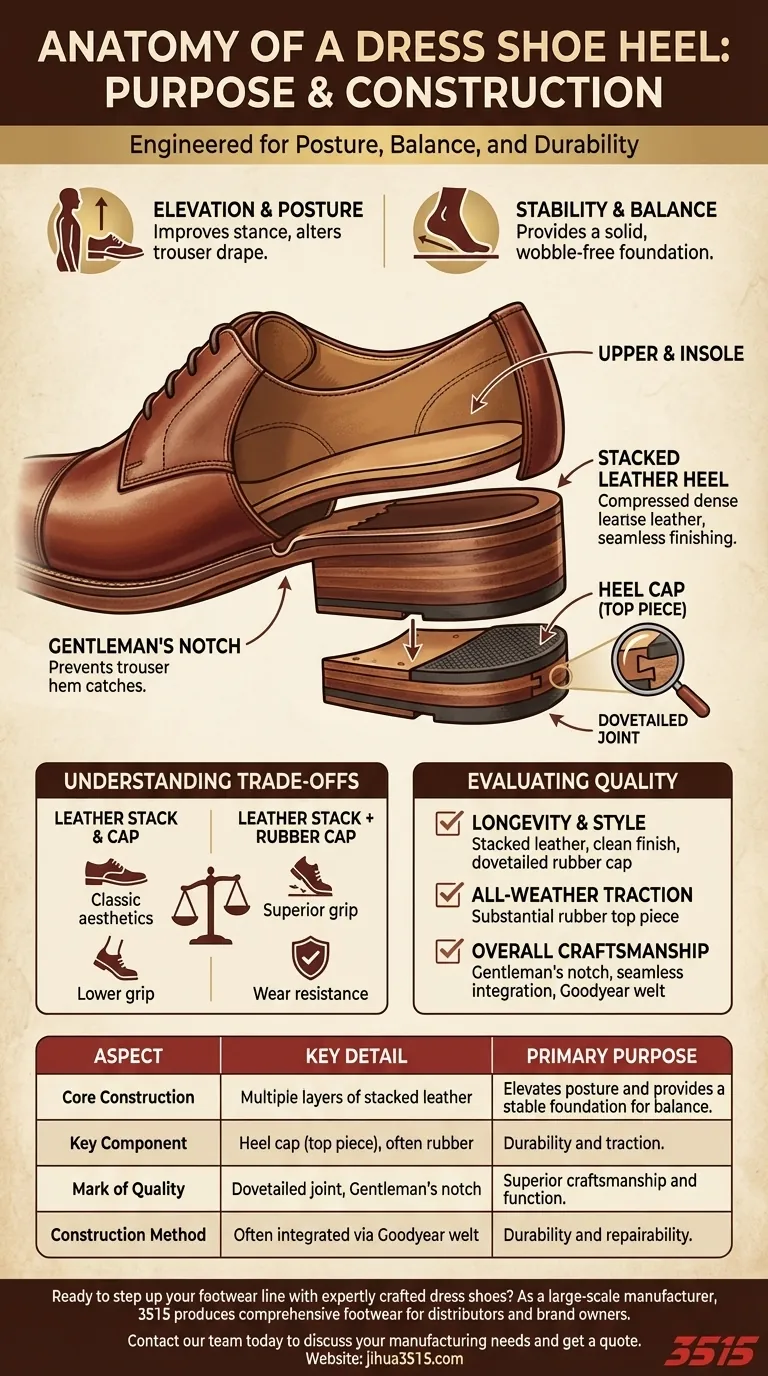
At its core, the heel of a dress shoe is an engineered component designed for two primary purposes: providing elevation to improve posture and creating a stable foundation for balance. It is most commonly constructed from multiple layers of stacked leather, which are shaped and finished to form a solid block.
The heel is far more than an aesthetic addition; its construction method and materials are a direct indicator of a shoe's overall quality, durability, and the stability it will provide the wearer.
The Functional Purpose of the Heel
A well-designed heel is critical to the comfort and performance of a dress shoe. Its role extends beyond simply adding height.
Providing Elevation and Posture
The most obvious function of the heel is to elevate the rear of the foot. This slight lift can improve the wearer's posture and alter the drape of their trousers for a more refined silhouette.
Ensuring Stability and Balance
The heel block serves as the rear anchor point for your foot. A properly constructed heel provides a solid, flat base that prevents wobbling and ensures a confident, balanced stride with each step.
Deconstructing the Heel
The anatomy of a quality shoe heel reveals a commitment to traditional craftsmanship and functional design.
The Stacked Leather Method
The classic and most respected method involves building the heel from several layers of dense leather. These layers are glued and compressed together, then sanded and finished to create a seamless and incredibly durable block.
The Heel Cap or Top Piece
The final layer that makes contact with the ground is called the heel cap or top piece. While the stack is leather, this piece is often made of rubber or a combination of rubber and leather for enhanced durability and traction.
Premium Construction Details
In higher-quality shoes, this rubber top piece may be joined to the leather stack with a dovetailed joint. This interlocking design is a hallmark of superior craftsmanship, providing a more secure bond than a simple glued-on piece.
The Gentleman's Notch: A Mark of Tradition
Some high-end dress shoes feature a small, curved cutout on the inner, forward edge of the heel. This is known as a "gentleman's notch" or "gentleman's corner," a traditional detail designed to prevent trouser hems from catching on the heel.
Understanding the Trade-offs
The materials and design of a heel involve balancing tradition with modern performance needs.
Leather vs. Rubber Components
A full leather heel stack is traditional and aesthetically pleasing, but a rubber top piece offers far superior grip and wear resistance. Many of the best shoes combine both to get the benefits of each material.
Integration with the Sole
The heel's integrity is tied to how it connects to the outsole (the bottom of the shoe). This entire foundation is then attached to the upper. Methods like a Goodyear welt create a durable, water-resistant, and easily repairable shoe, making heel replacement straightforward for a cobbler.
Height and Stability
There is a direct trade-off between heel height and stability. While a slightly higher heel can be stylistically desirable, it also raises the center of gravity, potentially compromising balance. A standard, broad dress shoe heel provides the optimal foundation.
How to Evaluate a Shoe's Heel
When examining a dress shoe, the heel tells you a story about its quality.
- If your primary focus is longevity and classic style: Look for a stacked leather heel with clean, smooth finishing and consider a dovetailed rubber top piece a significant mark of quality.
- If your primary focus is all-weather traction: Ensure the heel has a substantial rubber top piece for grip, even if the rest of the stack is leather.
- If your primary focus is assessing overall craftsmanship: Look for details like a gentleman's notch and the seamless integration between the heel, the outsole, and the upper part of the shoe.
By understanding the heel, you gain a deeper appreciation for the engineering and artistry of a well-made dress shoe.
Summary Table:
| Aspect | Key Detail |
|---|---|
| Primary Purpose | Elevates posture and provides a stable foundation for balance. |
| Core Construction | Multiple layers of stacked leather, shaped and finished. |
| Key Component | Heel cap (top piece), often rubber for durability and traction. |
| Mark of Quality | Dovetailed joint for the top piece; Gentleman's notch. |
| Construction Method | Often integrated via a Goodyear welt for durability and repairability. |
Ready to step up your footwear line with expertly crafted dress shoes?
As a large-scale manufacturer, 3515 produces a comprehensive range of footwear for distributors, brand owners, and bulk clients. Our production capabilities encompass all types of shoes and boots, including dress shoes built with the precise heel construction and quality details outlined in this article.
We can help you deliver superior stability, durability, and classic style to your customers. Contact our team today to discuss your manufacturing needs and get a quote.
Visual Guide
Related Products
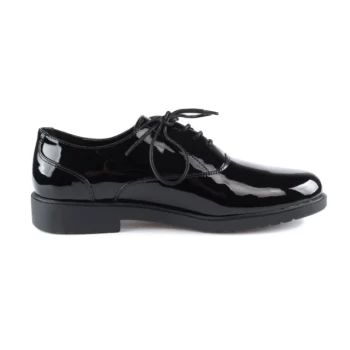
- Wholesale Patent Oxford Dress Shoes | Custom & Bulk Manufacturing
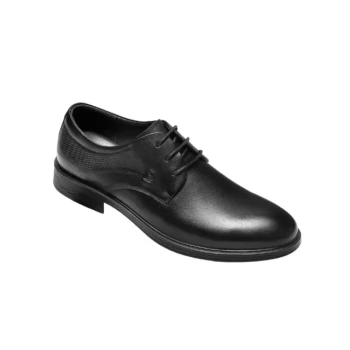
- Classic Leather Derby Dress Shoes Wholesale & Custom Manufacturing
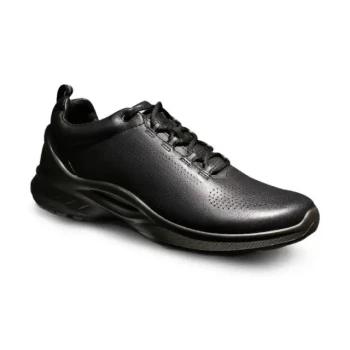
- Wholesale Perforated Comfort Dress Shoes | Custom Derby Shoe Manufacturer
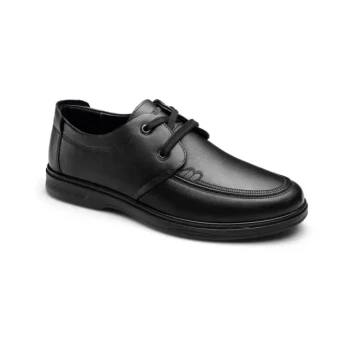
- Wholesale Leather Derby Dress Shoes Custom Manufacturer for Brands
- Wholesale Comfort Dress Shoes with Dial Closure for Custom Manufacturing
People Also Ask
- What are the key characteristics of Oxford dress shoes? A Guide to Timeless Formal Footwear
- How do Oxfords and Derbies differ in terms of lacing and formality? A Guide to Choosing the Right Shoe
- What is the origin of the Oxford shoe? From 1800s University Boots to Modern Elegance
- How do Oxford Shoes differ from other casual shoes? The Ultimate Guide to Lacing & Formality
- What makes Oxford shoes suitable for business casual settings? Master the Art of Professional Style