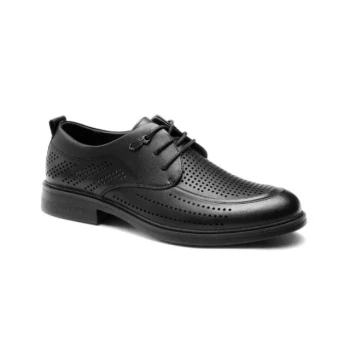
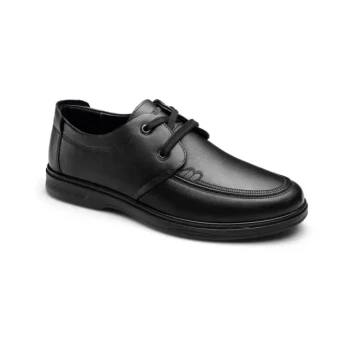
The fundamental difference between an Oxford and a Derby shoe lies in their lacing systems, which directly dictates their level of formality. Oxfords feature a "closed lacing" system, creating a sleek, formal profile ideal for business and evening wear. In contrast, Derbies use an "open lacing" system, resulting in a more versatile and comfortable shoe suited for a wider range of smart-casual occasions.
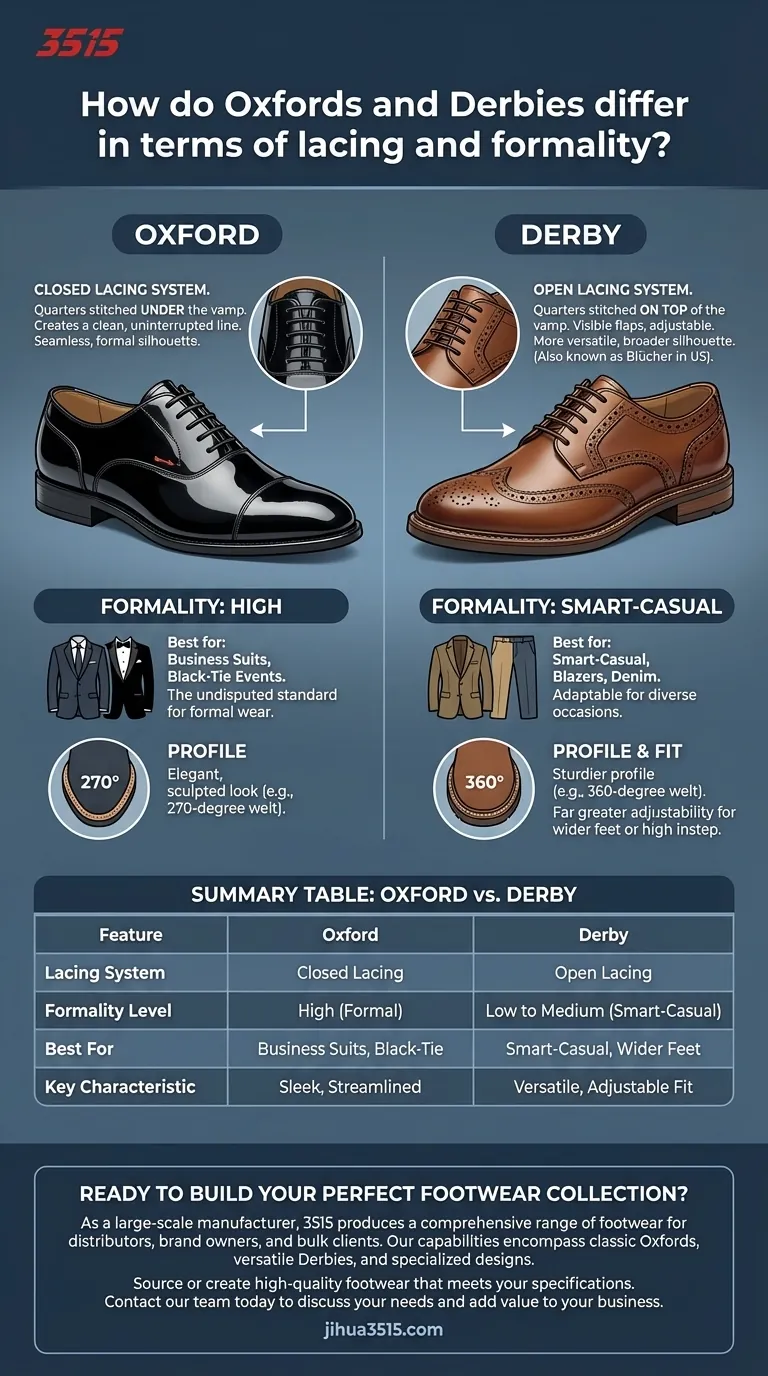
The core distinction is simple: an Oxford’s lacing is stitched under the shoe's upper for a seamless look, making it inherently formal. A Derby’s lacing is stitched on top, creating visible flaps that offer more flexibility and a more casual appearance.
The Defining Detail: Open vs. Closed Lacing
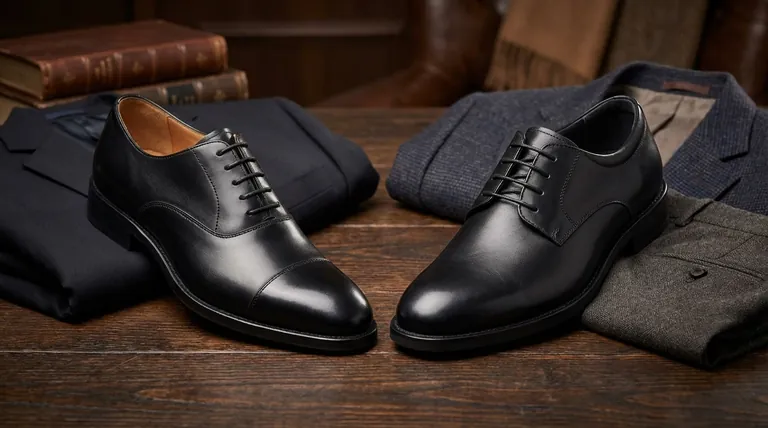
The single most reliable way to distinguish between these two iconic dress shoes is to examine how the shoelace eyelets are constructed. This is not a stylistic choice but a fundamental difference in their architecture.
The Oxford's Closed Lacing System
In an Oxford, the pieces of leather that hold the shoelace eyelets (the "quarters") are stitched underneath the front part of the shoe (the "vamp").
This creates a clean, uninterrupted line across the top of the shoe. The lacing closes to form a "V" shape, but the system is sewn shut at the bottom, restricting its adjustability.
This seamless construction is what gives the Oxford its signature sleek and formal silhouette.
The Derby's Open Lacing System
On a Derby shoe, the quarters are stitched on top of the vamp.
This construction creates two visible flaps of leather that sit opposite each other. These flaps are not joined at the bottom, allowing them to be pulled apart or laced tighter as needed.
This "open" design makes the shoe appear slightly broader and less streamlined than an Oxford. In the United States, this style is also commonly known as a Blücher.
How Construction Dictates Formality
The difference in lacing is not just aesthetic; it's a clear signal of the shoe's intended purpose and place in a wardrobe.
The Oxford: The Standard for Formality
The Oxford's clean lines make it the undisputed champion of formal footwear.
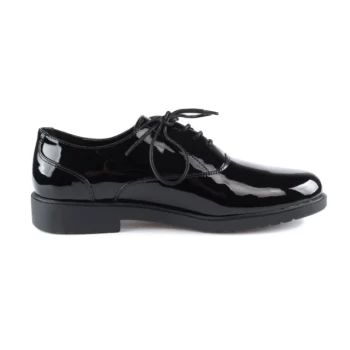
It is the correct and expected choice for business suits, black-tie events, and any occasion demanding a high degree of formality. A black patent leather Oxford, for instance, is the standard companion to a tuxedo.
The Derby: The Versatile Workhorse
The Derby's more robust and open construction makes it inherently less formal and significantly more versatile.
It pairs perfectly with smart-casual attire like sport coats, chinos, wool trousers, and even dark-wash denim. Brown Derbies, often featuring decorative perforations (brogueing), are a classic staple of this style.
Understanding the Trade-offs
Beyond formality, the structural differences have practical implications for fit, comfort, and overall appearance.
Adjustability and Comfort
The Derby's open lacing system offers far greater adjustability.
This makes it a significantly more comfortable option for individuals with wider feet or a high instep, as the lacing can be loosened to accommodate the foot's shape without pinching.
A Sleeker vs. a More Robust Profile
Subtle construction details often reinforce each shoe's purpose. Oxfords frequently use a 270-degree welt, where the sole stitching stops at the heel, creating a more elegant, sculpted look.
Derbies, on the other hand, often feature a 360-degree welt that runs around the entire shoe, lending it a sturdier and more classic profile.
Making the Right Choice for Your Goal
Your decision should be guided by the context in which you intend to wear the shoes.
- If your primary focus is formal events and business suits: The sleek, structured silhouette of the Oxford is the non-negotiable standard.
- If your primary focus is versatility and smart-casual wear: The Derby offers superior adaptability, pairing effortlessly with everything from a blazer to denim.
- If you have a high instep or require more comfortable footwear: The Derby's adjustable open-lacing system will provide a significantly better fit.
Recognizing this fundamental design difference empowers you to select the right shoe with confidence for any occasion.
Summary Table:
| Feature | Oxford | Derby |
|---|---|---|
| Lacing System | Closed Lacing | Open Lacing |
| Formality Level | High (Formal) | Low to Medium (Smart-Casual) |
| Best For | Business Suits, Black-Tie Events | Smart-Casual Attire, Wider Feet |
| Key Characteristic | Sleek, Streamlined Silhouette | Versatile, Adjustable Fit |
Ready to build your perfect footwear collection?
As a large-scale manufacturer, 3515 produces a comprehensive range of footwear for distributors, brand owners, and bulk clients. Our production capabilities encompass all types of shoes and boots, from classic Oxfords and versatile Derbies to specialized designs.
We can help you source or create high-quality footwear that meets your exact specifications and resonates with your target market. Contact our team today to discuss your needs and discover how we can add value to your business.
Visual Guide
Related Products
- Wholesale Patent Oxford Dress Shoes | Custom & Bulk Manufacturing
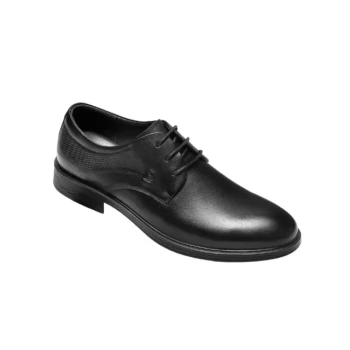
- Classic Leather Derby Dress Shoes Wholesale & Custom Manufacturing
- Wholesale Leather Derby Shoes Manufacturer | Customizable Business & Dress Footwear
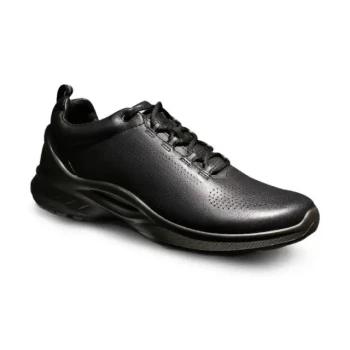
- Wholesale Perforated Comfort Dress Shoes | Custom Derby Shoe Manufacturer
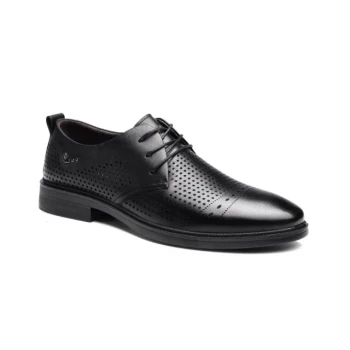
- Wholesale Breathable Perforated Leather Derby Dress Shoes for Custom Brands
People Also Ask
- What are the key characteristics of Oxford dress shoes? A Guide to Timeless Formal Footwear
- What is the origin of the Oxford shoe? From 1800s University Boots to Modern Elegance
- How do Oxford Shoes differ from other casual shoes? The Ultimate Guide to Lacing & Formality
- What makes Oxford shoes suitable for business casual settings? Master the Art of Professional Style
- How do oxford shoes enhance a business casual look? Achieve Polished Professionalism with Style