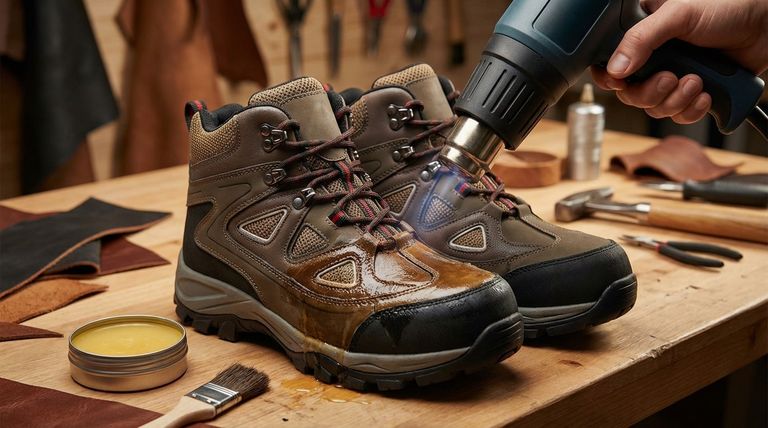
The primary purpose of heating a wax-covered boot is to melt the solid wax, transforming it into a liquid state. This allows the wax to move beyond the surface and absorb deeply into the pores and fibers of the boot's material, creating a durable and effective water-repellent barrier.
The goal is not simply to coat the boot, but to impregnate it. Heating is the essential step that turns a superficial layer of wax into a deeply absorbed, protective shield that repels water from within the material itself.
The Principle of Wax Absorption
To understand why heating is so critical, we need to look at how the materials interact at a microscopic level. The process is about transforming a surface treatment into an integrated part of the boot.
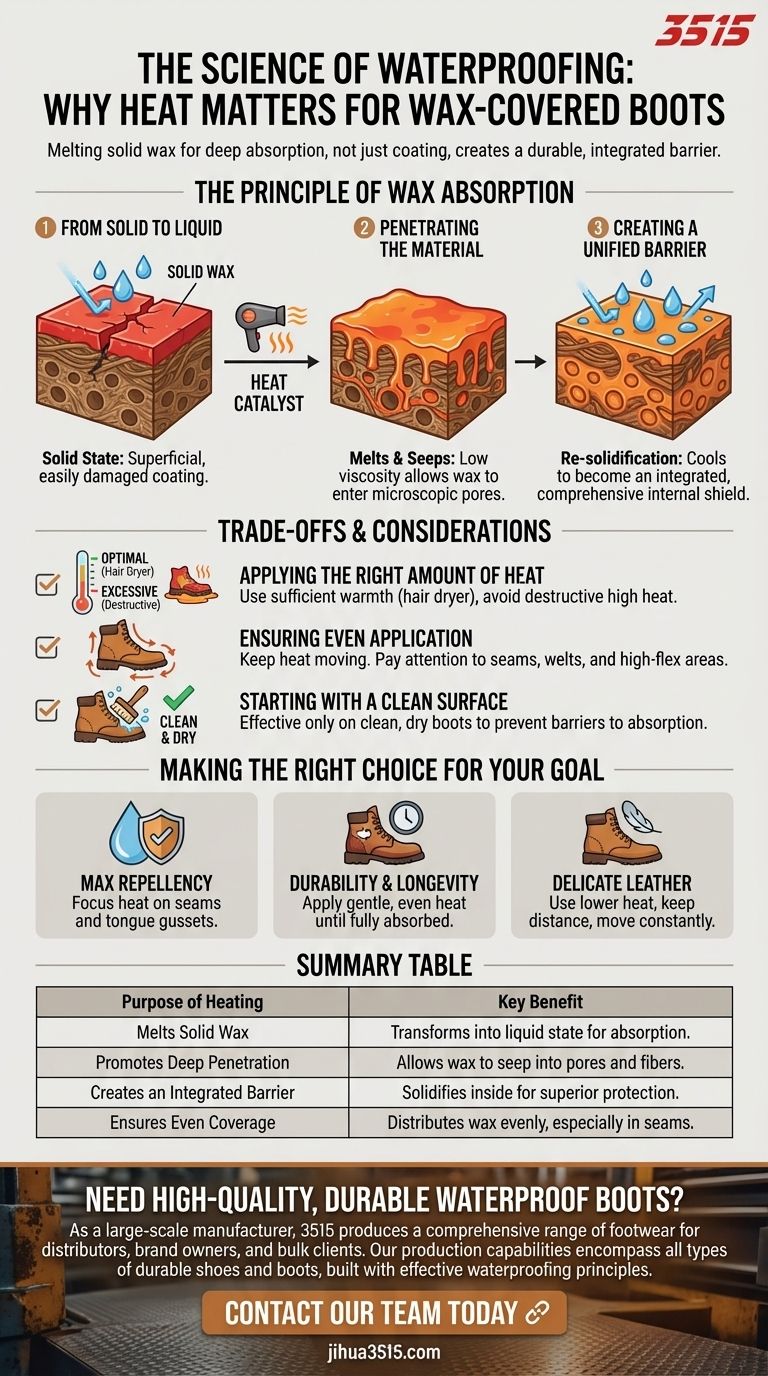
From Solid to Liquid
In its solid state, wax simply sits on top of the boot's material. It might offer minimal protection, but it can be easily scuffed off or cracked when the boot flexes.
Heat acts as the catalyst, changing the physical state of the wax from a solid to a liquid.
Penetrating the Material
Once melted, the wax has a low enough viscosity to seep into the microscopic pores and fibers of leather or fabric. Think of it like a dry sponge absorbing water; the material naturally draws the liquid wax inward.
This absorption is what creates a truly effective barrier against moisture.
Creating a Unified Barrier
As the boot cools, the wax re-solidifies inside the material. It is no longer a separate layer but is now integrated within the boot's structure.
This creates a comprehensive shield that fills the tiny gaps where water could otherwise penetrate, forcing moisture to bead up and roll off the surface.
Understanding the Trade-offs and Considerations
While effective, this process requires careful execution to avoid common mistakes that can compromise the outcome or even damage your footwear.
Applying the Right Amount of Heat
Using too much heat from an overly powerful source can be destructive. Excessive heat can permanently damage leather, causing it to shrink or scorch, and can even melt synthetic components like stitching or rubber soles.
A standard hair dryer provides sufficient warmth without posing a significant risk.
Ensuring Even Application
For complete protection, the wax must be absorbed evenly across the entire boot. It is crucial to keep the heat source moving continuously.
Pay special attention to seams, welts, and high-flex areas, as these are the most common points for water to enter.
Starting with a Clean Surface
This process is only effective on a clean, dry boot. Any dirt, dust, or residual moisture will act as a barrier, preventing the melted wax from absorbing properly into the material.
Making the Right Choice for Your Goal
Applying this knowledge correctly ensures your boots are ready for the elements.
- If your primary focus is maximum water repellency: Concentrate your heating efforts on the seams and tongue gussets, ensuring the wax fully melts and disappears into these critical areas.
- If your primary focus is durability and longevity: Apply gentle, even heat across the entire boot until the waxy haze is completely absorbed, signaling a deep and lasting bond.
- If you are working with delicate leather: Use a lower heat setting and keep the heat source at a greater distance, moving constantly to prevent any damage to the material's finish.
Ultimately, heating is the non-negotiable step that transforms a simple wax coating into deeply integrated and reliable waterproof protection.
Summary Table:
| Purpose of Heating | Key Benefit |
|---|---|
| Melts Solid Wax | Transforms wax into a liquid state for absorption. |
| Promotes Deep Penetration | Allows wax to seep into material pores and fibers. |
| Creates an Integrated Barrier | Wax re-solidifies inside the boot, offering superior protection. |
| Ensures Even Coverage | Heat helps distribute wax evenly, especially in seams. |
Need to produce high-quality, durable waterproof boots?
As a large-scale manufacturer, 3515 produces a comprehensive range of footwear for distributors, brand owners, and bulk clients. Our production capabilities encompass all types of durable shoes and boots, built with the principles of effective waterproofing in mind.
Let us help you create the perfect product for your market. Contact our team today to discuss your manufacturing needs and how we can bring value to your business.
Visual Guide
Related Products
- Wholesale Durable Camouflage Canvas Shoes with High-Traction Cleated Rubber Sole
- High-Traction Suede Tactical Boots Wholesale & Custom Manufacturing
- Heavy-Duty Goodyear Welted Pull-On Safety Rigger Boot
- Wholesale High-Traction Camo Boots - Custom Manufacturer for Brands
- Durable Goodyear Welt Leather Work Boots for Wholesale & Private Label
People Also Ask
- Why is the selection of high-strength fabric materials necessary in the production of canvas shoes and training shoes?
- What are the properties of canvas as a shoe material? A Guide to Lightweight Comfort & Style
- Can canvas shoes be worn in rainy conditions? The Truth About Water Resistance
- What are some examples of vulcanized shoes? Discover the Flexibility and Board Feel of Classic Sneakers
- What are the characteristics of canvas as a shoe material? A Guide to Lightweight, Breathable Footwear