
The proper way to store leather chukka boots is to control their environment, maintain their shape, and ensure they are clean and dry before being put away. This involves keeping them out of direct sunlight, allowing for air circulation, and using shoe trees or stuffing to prevent creasing.
The goal of storage is not just to get your boots out of the way. It's to create a stable, controlled environment that actively preserves the leather's health and the boot's structural integrity, protecting your investment for the long term.
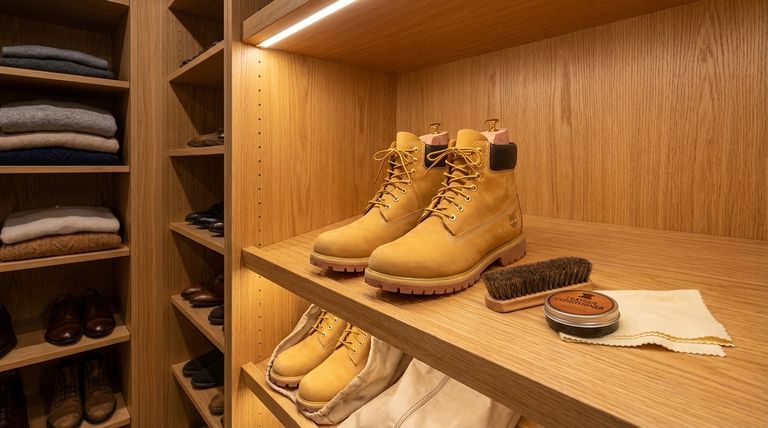
The Three Pillars of Proper Boot Storage
To truly protect your chukka boots, you must focus on three core principles: the environment they are in, their physical shape, and their condition before you store them. Neglecting any of these can lead to irreversible damage.
Pillar 1: Controlling the Environment
Leather is a natural material that reacts to its surroundings. The primary environmental threats are light, heat, and moisture.
Direct sunlight contains UV rays that act like a bleaching agent, causing the leather's color to fade and become uneven. Extreme heat, such as near a radiator or in a hot attic, will dry out the natural oils in the leather, leading to brittleness and cracking.
Conversely, trapped moisture is equally damaging. Storing boots in a damp basement or a sealed plastic container creates a breeding ground for mold and mildew, which can stain and degrade the leather. Always ensure good air circulation around your boots.
Pillar 2: Maintaining Structural Integrity
When not being worn, your boots are susceptible to gravity and pressure. Over time, the toe box can collapse and deep creases can set in, permanently altering their shape.
The best solution is to use cedar shoe trees. These are far superior to simple newspaper or plastic stuffers.
Cedar provides a firm, consistent shape that prevents creasing. Crucially, the unvarnished wood also absorbs residual moisture from your feet and helps neutralize odors, actively preserving the leather from the inside out.
Pillar 3: Pre-Storage Preparation
Never store dirty or damp boots, especially for long periods. Dirt and grime can become embedded in the leather, while moisture will accelerate deterioration.
Before storing your chukkas, clean them thoroughly with a horsehair brush to remove any surface dirt. If they are damp, allow them to air-dry naturally, away from direct heat sources.
For long-term storage (such as at the end of a season), it's also wise to apply a quality leather conditioner. This replenishes the oils in the hide, keeping it supple and preventing it from drying out while stored.
Common Pitfalls to Avoid
Understanding what not to do is just as important as knowing the correct steps. Many common storage methods can inadvertently ruin a good pair of boots.
The Problem with Plastic Bins
Sealing leather boots in a plastic bin is one of the most common mistakes. While it protects them from dust, it completely cuts off air circulation. Any residual moisture is trapped inside, creating a humid microclimate perfect for mold growth.
Newspaper vs. Cedar Shoe Trees
Stuffing boots with newspaper is a budget-friendly option that is better than nothing. However, it has downsides. The paper can compress over time, losing its effectiveness, and in rare cases, the ink can transfer to the boot's lining.
Shoe trees are an investment that pays for itself by dramatically extending the life and appearance of your footwear.
The Original Box Dilemma
Storing boots in their original cardboard box is acceptable for short periods, but ensure the box isn't in a damp area, as cardboard readily absorbs moisture from the air. For long-term storage, a breathable fabric shoe bag offers better protection from dust while still allowing air to circulate.
A Practical Storage Checklist
How you store your boots depends on whether it's for daily use or for the entire season.
- For daily or short-term storage: Insert cedar shoe trees as soon as you take the boots off and place them on an open shoe rack or shelf in your closet, away from direct sunlight.
- For long-term, seasonal storage: First clean and condition the boots, insert cedar shoe trees, place them in a breathable fabric bag, and store them in a climate-controlled closet.
Following these simple but critical steps will ensure your leather chukka boots remain in excellent condition and ready to wear for years to come.
Summary Table:
| Storage Factor | Do's | Don'ts |
|---|---|---|
| Environment | Store in a cool, dark, dry place with good air circulation. | Avoid direct sunlight, heat sources, and damp areas. |
| Shape Maintenance | Use cedar shoe trees to absorb moisture and prevent creasing. | Don't leave boots empty or stuff with newspaper long-term. |
| Pre-Storage Prep | Clean thoroughly and apply leather conditioner before storing. | Never store boots that are dirty or damp. |
Need to source high-quality leather chukka boots that are built to last? As a large-scale manufacturer, 3515 produces a comprehensive range of footwear for distributors, brand owners, and bulk clients. Our production capabilities ensure every pair is crafted for durability and easy maintenance. Contact our team today to discuss your wholesale or private label needs and protect your inventory investment with superior craftsmanship.
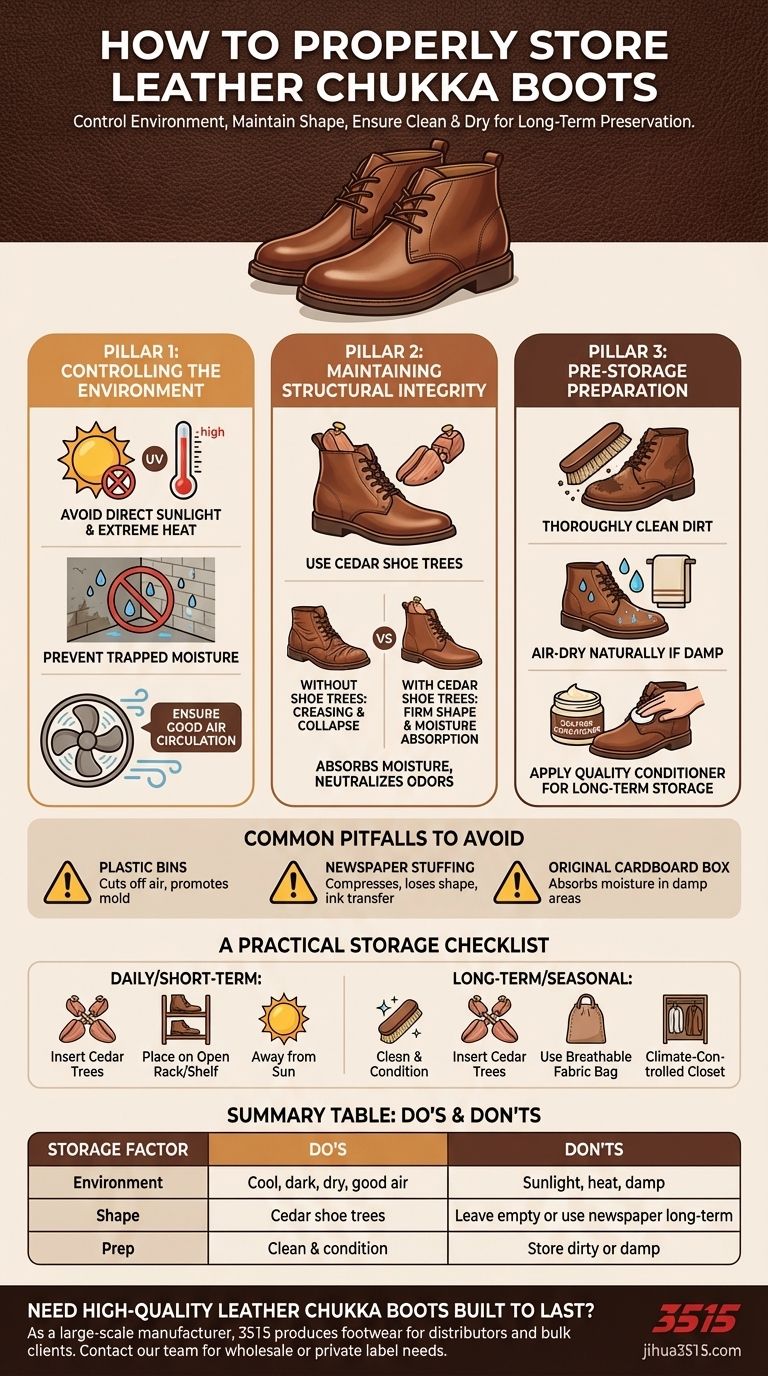
Visual Guide
Related Products
- Wholesale Classic Leather Lace-Up Ankle Boots for Brand Manufacturing
- Durable Leather Work Boots Wholesale Manufacturer & Custom Factory
- Durable Leather High-Ankle Tactical Boots for Wholesale & Custom Manufacturing
- Durable Leather Work Boots for Wholesale & Custom Manufacturing
- Wholesale Leather Work Boots with Customizable Wedge Sole for Brands
People Also Ask
- How are oils used to waterproof leather boots? A Guide to Deep Conditioning & Protection
- Why is regular maintenance necessary for the performance of leather boots? Boost Durability & Brand Reputation
- Why might it be beneficial to pre-heat the boots before applying wax? Achieve Deeper, Longer-Lasting Protection
- How can leather boots maintain their water resistance? A Guide to Lasting Protection
- What is the biggest enemy of leather boots? Protect Your Investment from Water Damage


















