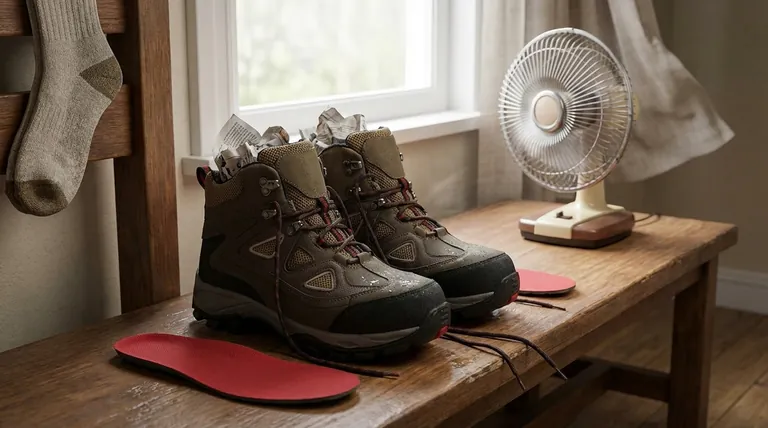
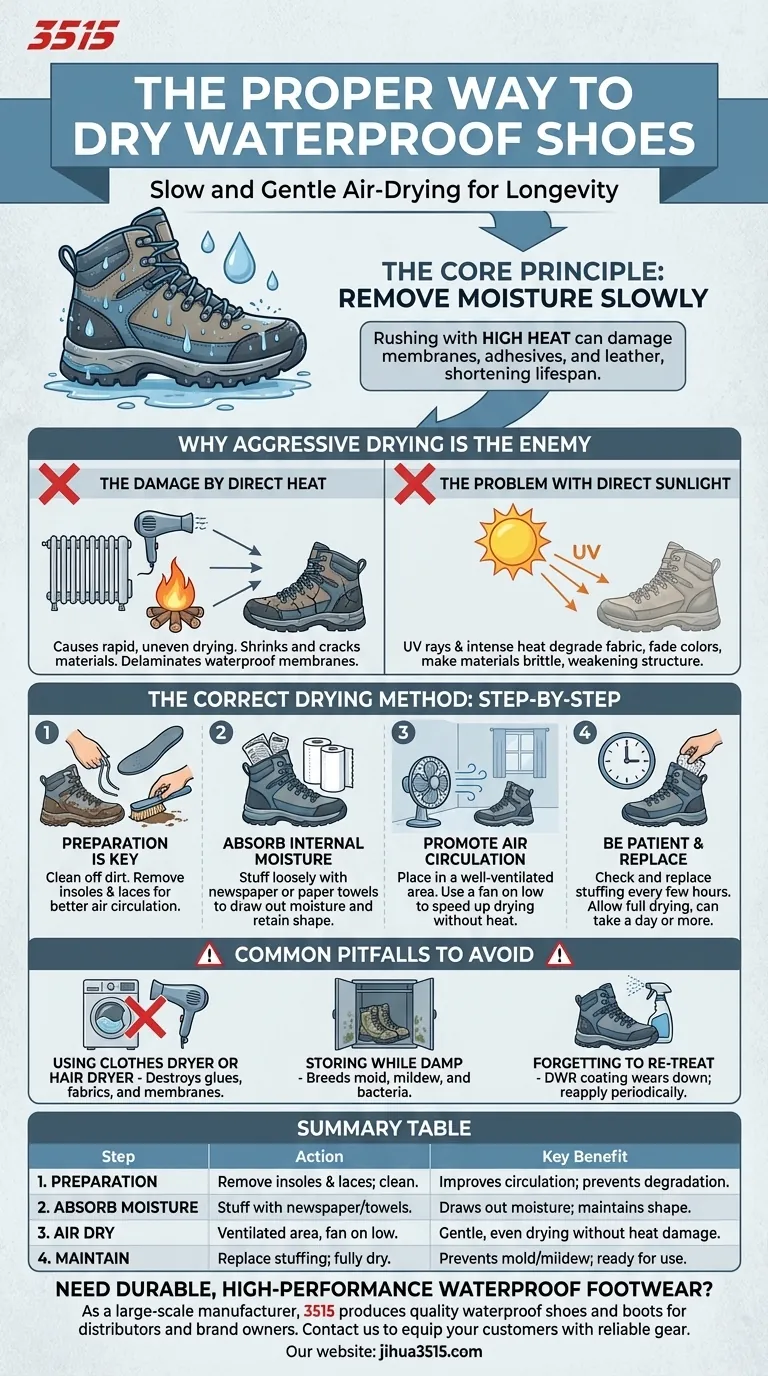
The proper way to dry waterproof shoes is by air-drying them slowly at room temperature in a well-ventilated area. Remove the insoles and laces, then stuff the shoes with newspaper or paper towels to absorb internal moisture and help them retain their shape. To accelerate the process, you can place them in front of a fan on a low setting, but you must avoid direct heat sources like hair dryers, radiators, or direct sunlight.
The core principle of drying waterproof footwear is to remove moisture slowly and gently. Rushing the process with high heat can irreversibly damage the waterproof membranes, adhesives, and materials like leather, ultimately shortening the lifespan of your shoes.
Why Aggressive Drying Is the Enemy
When your expensive waterproof boots or shoes are soaked, your first instinct might be to get them dry as fast as possible. This is a critical mistake. The specialized materials used in waterproof footwear are sensitive to high temperatures.
The Damage Done by Direct Heat
Applying direct heat from a radiator, campfire, or hair dryer causes rapid, uneven drying. This can shrink and crack materials like leather and synthetics.
More importantly, it can delaminate the layers of fabric and adhesives that bond the waterproof membrane (like GORE-TEX) to the shoe's outer shell, creating weak points and ruining its water-blocking capabilities.
The Problem with Direct Sunlight
Leaving your shoes to bake in the sun poses a similar threat. The ultraviolet (UV) rays and intense heat can degrade the shoe's fabric, fade its colors, and make materials brittle over time. This exposure weakens the shoe's overall structure and waterproofing.
The Correct Drying Method: Step-by-Step
This process prioritizes the health and longevity of your footwear. It might take longer, but it's the only way to ensure your gear remains effective.
1. Preparation is Key
Before you begin drying, you must clean the shoes. Caked-on mud and dirt can trap moisture and degrade the fabric. Brush off loose debris, then wipe them down with a damp cloth.
Next, remove the insoles and laces. This opens up the shoe's interior, dramatically improving air circulation and allowing all parts to dry thoroughly and evenly.
2. Absorb Internal Moisture
Stuff your shoes loosely with an absorbent material. Newspaper is a classic and effective choice because its porous paper and carbon-based ink are excellent at drawing out moisture.
Alternatively, you can use paper towels or even a small, dry microfiber cloth. This step is crucial for drying the inside of the shoe and helping it maintain its proper shape.
3. Promote Air Circulation
Place the prepared shoes in a dry, indoor location with good airflow. Avoid humid areas like basements or sealed closets.
To significantly speed up drying time without using heat, position a fan a few feet away from the shoes on a low setting. The constant, gentle movement of air is highly effective at wicking away moisture.
4. Be Patient and Replace Stuffing
Check the newspaper or paper towels every few hours. Once they feel damp, replace them with fresh, dry material.
Depending on how saturated they were, shoes can take anywhere from a few hours to a full day (or more) to dry completely. Do not wear them until they are fully dry to prevent discomfort and the growth of bacteria.
Common Pitfalls to Avoid
Understanding what not to do is just as important as knowing the correct method. These common mistakes can permanently damage your investment.
Pitfall 1: Using a Clothes Dryer or Hair Dryer
Never put waterproof footwear in a clothes dryer. The combination of intense heat and tumbling action is a guaranteed way to destroy the glues, fabrics, and waterproof membranes. A hair dryer concentrates heat in one spot, which is just as damaging.
Pitfall 2: Storing Them While Damp
Putting away even slightly damp shoes is a recipe for disaster. This creates a perfect breeding ground for mold, mildew, and odor-causing bacteria, which can be difficult or impossible to remove later.
Pitfall 3: Forgetting to Re-Treat
The cleaning and drying process can, over time, wear down the factory-applied Durable Water Repellent (DWR) coating on the outside of your shoes. When you notice water is no longer beading up and is instead soaking into the outer fabric, it's time to reapply a waterproofing treatment spray or wax.
Making the Right Choice for Your Gear
Your approach should always prioritize the long-term integrity of your shoes over the speed of drying.
- If your primary focus is speed: Use a fan on a low setting combined with frequently changed newspaper stuffing. This is the fastest safe method available.
- If your primary focus is shoe longevity: Follow the standard air-drying method meticulously, even if it takes a full day, and ensure they are 100% dry before storage.
Patience is the key to preserving the performance and extending the life of your waterproof footwear.
Summary Table:
| Step | Action | Key Benefit |
|---|---|---|
| 1. Preparation | Remove insoles & laces; clean off dirt. | Improves air circulation; prevents material degradation. |
| 2. Absorb Moisture | Stuff loosely with newspaper or paper towels. | Draws out internal moisture; helps maintain shoe shape. |
| 3. Air Dry | Place in a well-ventilated area; use a fan on low. | Ensures gentle, even drying without heat damage. |
| 4. Maintain | Replace stuffing every few hours until completely dry. | Prevents mold/mildew; guarantees shoes are ready for use. |
Need Durable, High-Performance Waterproof Footwear?
As a large-scale manufacturer, 3515 produces a comprehensive range of durable footwear for distributors, brand owners, and bulk clients. Our production capabilities encompass all types of waterproof shoes and boots, built with quality materials designed to last when cared for properly.
Let us help you equip your customers with reliable gear.
Contact our team today to discuss your footwear needs and explore our catalog.
Visual Guide
Related Products
- Wholesale Premium Waterproof Nubuck Safety Shoes Boots
- Heavy-Duty Waterproof Nubuck Safety Boots Safety Shoes for Bulk Supply
- Premium Wholesale Waterproof Safety Boots High Performance Protection for Industrial Markets
- Durable Waterproof Rain Boots | Custom Manufacturer for Wholesale & Brands
- Wholesale Waterproof Tactical Boots Custom Suede & High-Traction Soles
People Also Ask
- Why are waterproof safety boots recommended for certain work environments? Essential Protection for Wet & Hazardous Jobs
- What materials are commonly used in waterproof boots? The Complete Guide to Durable, Breathable Protection
- What are the drawbacks of waterproof boots? The Breathability vs. Protection Trade-Off
- What is the advantage of one-piece construction in waterproof boots? Unbeatable Seamless Protection
- What is the difference between waterproof, water-resistant, and water-repellent boots? Choose the Right Protection for Your Feet