
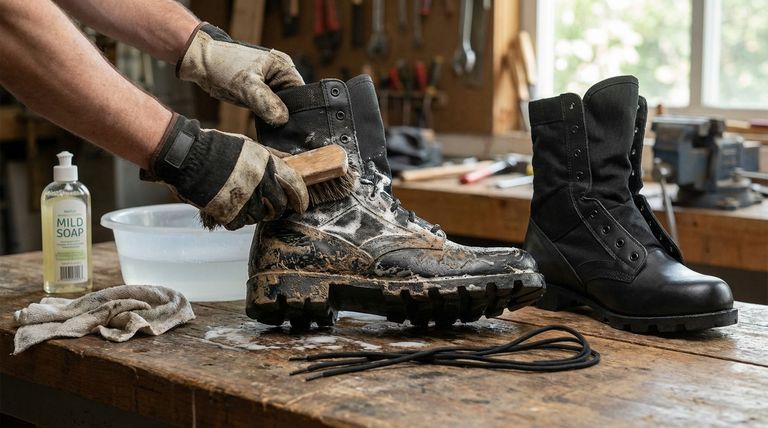
To clean synthetic military boots, the standard process involves removing loose debris, wiping them with a damp cloth and mild soap, rinsing with a clean cloth, and allowing them to air dry completely. This routine maintenance is essential for preserving the material's integrity and function.
The core principle of boot care is not about aesthetics, but about asset preservation. Regular cleaning removes abrasive grit and grime that physically wear down synthetic materials, ensuring your boots maintain their structural integrity and performance capabilities over time.
Why Regular Cleaning is Mission-Critical
Properly maintaining your gear is a fundamental discipline. For synthetic boots, cleaning is a critical task that directly impacts their longevity and reliability in the field.
Preventing Material Degradation
Dirt, sand, and grit act as abrasives. As you walk, these fine particles grind against the boot's fibers, slowly weakening seams and causing premature wear.
Maintaining Breathability
Synthetic boots are often designed to be breathable, allowing moisture from your feet to escape. A layer of caked-on mud or dirt clogs the material's pores, trapping sweat and leading to discomfort.
Preserving Water Resistance
Most synthetic boots have a factory-applied Durable Water Repellent (DWR) finish. Dirt and oils can break down this coating, compromising the boot's ability to shed water.
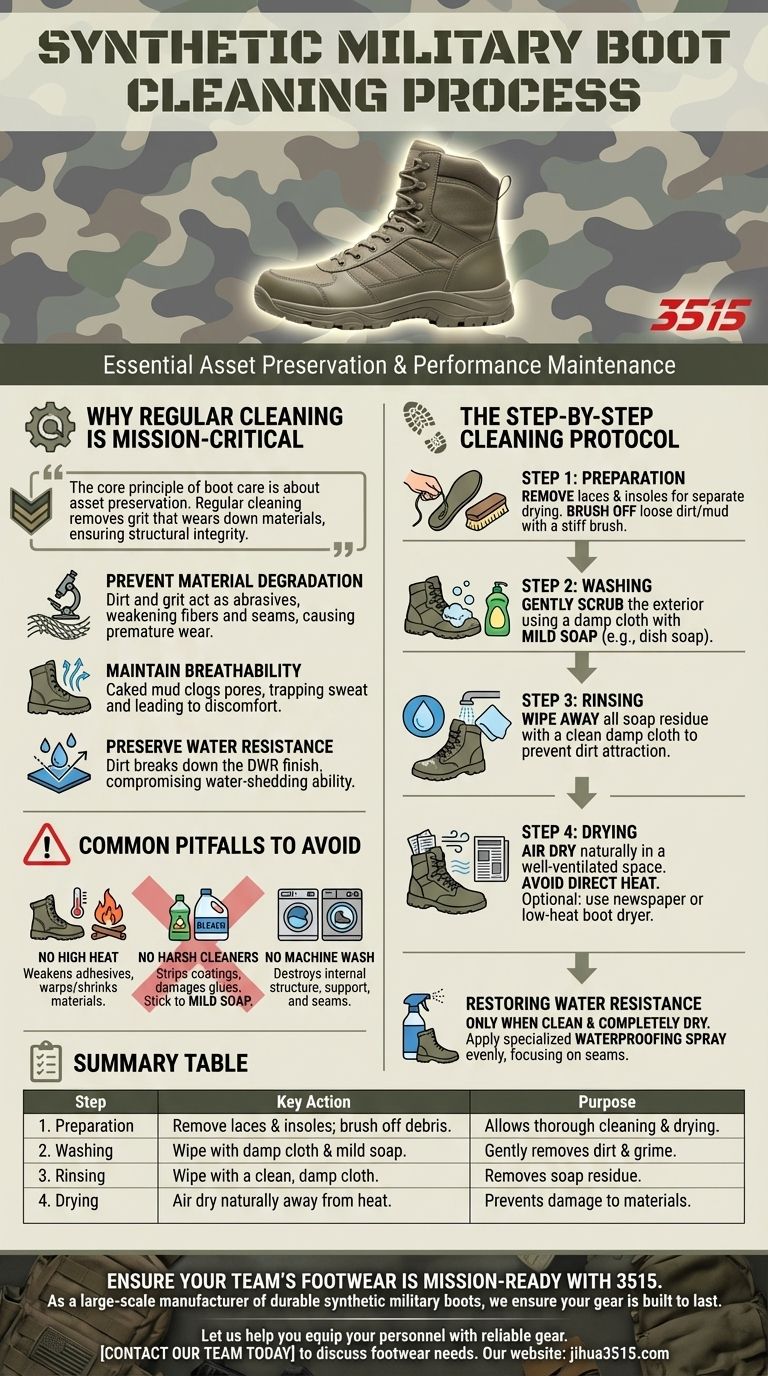
The Step-by-Step Cleaning Protocol
Follow this structured process for both routine and deep cleaning. The only difference is the level of detail and frequency.
Step 1: Preparation and Initial Cleaning
First, remove the laces and insoles. This allows you to clean the tongue and interior more effectively and lets the components dry separately.
Use a stiff brush to knock off all loose dirt and scrape away any caked-on mud from the exterior and the outsole lugs.
Step 2: Washing the Exterior
Use a damp cloth with a small amount of mild soap, such as dish soap, or a specialized footwear cleaner. Gently scrub the entire surface of the boot.
Step 3: Rinsing Thoroughly
Wipe away all soap residue with a separate, clean, damp cloth. Failing to remove all soap can leave a film that actually attracts more dirt.
Step 4: Proper Drying Technique
Allow the boots to air dry naturally in a well-ventilated space. You can stuff them with newspaper or use a boot dryer on a low or no-heat setting to speed up the process.
Common Pitfalls to Avoid
How you clean your boots is as important as whether you clean them. Incorrect methods can cause irreversible damage.
Avoid High Heat
Never dry your boots near a direct heat source like a campfire, radiator, or heater. Intense heat can weaken the adhesives used in boot construction and cause synthetic materials to warp or shrink.
Choose the Right Cleaner
Harsh detergents, solvents, or chemical cleaners can strip the protective coatings from the synthetic materials and damage the glues holding the boot together. Always stick to mild soap.
Do Not Machine Wash
Never put your boots in a washing machine or dryer. The aggressive tumbling action can destroy the boot's internal structure, support, and seams.
Restoring Water Resistance
After several cleanings or heavy use, you may need to refresh the boot's ability to repel water.
When to Re-apply
Perform this step only after the boots have been thoroughly cleaned and are completely dry. Applying a waterproofing product to dirty or damp boots will be ineffective.
The Correct Application
Use a waterproofing spray specifically designed for synthetic footwear. Apply it evenly according to the manufacturer's instructions, paying close attention to the seams.
Making the Right Choice for Your Goal
Your cleaning frequency should match your operational tempo and environment.
- If your primary focus is routine maintenance after light use: A quick wipe-down with a damp cloth to remove surface dust and dirt is sufficient.
- If your primary focus is recovery after heavy field use: Commit to the full deep-cleaning protocol to remove embedded grit and preserve the boot's materials.
- If your primary focus is long-term storage: Always perform a full cleaning and ensure boots are bone-dry before storing to prevent mold and material decay.
Consistent care ensures your equipment remains a reliable asset, ready for whatever mission comes next.
Summary Table:
| Step | Key Action | Purpose |
|---|---|---|
| 1. Preparation | Remove laces & insoles; brush off debris. | Allows for thorough cleaning and drying. |
| 2. Washing | Wipe with a damp cloth and mild soap. | Gently removes dirt and grime. |
| 3. Rinsing | Wipe with a clean, damp cloth. | Removes soap residue to prevent dirt attraction. |
| 4. Drying | Air dry naturally away from heat. | Prevents damage to materials and adhesives. |
Ensure your team's footwear is mission-ready with 3515.
As a large-scale manufacturer, 3515 produces a comprehensive range of durable synthetic military boots for distributors, brand owners, and bulk clients. Our expertise in materials and construction ensures your footwear is built to last, but proper care is key to maximizing its lifespan.
Let us help you equip your personnel with reliable gear. Contact our team today to discuss your footwear needs and sourcing options.
Visual Guide
Related Products
- High-Traction Suede Tactical Boots Wholesale & Custom Manufacturing
- Wholesale Waterproof Tactical Boots Custom Suede & High-Traction Soles
- Durable Mid-Cut Tactical Boots for Wholesale & Private Label
- Durable Military Combat Boots with Water Drainage for Wholesale & OEM
- Durable High-Ankle Tactical Boots for Wholesale & Custom Manufacturing
People Also Ask
- Why is sequential analysis utilized to evaluate tactical boots? Master Dynamic Boot Development and Ergonomic Performance
- How does the material of tactical boots affect their performance? Choose the Right Material for Your Mission
- How do tactical boots differ from regular boots? Performance, Durability & Design Explained
- How do military uniforms and tactical boots impact the prediction of thermal risk? Essential Safety Insights
- What are the benefits of integrating FES and sEMG into tactical boots? Safety, Reliability & Field-Ready Performance



















