
At their core, combat boots are a specialized tool. Their primary purpose is to provide soldiers with maximum protection, durability, and stability in the most demanding and unpredictable environments. They are engineered to safeguard the feet and ankles from injury while ensuring reliable traction, allowing a soldier to remain mobile and effective.
While often adopted for style or work, the design of a combat boot is not arbitrary. Every feature—from its high-cut ankle to its aggressive sole—is a deliberate engineering decision focused on a single mission: maximizing a soldier's operational effectiveness and survivability by protecting their most critical asset, their feet.
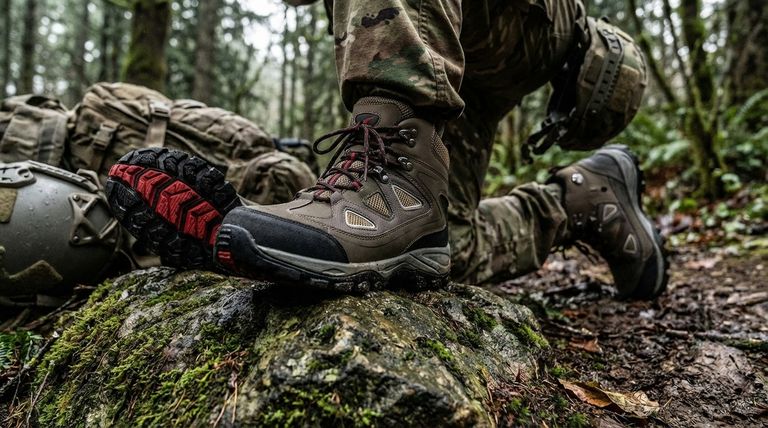
The Engineering Philosophy: Protection Above All Else
A combat boot is designed around the non-negotiable need to keep a soldier moving safely. This principle dictates every aspect of its construction, prioritizing function over all other considerations.
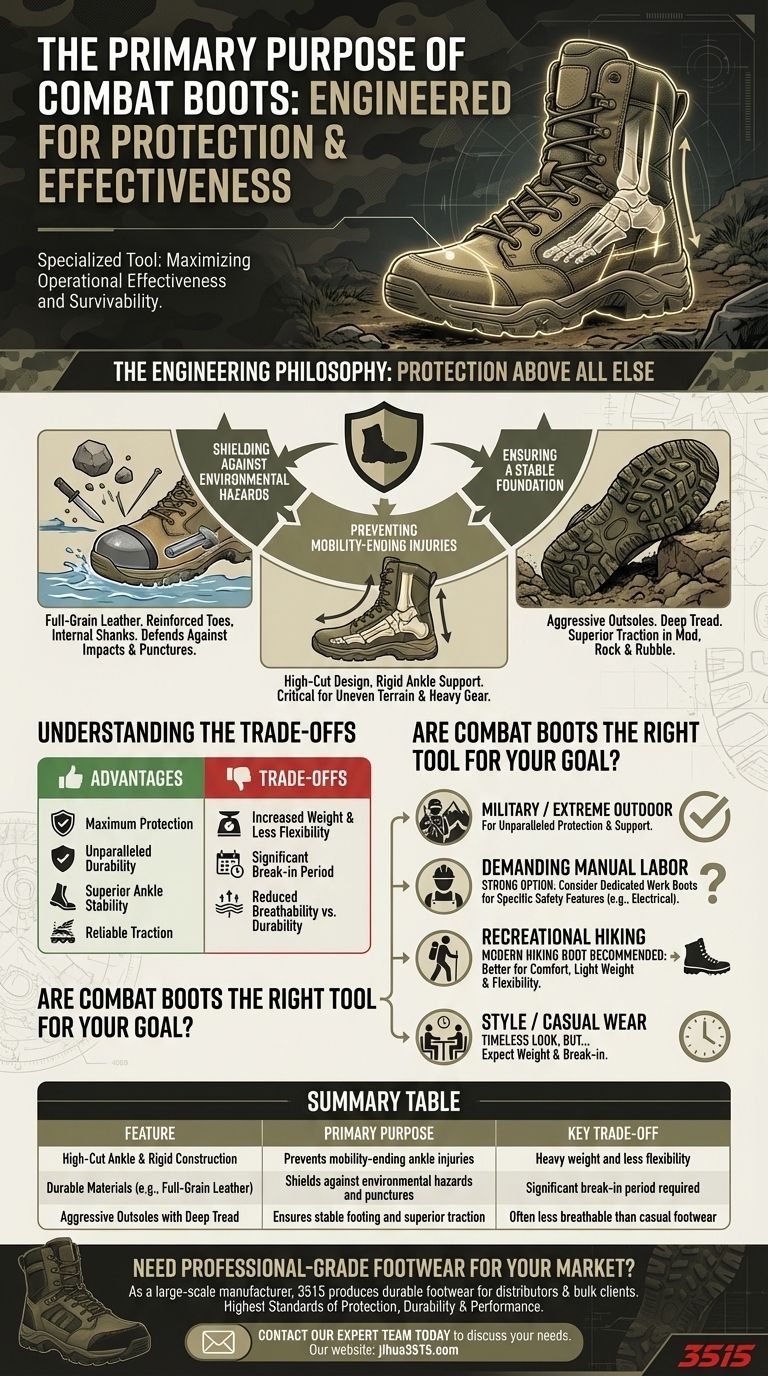
Shielding Against Environmental Hazards
The battlefield is filled with unpredictable dangers. Combat boots serve as the first line of defense against them.
They are built with highly durable materials, typically full-grain leather and rugged synthetic blends, to withstand heavy usage. Features like reinforced or steel-tipped toes and internal shanks protect the foot from impacts and punctures from sharp objects on the ground.
Preventing Mobility-Ending Injuries
An ankle sprain or twist can render a soldier combat-ineffective. The signature high-cut design of a combat boot is its most critical feature for stability.
This design, combined with less flexible materials than typical footwear, provides rigid ankle support. This structure is essential for preventing common injuries when navigating uneven terrain under the weight of heavy gear.
Ensuring a Stable Foundation
A soldier's footing must be secure whether on mud, rock, or rubble. Combat boots are equipped with aggressive outsoles and deep tread patterns.
This design provides superior traction, maximizing the grip on a wide variety of surfaces and reducing the risk of slips and falls in high-stress situations.
Understanding the Trade-offs
The specialized design of combat boots creates clear advantages in harsh conditions, but it also involves significant trade-offs that are important to understand.
Weight and Flexibility
The robust materials and reinforcements that provide protection also add considerable weight. Compared to hiking or athletic shoes, combat boots are heavier and far less flexible.
This can lead to increased fatigue during long periods of movement and a less natural stride.
Break-in Period
The stiff leather and rigid construction required for maximum support mean that most combat boots have a significant break-in period. They often feel uncomfortable out of the box and require extended wear to conform to the user's foot.
Breathability vs. Durability
A boot designed to keep water and debris out can also trap heat and sweat inside. While modern designs incorporate breathable materials, the core focus on durability and protection often comes at the expense of ventilation, which can be a factor in certain climates.
Are Combat Boots the Right Tool for Your Goal?
To make the right choice, align the boot's core purpose with your specific needs.
- If your primary focus is military use or extreme outdoor survival: The unparalleled protection, durability, and ankle support are precisely what they were designed for and remain the best choice.
- If your primary focus is demanding manual labor: They are a strong option for protection, but consider if a dedicated work boot offers more specific safety features, such as electrical hazard ratings.
- If your primary focus is recreational hiking: A modern hiking boot will likely serve you better, offering superior comfort, lighter weight, and more flexibility for covering long distances.
- If your primary focus is style or casual wear: They offer a timeless look and exceptional durability, but be prepared for the weight and necessary break-in period.
Understanding that a combat boot is engineered for protection first and foremost allows you to choose the right tool for your mission, whatever it may be.
Summary Table:
| Feature | Primary Purpose | Key Trade-off |
|---|---|---|
| High-Cut Ankle & Rigid Construction | Prevents mobility-ending ankle injuries | Heavy weight and less flexibility |
| Durable Materials (e.g., Full-Grain Leather) | Shields against environmental hazards and punctures | Significant break-in period required |
| Aggressive Outsoles with Deep Tread | Ensures stable footing and superior traction | Often less breathable than casual footwear |
Need Professional-Grade Footwear for Your Market?
As a large-scale manufacturer, 3515 produces a comprehensive range of durable footwear, including combat and tactical boots, for distributors, brand owners, and bulk clients. Our production capabilities ensure the highest standards of protection, durability, and performance you require.
Contact our expert team today to discuss your specific needs and discover how we can be your reliable manufacturing partner.
Visual Guide
Related Products
- Durable Military Combat Boots with Water Drainage for Wholesale & OEM
- Durable Leather Tactical Boots Wholesale & Custom Manufacturing for Brands
- High-Traction Suede Tactical Boots Wholesale & Custom Manufacturing
- Wholesale Lightweight Tactical Boots Custom Manufacturer for Desert & Combat Use
- Durable Mid-Cut Tactical Boots for Wholesale & Private Label
People Also Ask
- Why must gait validation for military applications be conducted in combat boots? Ensure Data Accuracy for Soldiers
- What are the common types of combat boots? Find the Right Boot for Your Mission
- What factors should be considered when choosing military boots for hiking? Durability vs. Weight for Your Terrain
- What are the key considerations when choosing military boots? Prioritize Compliance, Environment & Fit
- How should the midfoot and heel fit in military boots? Achieve a Snug, Secure Fit for Blister Prevention

















