The long-standing RICE protocol for ankle sprains is now outdated. The new gold standard is the POLICE principle, which stands for Protection, Optimal Loading, Ice, Compression, and Elevation. This modern framework replaces the concept of complete "Rest" with a more active recovery strategy designed to accelerate healing and improve long-term outcomes.
The critical evolution from RICE to POLICE is the shift away from prolonged rest. The new standard emphasizes protecting the injured joint while introducing controlled, early movement (Optimal Loading) to promote faster, more effective healing.
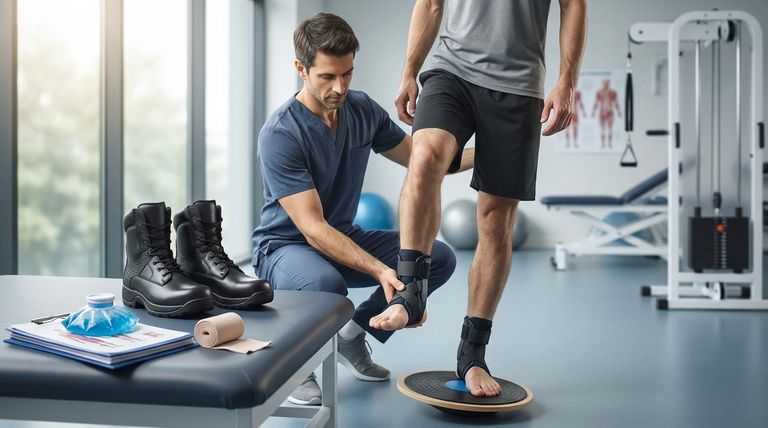
From Passive Rest to Active Recovery: Deconstructing POLICE
The shift to the POLICE principle is based on our evolving understanding of tissue healing. While rest is important in the initial hours after an injury, prolonged immobilization can lead to muscle atrophy, joint stiffness, and a slower overall recovery.
Protection (The "P")
The first step is to protect the injured ankle from further damage. This doesn't mean complete immobilization.
Protection involves safeguarding the joint using tools like crutches, tape, or a functional brace. The goal is to prevent harmful movements while still allowing for safe, controlled motion.
Optimal Loading (The "OL")
This is the most significant change from the RICE protocol and the cornerstone of modern recovery.
Optimal Loading means gradually reintroducing controlled stress and movement to the injured tissues. This mechanical stimulation is essential for signaling the body to heal, remodel, and strengthen the ligaments.
This process should be progressive, starting with gentle range-of-motion exercises and advancing as pain allows. It actively combats stiffness and muscle weakness.
Ice, Compression, and Elevation (The "ICE")
These familiar components remain valuable for managing the acute symptoms of an injury.
Ice helps manage pain, while compression and elevation are effective tools for controlling swelling. They are best utilized in the first 24-72 hours post-injury to manage the initial inflammatory response.
Where Bracing Fits into Modern Recovery
Functional bracing is a key enabler of the POLICE principle, directly facilitating the two most critical components: Protection and Optimal Loading. It acts as a bridge between the acute injury phase and a full return to activity.
The Role of External Support
A modern ankle brace, such as the TayCo Brace, provides the necessary Protection by restricting the specific, unstable movements that caused the sprain in the first place.
Unlike a plaster cast, it is not designed for complete immobilization. It is built to allow for safe, natural motion (like walking) while preventing re-injury.
Enabling Optimal Loading
By providing this structural support, a functional brace gives you the stability and confidence to begin Optimal Loading much sooner.
You can start bearing weight and engaging in rehabilitation exercises with a significantly lower risk of setbacks. This is crucial for stimulating tissue repair and maintaining surrounding muscle strength.
A Bridge to Full Function
Think of a brace not as a permanent crutch, but as a transitional tool. It allows the body to heal in a controlled environment, facilitating a more structured and often faster return to daily life and sport.
Understanding the Trade-offs
While the POLICE principle and functional bracing represent a significant advancement, it's critical to approach recovery with a clear understanding of the potential pitfalls.
Over-Protection and Dependence
Relying on a brace for too long without an accompanying rehabilitation program can be counterproductive. The ultimate goal is to restore the ankle's own natural strength and stability.
A brace is one part of a comprehensive plan that must include targeted strengthening and balance (proprioception) exercises.
The Importance of Professional Guidance
"Optimal Loading" is a medical concept, not a guess. Applying too much load too soon can delay healing or worsen the injury.
It is essential to work with a physician or physical therapist to determine the appropriate type, intensity, and progression of loading for your specific injury.
Bracing is Not a Cure-All
A brace provides mechanical support to damaged ligaments, but it does not heal them on its own. It is an assistive tool that enables the true work of recovery: a well-designed rehabilitation program.
Making the Right Choice for Your Recovery
Applying these principles effectively depends on your specific situation and goals.
- If you have just sustained an acute ankle sprain: Your immediate priority is to apply the POLICE principle—protect the ankle, manage swelling with ICE, and consult a professional about starting optimal loading.
- If you are an athlete focused on a quick return to sport: A functional brace can be a critical tool to begin controlled, sport-specific movements earlier and more safely under medical guidance.
- If you are concerned about chronic ankle instability: The focus should be on a comprehensive rehabilitation program that includes strengthening and balance exercises, where a brace is used for high-risk activities but not as a permanent solution.
Embracing this active approach empowers you to be a participant in your own healing, leading to a stronger, more resilient outcome.
Summary Table:
| Principle | Role in Recovery | Key Takeaway |
|---|---|---|
| Protection (P) | Safeguards the joint from further damage. | Use a brace or crutches to prevent harmful movements. |
| Optimal Loading (OL) | Reintroduces controlled stress to heal tissues. | The most critical shift from RICE; promotes active recovery. |
| Ice, Compression, Elevation (ICE) | Manages pain and controls initial swelling. | Most effective in the first 24-72 hours post-injury. |
Ready to take an active role in your recovery?
As a leading manufacturer of supportive footwear and bracing solutions, 3515 understands the importance of proper protection and optimal loading for effective healing. Our production capabilities encompass a comprehensive range of footwear and bracing products designed for durability, support, and comfort.
Whether you are a distributor, brand owner, or bulk client looking for reliable products that align with modern recovery standards, we can provide the manufacturing expertise and quality you need.
Contact our team today to discuss how we can support your product goals and help your customers achieve better recovery outcomes.
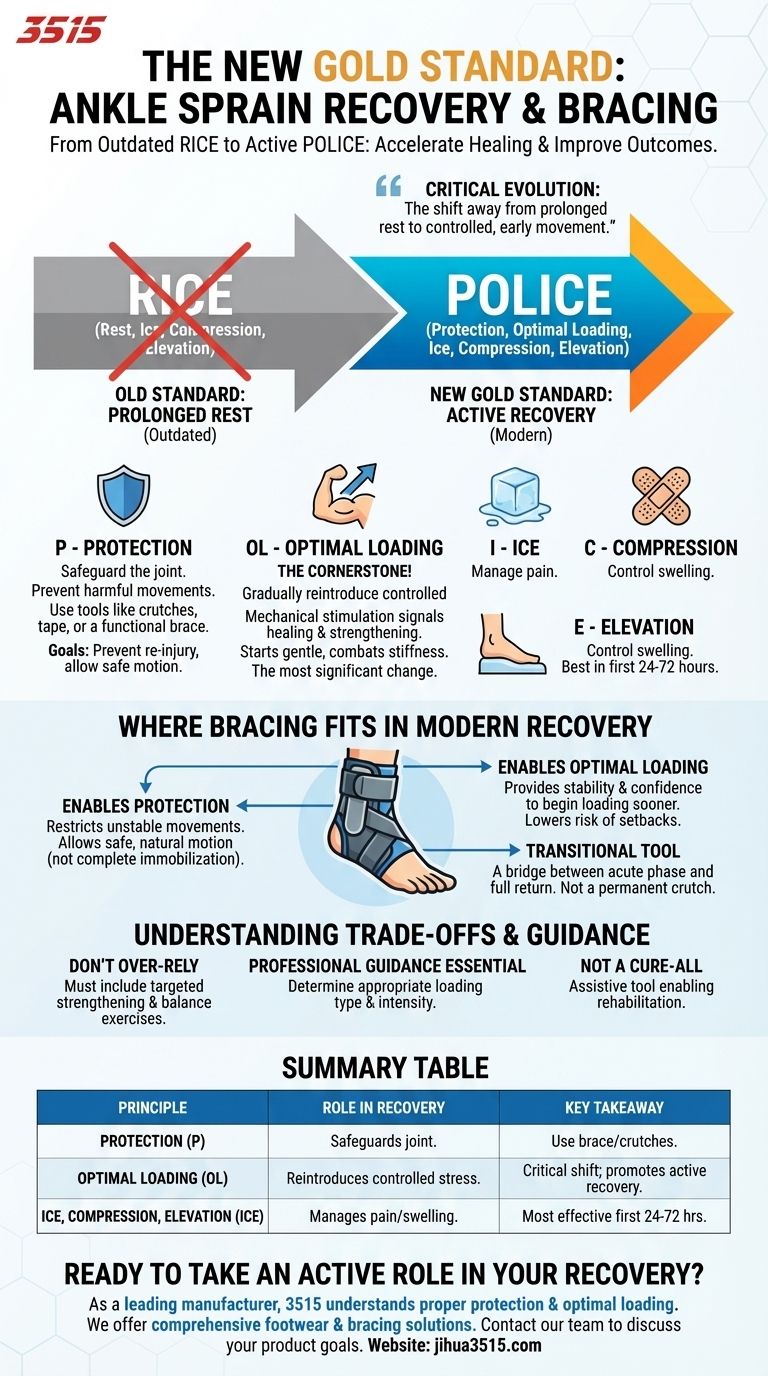
Visual Guide
Related Products
- Durable High-Ankle Tactical Boots for Wholesale & Custom Manufacturing
- Durable Leather High-Ankle Tactical Boots for Wholesale & Custom Manufacturing
- Wholesale Classic Leather Lace-Up Ankle Boots for Brand Manufacturing
- Durable High-Ankle Tactical Boots Wholesale Manufacturer for Custom & Bulk Orders
- Wholesale Leather Ankle Boots with Lug Soles for Custom Brand Manufacturing
People Also Ask
- How do tactical boots protect against injuries? Discover the Integrated Safety System
- What are the different types of tactical boots available? Find the Right Boot for Your Mission
- What are the main construction similarities between tactical boots and tactical sneakers? Built for Performance & Durability
- How is the compatibility of polymer materials demonstrated in smart footwear? Enhancing Tactical & Training Performance
- What is the role of high-frequency acquisition hardware in technical skill analysis for outdoor and tactical boots?