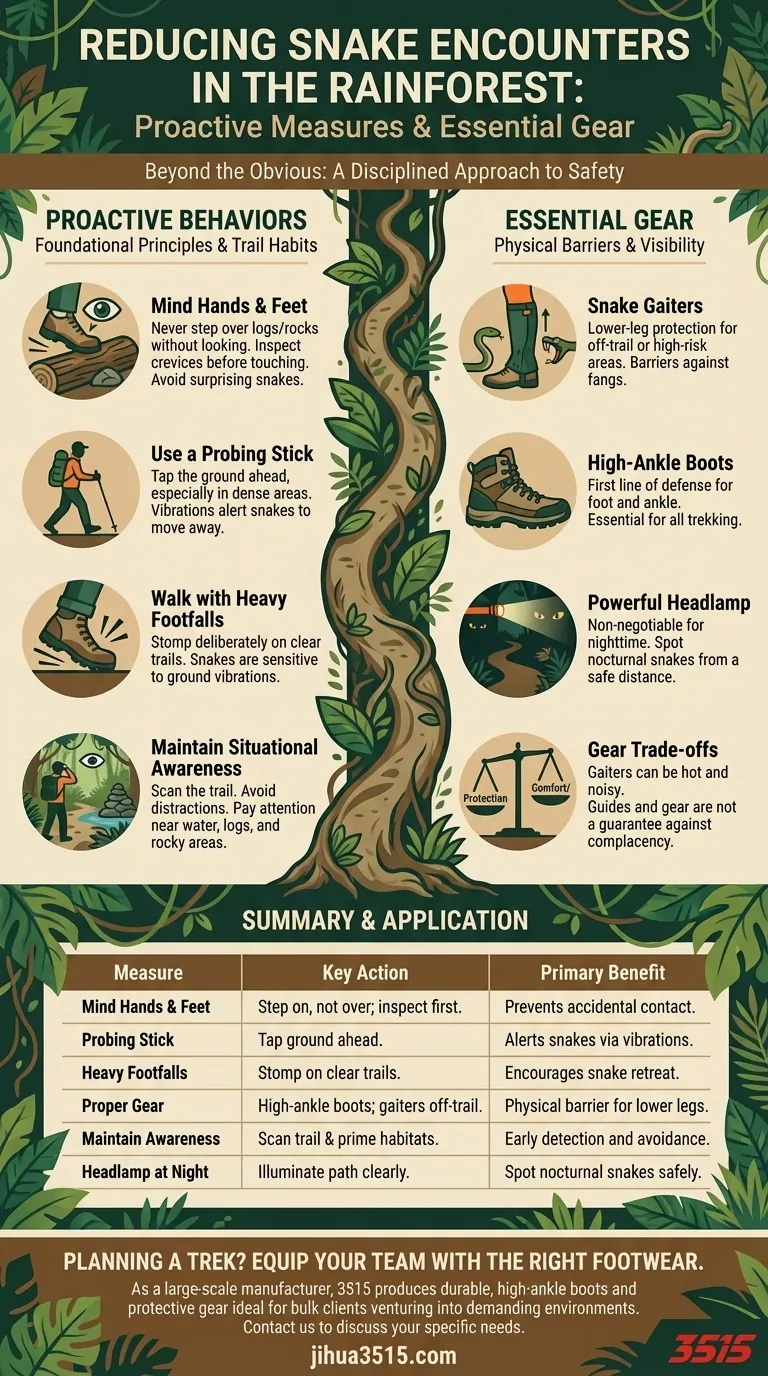
Beyond the obvious, reducing snake encounters in the rainforest hinges on proactive behavior and environmental awareness. This involves carefully managing where you place your hands and feet, using tools like a trekking pole to probe ahead, and selecting appropriate gear like high-ankle boots and, when necessary, snake gaiters.
Your greatest tool for snake avoidance is not any single piece of gear, but a disciplined awareness of your immediate surroundings. The goal is to avoid surprising a snake, as the vast majority of bites are defensive reactions.
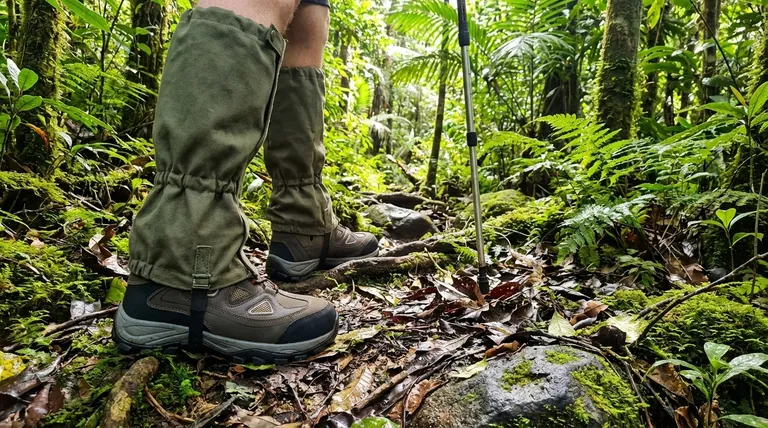
Foundational Principles of Snake Avoidance
Understanding Snake Behavior
Snakes are not malicious predators actively hunting humans. They primarily seek cover, warmth, and food sources like small rodents.
Most rainforest snakes are shy and will avoid confrontation if given the opportunity. They rely on camouflage for protection and prefer to remain hidden.
The Nature of an Encounter
A "snake encounter" that leads to a bite is almost always the result of a snake feeling cornered or threatened. This typically happens when a person accidentally steps on or near the snake, or places a hand on it while climbing.
Proactive Measures on the Trail
Mind Your Hands and Feet
This is the single most important rule. Never step over a log or rock when you cannot see the other side. Always step on it first, look down, and then step off.
Similarly, never put your hands into crevices, hollow logs, or thick vegetation without first visually inspecting the area.
Use a "Probing" Stick
Carrying a trekking pole or a sturdy stick is highly effective. Use it to tap the ground ahead of you, especially in areas with dense leaf litter or low visibility.
The vibrations from the tapping will alert most snakes to your presence, giving them ample time to move away long before you get close.
Walk with Heavy Footfalls
When walking on a clear trail, deliberately stomp your feet. Snakes are highly sensitive to ground vibrations and will often retreat from the sound of your approach.
Maintain Situational Awareness
Avoid distractions like headphones. Constantly scan the trail ahead and to your sides. Pay close attention near water sources, log piles, and rocky outcrops, as these are prime locations for snakes.
Selecting the Right Gear
The Role of Snake Gaiters
Snake gaiters are protective coverings that extend from the ankle to the knee. They provide a physical barrier against fangs.
They are particularly useful if you are trekking off-trail, through dense undergrowth, or in an area known for a high population of venomous snakes.
High-Ankle Boots as a Baseline
Sturdy, leather or synthetic high-ankle hiking boots are your first line of defense. They provide significant protection for the foot and ankle, which are the most common bite locations.
The Importance of a Good Headlamp
Many snake species are nocturnal. If you must be out after dark, a powerful headlamp is non-negotiable. It allows you to see the path clearly and spot potential threats from a safe distance.
Understanding the Trade-offs
The Limits of Protective Gear
Snake gaiters can be hot, cumbersome, and noisy. They are not a license to be careless and offer no protection if you place your hand on a snake.
Boots and gaiters provide protection for the lower legs, but bites can and do occur higher on the body, though this is much less common.
Guides Are Not a Guarantee
An experienced local guide is an invaluable asset for spotting snakes you would otherwise miss. However, they cannot see everything.
Your personal vigilance remains your most critical safety measure. You are ultimately responsible for where you step and what you touch.
Complacency is the Real Danger
The most significant risk is becoming complacent after hours of hiking without seeing any wildlife. You must maintain your discipline and awareness for the entire duration of your time in the forest.
How to Apply This to Your Trip
- If your primary focus is well-maintained trails: Sturdy high-ankle boots and using a walking stick for probing are your most effective measures.
- If your primary focus is off-trail exploration or field research: Combining high-ankle boots with snake gaiters provides the highest level of lower-leg protection.
- If your primary focus is night photography or observation: A powerful headlamp and moving slowly with a local guide is the only safe approach.
By understanding snake behavior and adopting these defensive habits, you can explore the rainforest with confidence and dramatically reduce your risk.
Summary Table:
| Measure | Key Action | Primary Benefit |
|---|---|---|
| Mind Hands & Feet | Step on logs/rocks, don't over; inspect before touching. | Prevents accidental contact with hidden snakes. |
| Use a Probing Stick | Tap the ground ahead in dense areas. | Alerts snakes to your presence via vibrations. |
| Walk with Heavy Footfalls | Stomp deliberately on clear trails. | Creates vibrations that encourage snakes to retreat. |
| Select Proper Gear | Wear high-ankle boots; use gaiters for off-trail. | Provides a physical barrier against bites to lower legs. |
| Maintain Awareness | Avoid distractions; scan trail and prime habitats. | Allows for early detection and avoidance. |
| Use a Headlamp at Night | Illuminate your path clearly after dark. | Critical for spotting nocturnal snakes from a safe distance. |
Planning a trek into challenging terrain? Ensure your entire team is equipped with the right protective footwear. As a large-scale manufacturer, 3515 produces a comprehensive range of durable, high-ankle boots and protective gear ideal for distributors, brand owners, and bulk clients venturing into rainforests or other demanding environments. Our production capabilities encompass all types of safety and outdoor footwear designed for maximum protection and comfort.
Let us help you gear up safely. Contact our team today to discuss your specific needs and explore our product lines.
Visual Guide