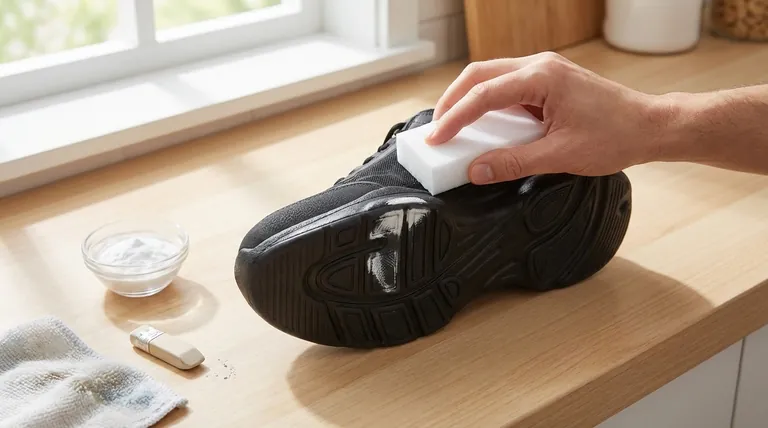
To remove scuff marks from rubber shoes, you can create a simple cleaning paste using baking soda and warm water. Apply the paste to the mark with a soft cloth or brush, scrubbing gently in a circular motion until the scuff lifts. For more stubborn marks, carefully use a standard pencil eraser or a magic eraser for more targeted abrasive power.
The key to removing scuffs from rubber is progressive abrasion. You should always begin with the gentlest method possible, like a paste, and only escalate to more abrasive tools for marks that resist the initial cleaning.
The Principle: Why These Methods Work
Understanding a Scuff Mark
A scuff mark isn't a typical stain that soaks into a material. It's a surface-level issue caused by material transfer (like a black rubber mark on a white sole) or a slight abrasion of the shoe's own rubber.
The goal is to use a mild abrasive to gently lift and scrub away this transferred material without scratching or dulling the underlying surface of your shoe.
Step-by-Step Removal Techniques
Method 1: The Baking Soda Paste (Gentle Approach)
This should always be your first step. Baking soda is a fine, gentle abrasive that is highly effective for most common scuffs.
Create a paste by mixing about one tablespoon of baking soda with a teaspoon of warm water until it reaches a toothpaste-like consistency.
Apply the paste directly to the scuff mark using a soft cloth, an old toothbrush, or your finger.
Scrub the area with gentle pressure in a circular motion. You should see the mark begin to fade and lift. Wipe the area clean with a damp cloth to remove any residue.
Method 2: The Eraser Technique (Targeted Approach)
If the paste method doesn't fully remove the mark, you can escalate to a tool with slightly more friction.
Start with a clean, standard pencil eraser. Rub it directly on the scuff mark as if you were erasing a pencil line from paper. This works surprisingly well for dark-colored scuffs.
For the most persistent marks, a magic eraser (melamine foam) can be used. Dampen a small corner of the eraser and rub it very gently on the scuff.
Understanding the Trade-offs and Risks
The Danger of Over-Scrubbing
The most common mistake is applying too much pressure. Aggressive scrubbing, even with a soft cloth, can dull the finish of the rubber or even wear away the texture. Always start gently.
Why Magic Erasers Require Caution
A magic eraser is a micro-abrasive, functioning like extremely fine-grit sandpaper. While effective, it can permanently alter the sheen and texture of the rubber if used too forcefully. Use it as a last resort and with light pressure.
Test on an Inconspicuous Area
Before applying any method to a prominent scuff, it's wise to test it on a hidden area of the shoe, such as the inner arch of the sole. This ensures your chosen method won't cause discoloration or damage.
Making the Right Choice for Your Goal
- If your primary focus is preserving the shoe's original finish: Always start with the baking soda paste and use minimal pressure.
- If your primary focus is removing a stubborn, dark scuff: Attempt the paste first, then a pencil eraser, and only then proceed cautiously with a magic eraser on the specific mark.
- If you are working on colored rubber: Testing on a hidden spot is non-negotiable, as some abrasives can cause slight color fading on certain materials.
A methodical and gentle approach is the most effective strategy for restoring your rubber footwear without causing unintended damage.
Summary Table:
| Method | Best For | Key Consideration |
|---|---|---|
| Baking Soda Paste | Most common scuffs; preserving finish | Gentle, safe first step |
| Pencil Eraser | Stubborn, dark marks | Targeted friction, low risk |
| Magic Eraser | Persistent marks only | Use with caution; can alter sheen |
Keep your footwear looking its best with professional-grade care.
As a large-scale manufacturer, 3515 produces a comprehensive range of durable rubber footwear for distributors, brand owners, and bulk clients. Our expertise ensures your products are built to last, but proper maintenance is key to longevity.
Contact our team today to discuss your footwear needs and discover how our production capabilities can deliver quality and value for your business.
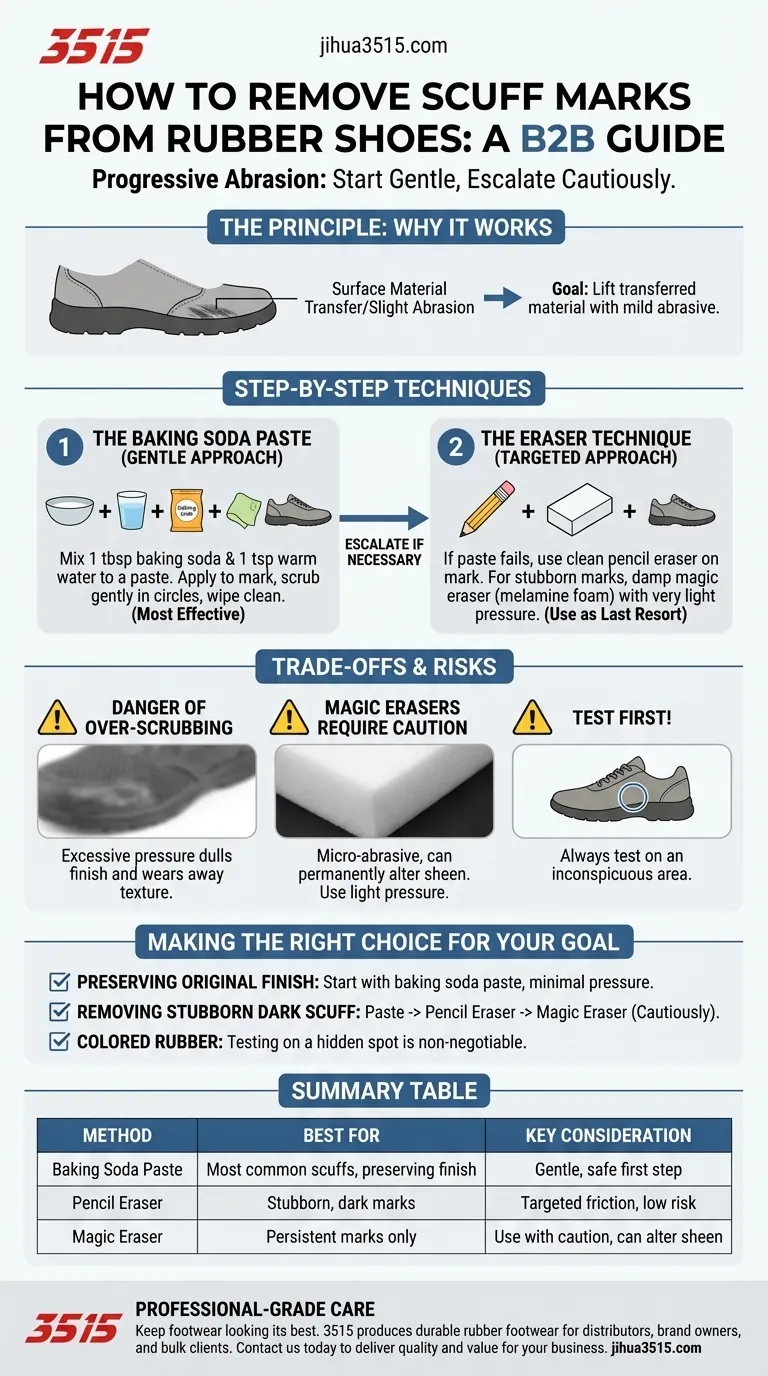
Visual Guide
Related Products
- Durable Rubber-Soled Utility Shoes for Wholesale & Custom Brand Manufacturing
- Durable Rubber Sole Outdoor Shoes Wholesale & Custom Manufacturing
- Durable Canvas Work Shoes with Rubber Lug Sole | Wholesale Manufacturer
- Wholesale Durable Camouflage Canvas Shoes with High-Traction Cleated Rubber Sole
- Wholesale Durable Camo Canvas Shoes with High-Traction Rubber Soles
People Also Ask
- Why are rubber-soled shoes considered multi-weather footwear? Unlock All-Season Traction & Protection
- Why should we wear rubber soled shoes? Unlock Superior Safety and Durability
- How do rubber soles affect a shoe's appearance? Defining Your Shoe's Style and Formality
- What are the types of rubber sole shoes available? Choose the Right Sole for Durability & Comfort
- When were rubber sole shoes invented? From 1800s Concept to Modern Mainstay