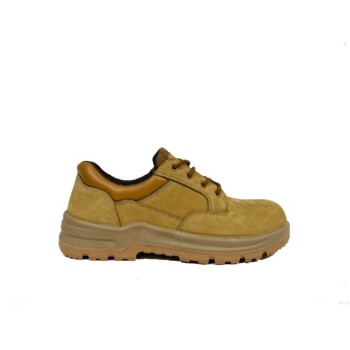
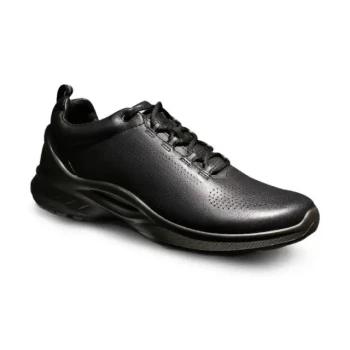
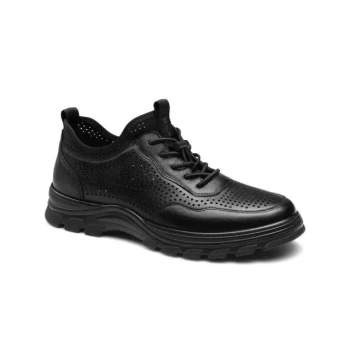
Negative Heel Shoes (NHS) operate on the mechanical principle of reversed elevation, where the forefoot is constructed to be positioned higher than the heel. This specific Heel-Toe Drop (HTD) gradient physically compels the body's center of gravity to shift backward, effectively counteracting the instability associated with a forward-leaning posture and anchoring the wearer against anterior imbalance.
By reversing the standard sole gradient, Negative Heel Shoes induce a conservative walking strategy characterized by reduced speed and shorter strides, ultimately minimizing Center of Pressure displacement to maximize stability in the anteroposterior direction.
The Biomechanics of the Backward Shift
Counteracting Forward Lean
The core mechanism of NHS is the manipulation of the Heel-Toe Drop (HTD). In standard footwear, the heel is often elevated; in NHS, the gradient is inverted.
This structural design forces a mechanical realignment of the body. By lifting the forefoot, the shoe creates a physical slope that resists the body's natural tendency to tip forward during momentum generation.
Consequently, the body's center of gravity (COG) shifts backward. This rearward adjustment is the primary stabilizing force, preventing the center of mass from moving too far forward where balance is easily lost.
Regulating Center of Pressure (COP)
Stability is quantitatively measured by how much the Center of Pressure (COP) moves while walking. High displacement often indicates instability or a struggle to maintain balance.
NHS specifically targets the propulsion phase of the gait cycle. During this phase, the shoe's geometry restricts excessive movement of the COP.
By producing smaller COP displacement, the shoe ensures that forces applied to the ground remain within a tighter, more controllable range. This directly translates to improved balance control capabilities.
Induced Gait Strategy
The Conservative Walking Approach
The mechanical constraints of Negative Heel Shoes do not just alter static posture; they fundamentally change how a person moves. The design induces a "conservative" walking strategy.
This strategy prioritizes security over efficiency or velocity. The body instinctively adapts to the negative heel by adopting a more cautious movement pattern to maintain equilibrium.
Reduction in Speed and Stride
Two specific variables change significantly under the influence of NHS mechanics: walking speed and stride length.
Both are reduced when wearing NHS. A shorter stride prevents the center of gravity from extending beyond the base of support, while reduced speed allows for more time to correct balance errors.
This regulation of gait parameters is essential for reducing the risk of falls, particularly in scenarios where forward momentum might otherwise lead to a loss of control.
Understanding the Trade-offs
Velocity vs. Stability
It is crucial to understand that the stability provided by NHS comes at the cost of propulsion speed.
Because the shoe design shortens stride length and encourages a backward weight shift, it actively inhibits rapid forward movement.
Anteroposterior Focus
The stability benefits are highly specific to the anteroposterior (front-to-back) direction.
While excellent for correcting forward lean, this design is specialized. It is intended to regulate the forward shift of the center of mass, serving as an ergonomic tool for specific stability deficits rather than a general-purpose athletic solution.
Making the Right Choice for Your Goal
The utility of Negative Heel Shoes depends entirely on whether your priority is gait correction or dynamic performance.
- If your primary focus is correcting forward lean: NHS provides the necessary mechanical intervention to shift the center of gravity backward and reduce the risk of falling.
- If your primary focus is gait efficiency or speed: The conservative walking strategy induced by NHS will likely hinder your performance due to reduced stride length and velocity.
Ultimately, NHS technology utilizes sole geometry to trade dynamic speed for a secured, stable center of gravity.
Summary Table:
| Feature | Standard Footwear | Negative Heel Shoes (NHS) |
|---|---|---|
| Heel-Toe Drop (HTD) | Positive (Heel higher) | Negative (Forefoot higher) |
| Center of Gravity | Forward leaning | Shifted Backward |
| Gait Strategy | Dynamic / Speed-focused | Conservative / Security-focused |
| Stride Length | Longer | Shorter (Reduced) |
| Primary Benefit | Propulsion & Velocity | Anteroposterior Stability |
| Stability Impact | Higher COP displacement | Reduced COP displacement |
Elevate Your Product Line with Advanced Footwear Engineering
Are you looking to integrate ergonomic stability or specialized gait correction into your brand's portfolio? As a large-scale manufacturer serving global distributors and brand owners, 3515 offers the technical expertise and production scale to bring innovative designs like Negative Heel technology to life.
Our comprehensive capabilities extend across all footwear types—from our flagship Safety Shoes and Tactical Boots to high-performance Outdoor Shoes, Sneakers, and Dress & Formal footwear. We provide the quality assurance and bulk manufacturing efficiency needed to meet the diverse requirements of the modern market.
Ready to develop your next footwear series? Contact us today to discuss your specifications and discover how 3515 can provide the competitive edge your brand deserves.
References
- Xin Li, Yaodong Gu. The Influence of a Shoe’s Heel-Toe Drop on Gait Parameters during the Third Trimester of Pregnancy. DOI: 10.3390/bioengineering9060241
This article is also based on technical information from 3515 Knowledge Base .
Related Products
- Premium Wheat Nubuck Safety Shoes for Bulk Distribution
- Wholesale Mesh Steel Toe Safety Shoes with Dial Closure Factory Production
- Wholesale Durable Camouflage Canvas Shoes with High-Traction Cleated Rubber Sole
- Premium Lightweight Safety Shoes for Wholesale & Bulk Orders
- Durable Rubber Sole Outdoor Shoes Wholesale & Custom Manufacturing
People Also Ask
- What are the primary protective functions of safety shoes with steel toes in the automotive repair industry?
- What type of safety shoe is recommended for workers exposed to heavy machinery? Steel Toe Boots for Ultimate Protection
- What are the main materials used in steel toe safety shoes? A Guide to Protective Footwear Construction
- Why is it mandatory to wear safety shoes with steel toe protection during metal loading? Prevent Crushing Injuries
- What role do steel-toe safety shoes play in high-rise construction? Essential PPE for Vertical Build Security