
In short, selecting the right horse riding boots is a critical decision for safety, control, and comfort. They are not merely footwear but a specialized piece of equipment designed to protect you from serious injury, enable clear communication with your horse, and provide the necessary support to maintain correct riding posture.
Your riding boot is the primary interface between you and your horse. Choosing the wrong one compromises your safety and effectiveness as a rider, while choosing the right one enhances the connection and protects you from harm.
The Core Pillars of a Proper Riding Boot
A common mistake is to view riding boots as a simple accessory. In reality, they serve several distinct and non-negotiable functions that standard shoes or boots cannot fulfill.
Uncompromising Safety
The most crucial function of a riding boot is accident prevention. The design directly addresses common riding hazards.
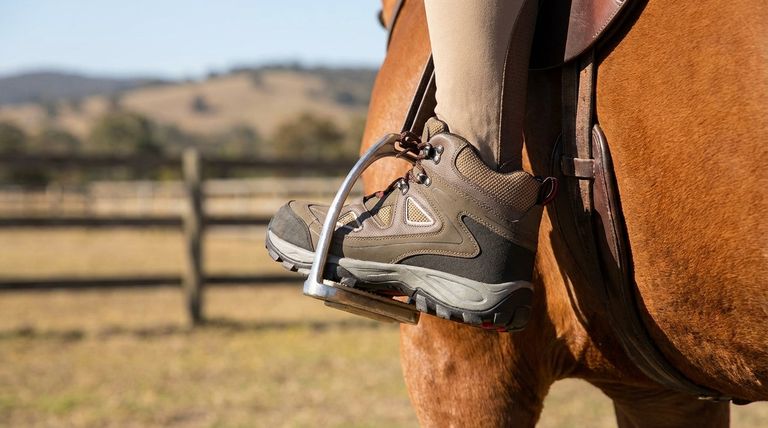
A distinct heel (typically around one inch) is essential. It acts as a stopper, preventing your foot from sliding all the way through the stirrup, which could lead to being dragged in a fall.
The boot also provides a protective barrier. It shields your feet and ankles from being pinched by the stirrup leather or injured if the horse accidentally steps on you.
Enhancing Rider-Horse Communication
Effective riding relies on subtle cues. Your boots are a primary tool for this communication.
A relatively thin sole allows you to feel the stirrup properly, giving you a better sense of balance and connection.
The smooth surface and snug fit of a riding boot allow your leg to apply precise pressure to the horse's side, signaling for turns, transitions, and speed adjustments. This is vital for a harmonious partnership.
Maintaining Correct Position and Comfort
Proper riding form is key to balance and control. Your boots are foundational to achieving this.
The structure of a riding boot provides ankle support, helping you maintain the correct "heels down, toes up" leg position. This stability reduces rider fatigue and improves effectiveness.
Ill-fitting boots are a major distraction. They can cause chafing, blisters, and general discomfort, taking your focus away from your horse and your surroundings.
Understanding the Key Trade-offs
Choosing a boot always involves balancing competing priorities. Understanding these trade-offs ensures you select a boot that aligns with how you actually ride.
In-Saddle Performance vs. On-the-Ground Walkability
There is often an inverse relationship between a boot's performance while riding and its comfort for walking around the barn.
Tall boots, which extend to the knee, offer maximum leg stability and are preferred for formal disciplines. However, they can be stiff and awkward for extensive walking or barn chores.
Paddock boots, which are ankle-height, are far more comfortable and practical for groundwork. However, they offer less lower-leg support unless paired with half-chaps.
Initial Cost vs. Long-Term Value
While durable, high-quality boots are an investment, they will degrade if not maintained.
Neglecting proper care compromises their protective capabilities and shortens their lifespan. Regularly cleaning and conditioning leather extends its life significantly.
Investing in a well-constructed boot and caring for it properly saves money over time by reducing the frequency of replacement.
Making the Right Choice for Your Goal
Your specific riding discipline and goals should be the ultimate guide for your selection.
- If your primary focus is formal competition (like dressage or jumping): You need the superior leg stability and polished look of traditional tall boots.
- If your primary focus is versatility and casual lessons: A quality pair of paddock boots, combined with half-chaps for extra grip, offers the best balance of comfort and function.
- If your primary focus is trail riding or all-day ranch work: Look for a durable boot with a defined heel designed for comfort over many hours, such as those made for Western or endurance riding.
Ultimately, the right boot is a non-negotiable tool that keeps you safe, comfortable, and in clear communication with your horse.
Summary Table:
| Key Factor | Why It Matters |
|---|---|
| Safety | Prevents foot from sliding through stirrup; protects from impact. |
| Communication | Enables subtle leg cues for clear signals to the horse. |
| Comfort & Posture | Provides ankle support for correct riding position and reduces fatigue. |
| Discipline-Specific Fit | Different boots (tall, paddock, Western) suit specific riding styles. |
As a large-scale manufacturer, 3515 produces a comprehensive range of equestrian footwear for distributors, brand owners, and bulk clients. We understand that the right boot is foundational to safety and performance. Our production capabilities encompass all types of riding boots, from tall dressage boots to durable paddock and Western styles, ensuring quality and precision for every rider's needs.
Ready to equip your customers with the perfect riding boot? Contact us today to discuss your manufacturing requirements and how we can support your business.
Visual Guide

Related Products
- Durable Goodyear Welt Leather Work Boots for Wholesale & Private Label
- Wholesale Tactical Boots High-Traction & Reflective for Bulk & Brand Orders
- Wholesale High-Traction Camo Boots - Custom Manufacturer for Brands
- Durable Leather Tactical Boots Wholesale & Custom Manufacturing for Brands
- Durable Leather High-Ankle Tactical Boots for Wholesale & Custom Manufacturing
People Also Ask
- What is the difference between full-grain and top-grain leather? Premium Material Guide for Boot Manufacturers
- What are the advantages of leather as an upper material for work boots? Unmatched Durability & Custom Comfort
- Why is it important to waterproof leather work boots? Protect Your Investment and Performance
- How should new leather work boots be broken in? A Guide to Comfort and Durability
- What are the advantages of leather uppers in work boots? Unmatched Durability & Protection



















