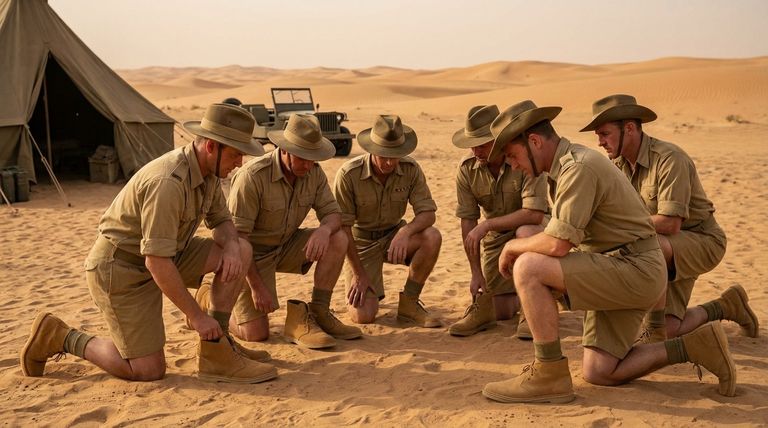
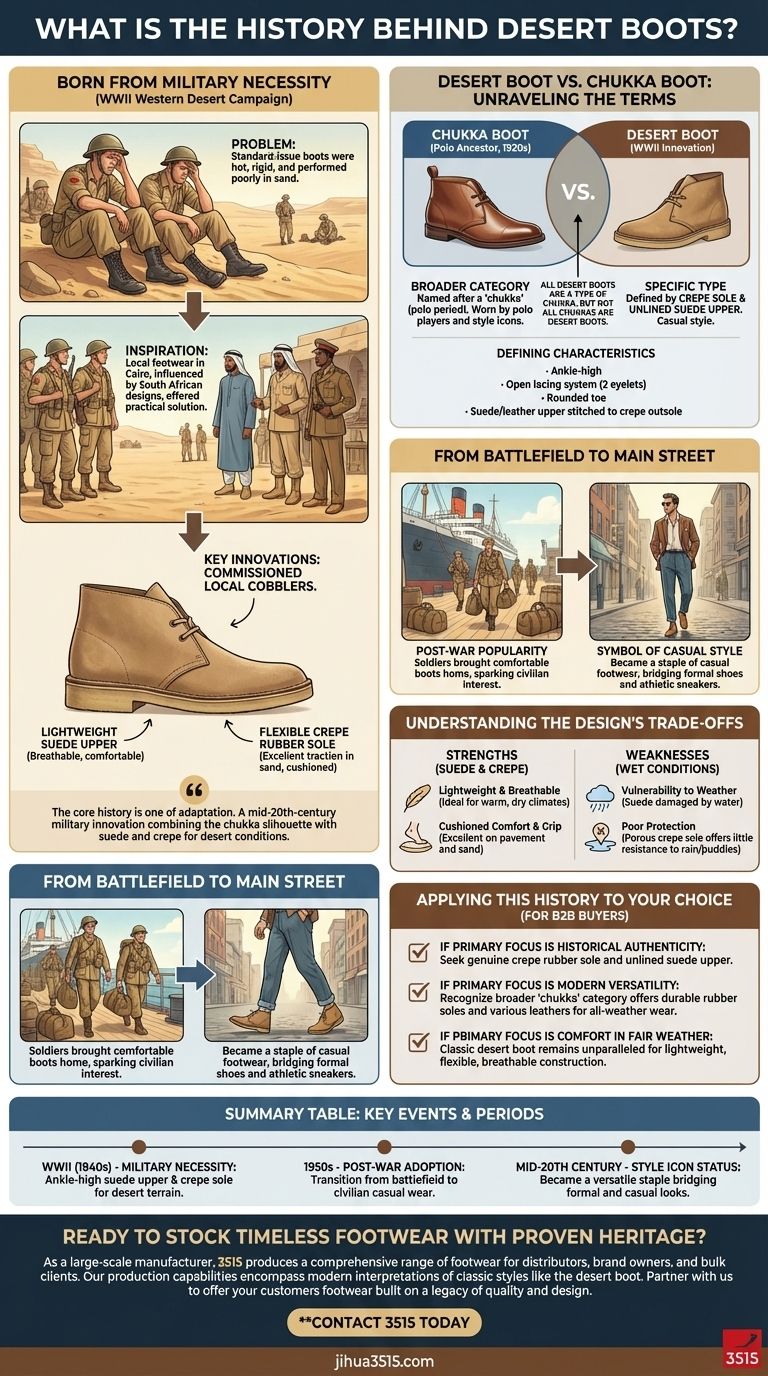
The desert boot was born from military necessity during World War II's Western Desert Campaign. British soldiers found their standard-issue boots ill-suited for the sandy, hot terrain. Observing the more practical footwear worn by traders and officers in Cairo—influenced by South African designs—they commissioned local cobblers to create a new boot, giving rise to the iconic style we know today.
The core history is one of adaptation. The desert boot is not an ancient design but a specific, mid-20th-century military innovation that combined the ankle-high silhouette of a chukka boot with a crepe rubber sole and suede upper, creating the perfect footwear for desert conditions.
The Birth of a Boot: A Military Necessity
The origin story of the desert boot is a direct response to a specific environmental challenge faced by soldiers.
The Problem with Standard-Issue Boots
During the North African campaigns of WWII, British soldiers discovered their heavy, rigid military boots were a liability. They were hot, uncomfortable, and performed poorly in the deep sand.
The Local Inspiration
Soldiers stationed in Egypt noticed the lightweight, comfortable boots worn by local traders in Cairo's bazaars. These were often ankle-high suede boots with a soft sole, influenced by the "Voortrekker" boots worn by South African forces who were fighting alongside the British.
Key Innovations: Suede and Crepe
Seeing a solution, the soldiers had local cobblers create a boot based on this design. It had two defining features: a light, breathable suede upper and a soft, flexible crepe rubber sole. This combination provided excellent comfort and traction on sand, solving the problems of the standard-issue footwear.
Desert Boot vs. Chukka Boot: Unraveling the Terms
To understand the desert boot's history, it's crucial to distinguish it from its close relative, the chukka boot.
The Chukka: A Polo-Playing Ancestor
The chukka boot predates the desert boot. Its name comes from a "chukka," a period of play in polo. These boots, which became popular in the 1920s and 30s, were designed for polo players and gained wider appeal after being worn by style icons like the Duke of Windsor.
A Simple Distinction
The relationship is straightforward: all desert boots are a type of chukka, but not all chukkas are desert boots.
A chukka is a broader category of ankle-high boot, typically with two or three eyelets. A desert boot is a specific, more casual chukka defined by its crepe sole and traditionally unlined suede upper.
Defining Characteristics
The classic desert boot is an ankle-high boot with an open lacing system, usually with two pairs of eyelets. It features a rounded toe, and the suede or leather upper is stitched down onto its signature crepe outsole.
From Battlefield to Main Street
Like many menswear staples, the desert boot's journey from military gear to civilian classic happened after the war.
Post-War Popularity
Soldiers returning from the war brought the comfortable and practical boots home with them. Their unique style and comfort quickly caught on with the civilian population.
A Symbol of Casual Style
By the mid-20th century, the desert boot had become a staple of casual footwear. Its simple, clean lines and comfortable construction made it a versatile choice that bridged the gap between formal shoes and athletic sneakers.
Understanding the Design's Trade-offs
The features that made the desert boot perfect for its original environment also define its limitations.
The Strength of Suede and Crepe
Suede is lightweight and breathable, making it ideal for warm, dry climates. The soft crepe sole provides a cushioned, comfortable feel with excellent grip on pavement and, of course, sand.
The Weakness in Wet Conditions
The design's primary weakness is its vulnerability to weather. Traditional suede is easily damaged by water, and the porous crepe sole offers little protection from rain or puddles. This makes it a poor choice for wet or cold climates without modern weatherproofing treatments.
Applying This History to Your Choice
The origin story of the desert boot directly informs what you should look for in a pair today.
- If your primary focus is historical authenticity: Seek out a boot with a genuine crepe rubber sole and an unlined suede upper, as this combination is true to the original military design.
- If your primary focus is modern versatility: Recognize that the broader "chukka" category now offers the same silhouette with durable rubber soles and various leathers better suited for all-weather wear.
- If your primary focus is comfort in fair weather: The classic desert boot remains an unparalleled choice for its lightweight, flexible, and breathable construction.
Ultimately, the desert boot's enduring legacy is a testament to how a simple, functional design, perfected for a specific need, can become a timeless style icon.
Summary Table:
| Key Event | Period | Key Feature Introduced |
|---|---|---|
| Military Necessity | WWII (1940s) | Ankle-high suede upper & crepe sole for desert terrain |
| Post-War Adoption | 1950s | Transition from battlefield to civilian casual wear |
| Style Icon Status | Mid-20th Century | Became a versatile staple bridging formal and casual looks |
Ready to Stock Timeless Footwear with Proven Heritage?
As a large-scale manufacturer, 3515 produces a comprehensive range of footwear for distributors, brand owners, and bulk clients. Our production capabilities encompass all types of shoes and boots, including modern interpretations of classic styles like the desert boot.
Partner with us to offer your customers footwear built on a legacy of quality and design.
Contact 3515 today to discuss your manufacturing needs and discover how we can help you build a successful footwear collection.
Visual Guide
Related Products
- Wholesale Lightweight Tactical Boots Custom Manufacturer for Desert & Combat Use
- Durable Military Combat Boots with Water Drainage for Wholesale & OEM
- Durable Spiked Camouflage Boots Wholesale & Factory Production
- Wholesale High-Traction Camo Boots - Custom Manufacturer for Brands
- Durable Leather Tactical Boots Wholesale & Custom Manufacturing for Brands
People Also Ask
- What are the common types of combat boots? Find the Right Boot for Your Mission
- What specialized protections do tactical boots offer? Maximize Endurance with High-Performance Footwear
- What are the different types of tactical boots available? Find the Right Boot for Your Mission
- How is the compatibility of polymer materials demonstrated in smart footwear? Enhancing Tactical & Training Performance
- What are the main construction similarities between tactical boots and tactical sneakers? Built for Performance & Durability