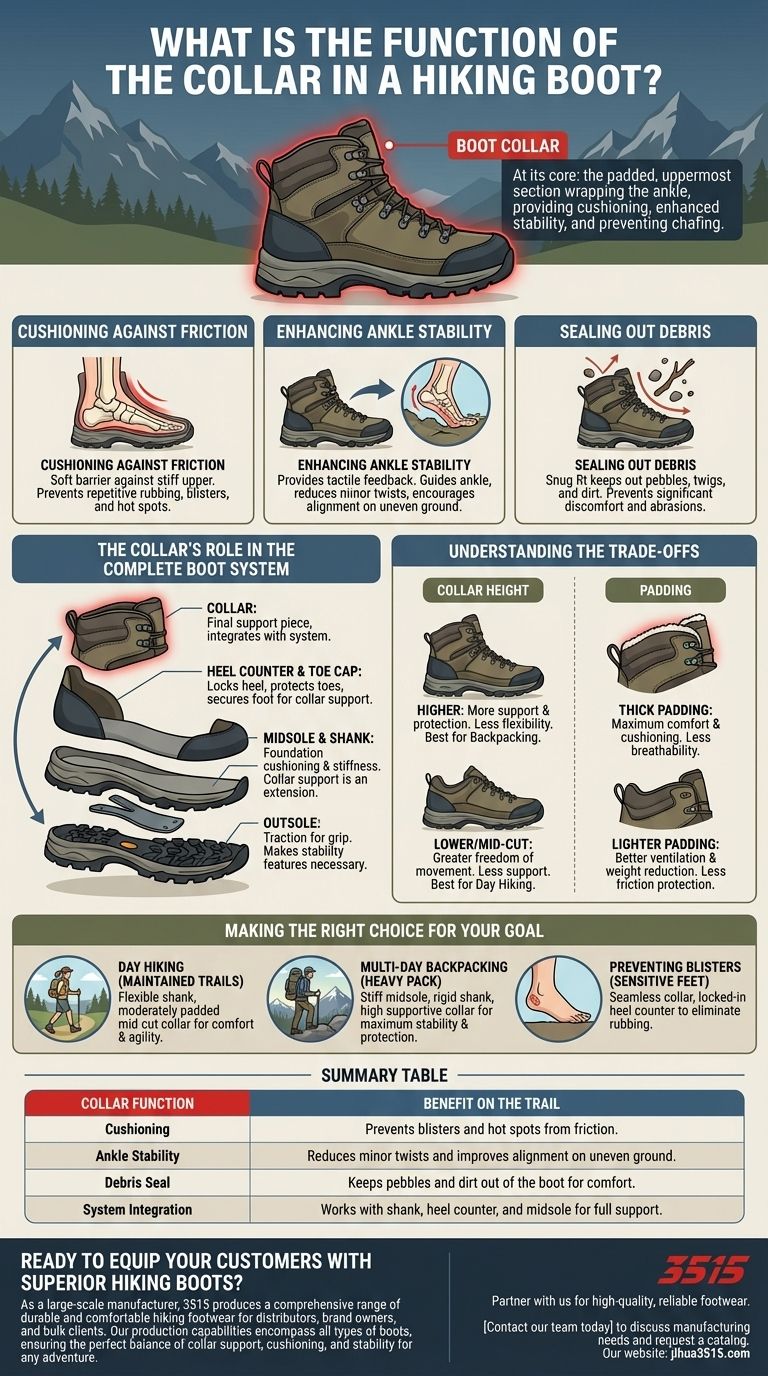
At its core, the collar of a hiking boot is the padded, uppermost section that wraps around your ankle. Its primary functions are to provide cushioning, enhance stability, and prevent chafing or blisters during long treks.
A well-designed collar provides comfort and support at the ankle, but its true value is realized only when it works in concert with the entire support system of the boot.
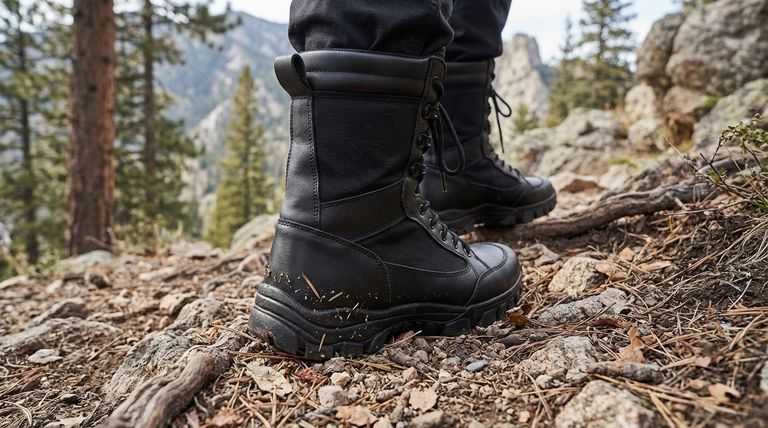
How the Collar Protects and Supports Your Ankle
The collar is your ankle's first line of defense against both internal friction and external hazards. It's a critical point of contact between your body and your gear.
Cushioning Against Friction
The most immediate function of a padded collar is comfort. It creates a soft barrier between the stiff upper material of the boot and your ankle bones.
This padding is essential for preventing the repetitive rubbing that can quickly lead to painful blisters and hot spots on the trail.
Enhancing Ankle Stability
While the boot's overall stiffness comes from deeper components, the collar provides tactile feedback and gentle support.
It helps guide your ankle, reducing minor twists and encouraging proper alignment, especially on uneven terrain.
Sealing Out Debris
A snug-fitting collar serves a simple but crucial role: it helps keep trail debris like pebbles, twigs, and dirt from falling into your boot.
This seemingly small function prevents significant discomfort and potential abrasions over the course of a hike.
The Collar's Role in the Complete Boot System
A boot's collar cannot function in isolation. Its effectiveness is directly tied to the structural integrity of the entire boot. Think of it as the final piece of a complex support structure.
The Foundation: Midsole and Shank
The midsole is the primary source of cushioning and shock absorption. Below it, the shank—a stiff plate—provides the boot's rigidity.
These components create the stable platform that prevents your foot from bending unnaturally over rocks and roots. The collar's support is an extension of this foundational stiffness.
Securing the Foot: The Heel Counter and Toe Cap
The heel counter is a firm cup that locks your heel into the back of the boot, preventing vertical and horizontal slippage. The toe cap protects you from frontal impacts.
By securing your foot firmly within the boot, these features ensure that your ankle is properly positioned to benefit from the collar's support.
The Connection to the Ground: The Outsole
The outsole is the rubber layer with aggressive lugs that grips the trail. While it doesn't interact directly with the collar, its traction is what makes the boot's stability features necessary.
Reliable grip from the outsole allows you to trust your footing, while the collar and other components protect you from missteps.
Understanding the Trade-offs
Choosing a boot involves balancing competing needs. The design of the collar is a key part of this balancing act.
Collar Height vs. Mobility
Higher collars (found on backpacking boots) offer more support and protection but can limit ankle flexibility, which may feel restrictive on flat, easy trails.
Lower or mid-cut collars (found on trail shoes or light hikers) offer greater freedom of movement but provide less support for carrying heavy loads or traversing technical terrain.
Padding vs. Breathability
Thick, plush padding in the collar offers maximum comfort and cushioning but can also trap heat and reduce breathability.
Lighter padding improves ventilation and reduces weight, but may offer less protection against friction on very long or strenuous hikes.
Making the Right Choice for Your Goal
Look beyond the collar and evaluate the entire boot as a system designed for a specific purpose.
- If your primary focus is day hiking on maintained trails: A boot with a flexible shank and a moderately padded mid-cut collar will provide the right balance of comfort and agility.
- If your primary focus is multi-day backpacking with a heavy pack: Prioritize a boot with a stiff midsole, a rigid shank, and a high, supportive collar to ensure maximum stability and protection.
- If your primary focus is preventing blisters: Pay close attention to the collar's seamless construction and ensure the heel counter locks your foot in place to eliminate any rubbing.
Understanding how each part of the boot supports the others empowers you to choose the right tool for your adventure.
Summary Table:
| Collar Function | Benefit on the Trail |
|---|---|
| Cushioning | Prevents blisters and hot spots from friction. |
| Ankle Stability | Reduces minor twists and improves alignment on uneven ground. |
| Debris Seal | Keeps pebbles and dirt out of the boot for comfort. |
| System Integration | Works with the shank, heel counter, and midsole for full support. |
Ready to equip your customers with superior hiking boots?
As a large-scale manufacturer, 3515 produces a comprehensive range of durable and comfortable hiking footwear for distributors, brand owners, and bulk clients. Our production capabilities encompass all types of boots, ensuring the perfect balance of collar support, cushioning, and stability for any adventure.
Partner with us to provide high-quality, reliable footwear that your customers will trust on every trail.
Contact our team today to discuss your manufacturing needs and request a catalog.
Visual Guide
Related Products
- Wholesale High-Traction Camo Boots - Custom Manufacturer for Brands
- Durable Rubber Sole Outdoor Shoes Wholesale & Custom Manufacturing
- Durable Spiked Camouflage Boots Wholesale & Factory Production
- Wholesale Lightweight Tactical Boots Custom Manufacturer for Desert & Combat Use
- Wholesale Waterproof Tactical Boots Custom Suede & High-Traction Soles
People Also Ask
- What are the key features of the new line of camo boots? Built for Extreme Cold & Rugged Terrain
- Are camo boots necessary for hunting success? Prioritize Performance Over Pattern
- How does the Rank Score Test identify the primary causes of premature failure in tactical and work boots? Key Insights
- What is the technical logic behind using closed-eye testing for tactical boots? Unlocking Peak Footwear Stability
- What shoes to wear for a security job? Durable, Protective Footwear for Long Shifts