
Choosing the right hiking footwear is the single most critical gear decision you will make for any outdoor excursion. It directly determines your safety, comfort, and endurance on the trail by preventing common injuries like back, knee, and ankle problems, as well as debilitating discomforts like blisters and wet feet.
Your ideal hiking shoe is not defined by a brand or price tag, but by its precise match to your feet, the terrain you'll face, and the weight you'll carry. The guiding principle is to select the lightest shoe possible that still provides the necessary support and protection for your specific journey.
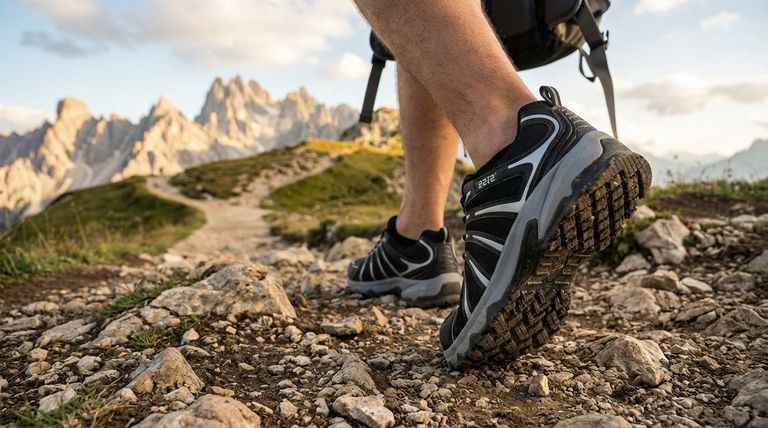
The Foundation of Your Hike: Why Footwear Matters
Your feet are the connection point to the trail. Any failure in this system—from poor fit to inadequate support—reverberates through your entire body, impacting your performance and enjoyment.
Preventing Injury from the Ground Up
Improper footwear is a direct cause of both acute and chronic injuries. A shoe that lacks support for the load you're carrying can lead to ankle twists, while poor cushioning can transfer shock up to your knees and back.
Eliminating Common Discomforts
The most immediate consequence of the wrong shoe is discomfort. A poor fit creates friction points, leading to blisters, while inadequate materials can leave your feet wet, cold, and prone to further issues.
Maximizing Endurance and Enjoyment
When your feet are comfortable and protected, you can focus on the trail ahead. Proper footwear reduces fatigue, allowing you to hike farther, navigate challenging terrain more confidently, and ultimately enjoy your experience.
Key Factors in Your Decision
The "best" hiking shoe is entirely contextual. To find the right match, you must evaluate four critical variables against each other.
Your Personal Morphology
The most important factor is comfort, which comes from a proper fit for your unique foot shape. A shoe must have a snug fit around your heel and midfoot while allowing enough room for your toes to wiggle and splay naturally.
The Terrain Underfoot
Consider the ground you will be covering. Smooth, well-groomed trails require less aggressive tread and support than rocky, uneven, or muddy terrain.
The Weight on Your Back
The weight of your backpack directly correlates to the amount of support you need. A light daypack places minimal stress on your feet and ankles, whereas a heavy multi-day pack demands a sturdier, more supportive shoe to prevent instability.
The Nature of Your Hike
The duration and intensity of your activity also dictate your needs. A short day hike has different requirements than a week-long trek through the mountains.
Understanding the Trade-offs
Hiking footwear exists on a spectrum from lightweight and flexible to sturdy and protective. Understanding where your needs fall on this spectrum is key.
The Case for Lighter Hiking Shoes
Hiking shoes are often a hybrid of trail running shoes and traditional boots. They are lightweight, breathable, and flexible, requiring little to no break-in period.
This makes them ideal for day hikes, fast-paced efforts on groomed trails, and situations where you are carrying a light pack. They also dry much faster than heavier boots.
The Need for Sturdier Footwear
As terrain becomes more rugged or your pack becomes heavier, the need for support increases. Sturdier trekking shoes or boots offer more ankle stability, which is crucial for those prone to twists or when carrying a significant load.
Essential Protective Features
Regardless of weight, look for key durability features. A stone guard at the front protects your toes from impacts, while a thick, padded tongue shields the top of your foot and adds comfort.
Practical Steps for a Perfect Fit
Selecting the right shoe is only half the battle. You must also ensure you are using it correctly as part of a system.
Try Before You Buy
Always test footwear in person, preferably at the end of the day when your feet are slightly swollen. Wear the actual hiking socks you plan to use to get an accurate sense of the fit.
The Importance of Proper Socks
Never wear cotton socks for hiking. They retain moisture, which is the primary cause of blisters. Always opt for moisture-wicking socks made from wool or synthetic materials.
Always Break Them In
Wear your new shoes around the house and on short walks before committing to a long hike. This allows the shoe to mold to your foot and helps you identify any potential hot spots before they become a problem on the trail.
Augment Your System
For added stability, especially when using lower-cut hiking shoes, consider using hiking poles. To keep rocks, dirt, and water out of your shoes, a pair of gaiters is an invaluable addition.
Making the Right Choice for Your Goal
Ultimately, your footwear choice is a tool designed for a specific job. Match the tool to your objective.
- If your primary focus is day hikes on well-maintained trails: A lightweight, breathable hiking shoe will provide the best balance of comfort and flexibility.
- If your primary focus is multi-day treks with a heavy pack: Opt for a sturdier shoe with more ankle support to handle the increased load and rough terrain.
- If you are prone to ankle injuries: Prioritize a more supportive, mid- or high-cut shoe to ensure stability, even on less demanding trails.
Investing time in finding the right footwear is an investment in every single step of your adventure.
Summary Table:
| Key Decision Factor | Why It Matters | Ideal For |
|---|---|---|
| Terrain & Trail Type | Determines needed tread and support. | Rocky paths need aggressive soles; groomed trails need less. |
| Backpack Weight | Dictates ankle and arch support. | Heavy packs require sturdy boots; light daypacks allow for shoes. |
| Your Foot Morphology | Ensures comfort and prevents blisters. | A snug heel with room for toes to splay is crucial. |
| Hike Duration & Intensity | Influences breathability and durability. | Long treks need robust protection; short hikes favor flexibility. |
Ready to equip your next adventure with perfectly fitted footwear?
As a large-scale manufacturer, 3515 produces a comprehensive range of durable hiking and trekking footwear for distributors, brand owners, and bulk clients. Our production capabilities encompass all types of shoes and boots, designed to meet the specific demands of any trail.
Let us help you provide the right foundation for every journey. Contact our team today to discuss your footwear needs and explore our catalog.
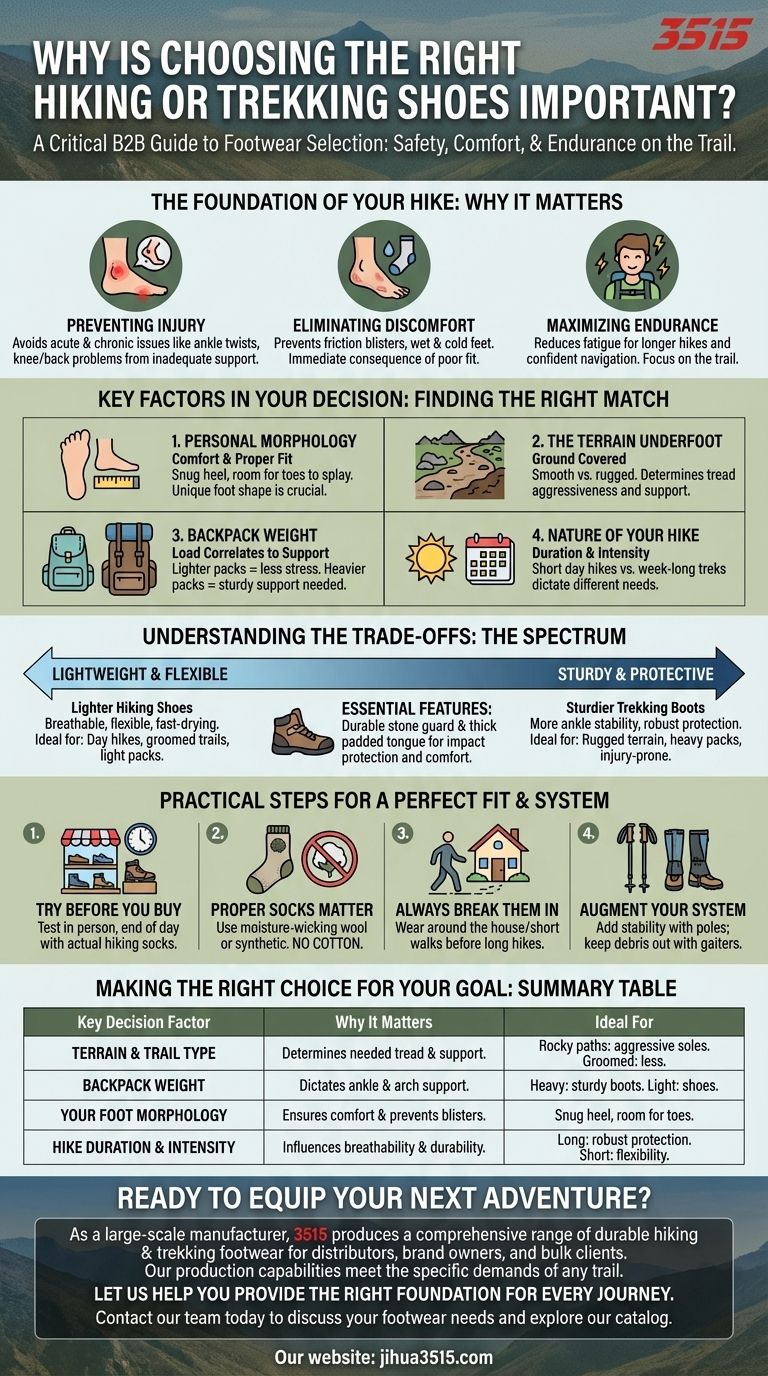
Visual Guide
Related Products
- Durable Rubber Sole Outdoor Shoes Wholesale & Custom Manufacturing
- Wholesale High-Traction Camo Boots - Custom Manufacturer for Brands
- Wholesale Durable Camouflage Canvas Shoes with High-Traction Cleated Rubber Sole
- Wholesale Durable Camo Canvas Shoes with High-Traction Rubber Soles
- Wholesale Waterproof Tactical Boots Custom Suede & High-Traction Soles
People Also Ask
- What is the function of the sole in outdoor shoes? Find the Perfect Grip and Support
- What role do outdoor shoes and sneakers play in navigating external terrains? Engineered Stability for Every Surface
- How is AI utilized in the design of outdoor and safety footwear? Harnessing Big Data for Market-Driven Shoe Innovation
- Why is durability important when selecting outdoor shoes? A Guide to Safety & Long-Term Value
- What are the key components of outdoor shoes that affect comfort and sturdiness? A Guide to Durable, High-Performance Footwear



















