At its core, this guide focuses on the practical, routine maintenance required to preserve calfskin shoes during daily use. It provides a foundational overview of different leather types to establish context, but its primary goal is to outline the specific, consistent care that prevents damage and maintains the appearance of calfskin footwear.
The central takeaway is that effective calfskin care is not about complex, infrequent restoration projects. Instead, it's about establishing simple, daily habits that protect your investment by addressing the material's unique vulnerabilities to moisture, dirt, and creasing.
Why Calfskin Requires Specific Attention
To properly care for calfskin, you must first understand the material itself. Its distinct properties are what make it both desirable and demanding compared to other leathers.
The Nature of Calfskin
Calfskin is prized for its fine grain, suppleness, and soft texture. This comes from the tight fiber structure of younger animal hide.
While this creates a luxurious look and comfortable feel, it also makes the leather more porous and susceptible to scratches, scuffs, and water spots than more rugged leathers.
How It Differs from Other Leathers
Unlike the robust, oil-tanned leathers used in work boots, calfskin is not designed for harsh conditions. It will dry out and crack without regular conditioning.
Compared to suede or nubuck, which have a napped surface requiring specialized brushes, calfskin has a smooth finish that needs polishing to maintain its luster and protective layer.
The Pillars of Routine Maintenance
The guide's focus on "daily use" centers on a few non-negotiable actions that form the foundation of long-term preservation. These are preventative measures, not repairs.
The Critical Role of Shoe Trees
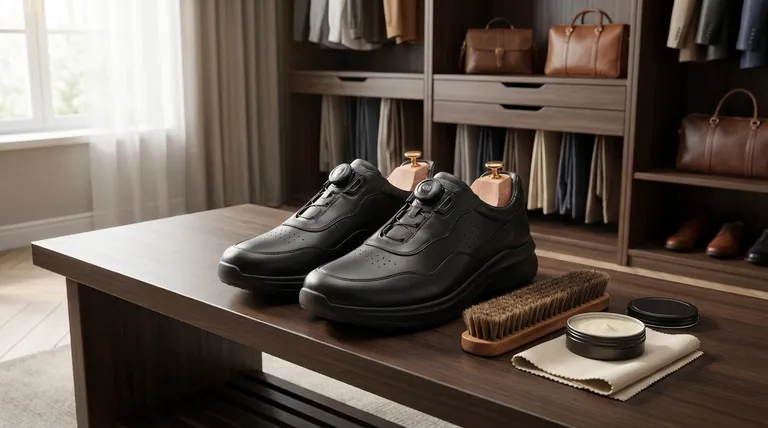
The single most important step in daily care is inserting cedar shoe trees immediately after taking your shoes off.
Shoe trees absorb the moisture and salts from perspiration that would otherwise degrade the leather from the inside. They also smooth out creases that form during wear, helping the shoe retain its original shape.
Post-Wear Cleaning
After each wear, a quick wipe-down with a soft cloth or horsehair brush is essential.
This simple action removes surface dust and dirt before it can become embedded in the leather's pores, which can abrade the finish and dull its appearance over time.
The Principle of Rotation
Calfskin leather needs time to breathe and fully dry out between wears. Wearing the same pair of shoes two days in a row traps moisture, accelerating the breakdown of leather fibers.
A proper rotation—allowing at least one full day of rest on shoe trees—dramatically extends the life of your footwear.
Common Pitfalls to Avoid
Neglecting these simple, routine steps leads to predictable and often irreversible damage. Understanding these trade-offs clarifies the importance of a consistent care regimen.
Premature Cracking and Fading
Without regular conditioning, the natural oils in calfskin evaporate. The leather becomes dry and brittle, leading to permanent cracks, especially across the vamp where the shoe flexes.
Shape Distortion
Forgoing shoe trees allows moisture-laden leather to dry in a collapsed or creased state. Over time, this permanently alters the shoe's intended shape and fit.
The Limits of Restoration
While a skilled cobbler can perform remarkable repairs, they cannot reverse the internal fiber damage caused by chronic moisture or restore leather that has deeply cracked from dryness. Routine care is always more effective than emergency restoration.
Making the Right Choice for Your Goal
Apply these principles based on your specific objective for your footwear collection.
- If your primary focus is preserving a new investment: Make using cedar shoe trees and wiping the shoes down after every single wear a non-negotiable habit from day one.
- If your primary focus is maintaining an existing collection: Implement a strict rotation system to ensure no pair is worn on consecutive days and set a calendar reminder for monthly conditioning.
- If your primary focus is achieving the best result with minimal effort: Prioritize shoe trees above all else. This one tool provides the most significant benefit for shoe longevity by addressing both moisture and shape.
Ultimately, consistent, simple actions are the key to ensuring your calfskin footwear remains a staple of your wardrobe for years to come.
Summary Table:
| Maintenance Pillar | Key Action | Primary Benefit |
|---|---|---|
| Shoe Trees | Insert cedar trees after each wear. | Absorbs moisture, maintains shape, reduces creasing. |
| Post-Wear Cleaning | Wipe with a soft cloth or brush. | Removes dirt and dust before it damages the leather. |
| Rotation | Allow shoes to rest for at least 24 hours between wears. | Prevents moisture buildup and fiber breakdown. |
Ready to build a durable and stylish footwear collection? As a large-scale manufacturer, 3515 produces a comprehensive range of high-quality footwear for distributors, brand owners, and bulk clients. Our expertise in materials like calfskin ensures your products are built to last. Let's discuss your needs—contact our team today to explore our production capabilities.
Visual Guide

Related Products
- Premium Lightweight Safety Shoes for Wholesale & Bulk Orders
- Wholesale Breathable Training Shoes Custom Athletic Footwear Manufacturer
- Lightweight Breathable Training Shoes for Wholesale & Custom OEM Manufacturing
- Wholesale Durable Camouflage Canvas Shoes with High-Traction Cleated Rubber Sole
- Wholesale Durable & Breathable Training Shoes for Custom Brands
People Also Ask
- What workplace hazards indicate the need for safety shoes? Identify risks to protect your workforce.
- What is a recommended alternative to using hairspray for slip resistance? Ditch Unreliable Hacks for Real Safety
- How is the absence of PPE (safety shoes & helmets) categorized in construction motion data labeling? Unlock Real-Time Safety Insights!
- What role does blockchain play in footwear supply chain transparency? Enhance Safety Shoe Traceability and Verification
- What role do specialized safety shoes play in preventing falls? Engineering Stability in Industrial Environments