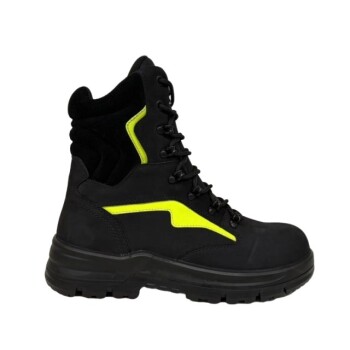
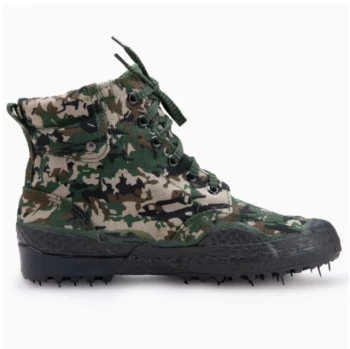
Before you do anything else, the first practical step in waterproofing your hiking boots is to clean them thoroughly. However, this action is dictated by a critical preceding decision: you must first identify the material of your boots—be it full-grain leather, nubuck, suede, or synthetic fabric—as this determines the specific waterproofing product you will need.
Effective waterproofing is not a single action but a systematic process. Success depends entirely on matching the right treatment to your boot's specific material and applying it to a perfectly clean surface.
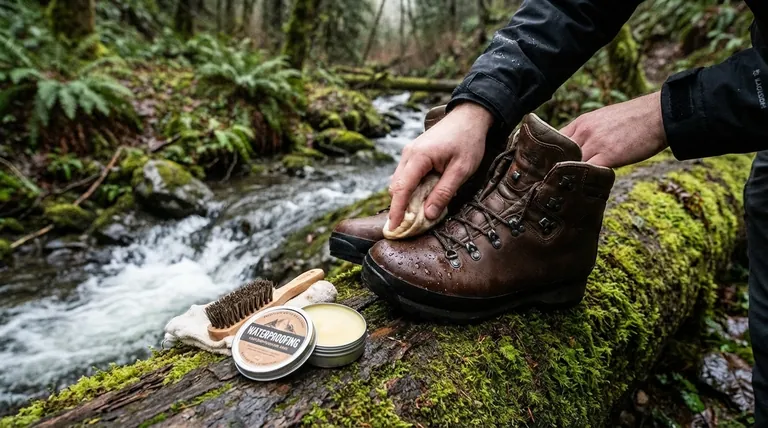
The Foundation: Why Material Dictates Method
The single biggest mistake in boot care is using the wrong product for the material. A treatment designed for heavy-duty leather can ruin the texture of suede, while a light spray won't adequately protect it.
Identifying Your Boot's Material
First, look at your boots. Full-grain leather is smooth and durable. Nubuck and suede have a softer, brushed, velvet-like texture. Synthetic boots are often made of nylon or polyester fabric panels, sometimes combined with leather.
Knowing this distinction is the essential first decision point.
Choosing the Right Waterproofing Product
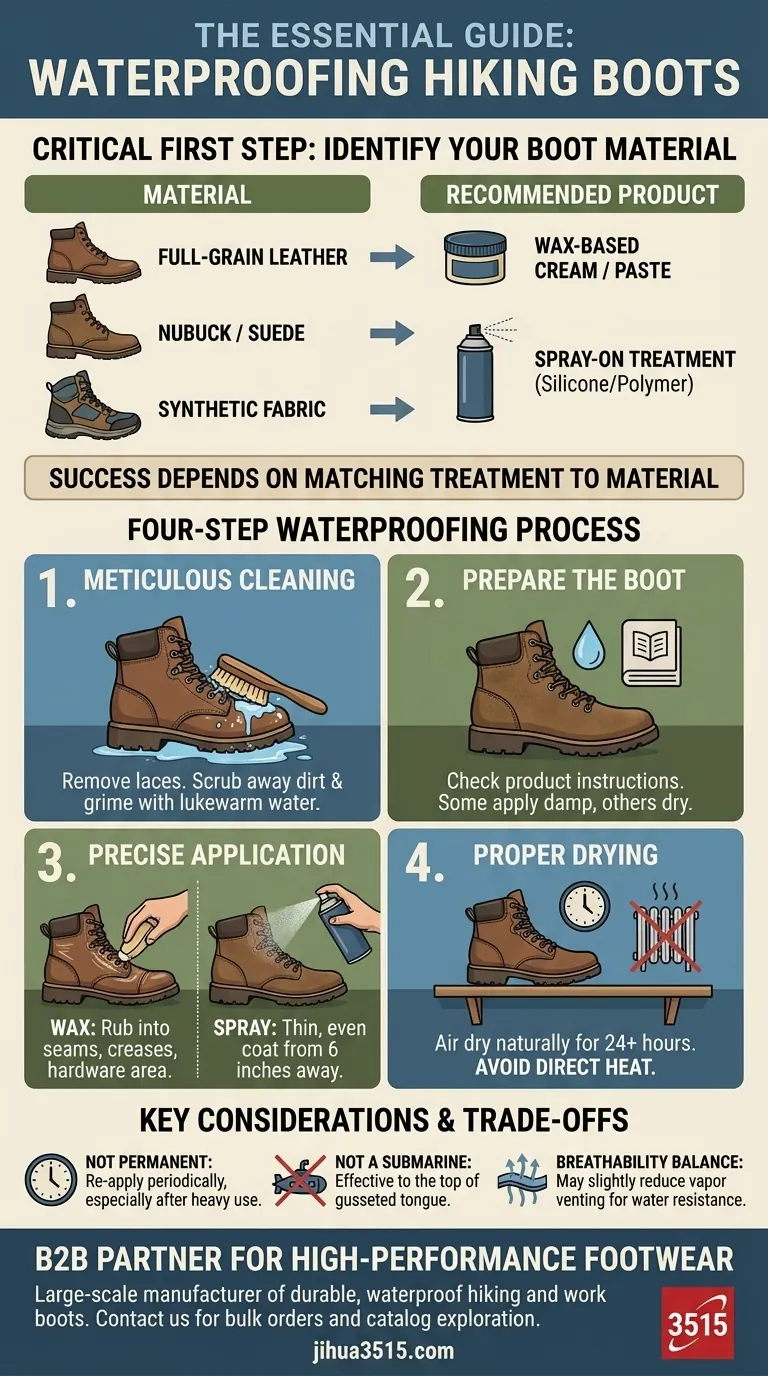
Each material requires a specific approach. Wax-based treatments are ideal for full-grain leather, as they condition the material while providing a robust water barrier.
For nubuck, suede, and synthetic fabrics, you must use a spray-on treatment. These silicone- or polymer-based sprays coat the fibers without matting down the texture or impairing breathability as much as a heavy wax would.
The Four-Step Waterproofing Process
Once you have the correct product in hand, the application is a straightforward process that requires patience and attention to detail.
Step 1: Meticulous Cleaning
You cannot waterproof a dirty boot. Dirt, mud, and dust prevent the treatment from properly bonding with the boot's surface, leading to an incomplete seal.
Remove the laces. Use a brush and lukewarm water to scrub away all grime. For stubborn spots, a specialized boot cleaner may be necessary.
Step 2: Prepare the Boot
Some treatments are designed for application on damp leather, while others require a completely dry surface. Read the instructions on your specific product carefully. Applying to a damp boot can help the treatment penetrate the pores of the leather more deeply.
Step 3: Precise Application
For sprays, hold the can about six inches from the boot and apply a thin, even coat.
For waxes or creams, use a cloth or your fingers to rub the treatment into the material, paying special attention to seams, creases, and the area around hardware like lace hooks. These are the most common points of failure.
Step 4: Proper Drying
Allow your boots to air dry naturally for at least 24 hours, away from any direct heat source like a radiator or fireplace. Intense heat can crack leather and damage the adhesives used in boot construction.
Understanding the Trade-offs
Waterproofing is essential maintenance, but it's important to have realistic expectations about its performance and limitations.
Waterproofing is Not Permanent
Every treatment degrades over time, especially in high-flex areas like the forefoot where the boot creases with every step. You will need to re-apply the treatment periodically, especially after heavy use in wet conditions.
A Boot is Not a Submarine
Waterproof boots are only effective up to a certain depth, typically the top of the gusseted tongue. Submerging your boot deeper than this will allow water to pour in from the top.
The Breathability Balance
While modern waterproof membranes like Gore-Tex are designed to be breathable, applying a heavy external waterproofing treatment can slightly reduce the boot's ability to vent moisture vapor (sweat) from the inside. This is a necessary trade-off for improved water resistance from the outside.
How to Apply This to Your Boots
Your choice of product and frequency of application should be guided by your gear and how you use it.
- If you have full-grain leather boots: Use a wax-based product for the best durability and to keep the leather conditioned and healthy.
- If you have nubuck, suede, or fabric boots: Stick to spray-on treatments to create a water-repellent barrier without damaging the material's texture.
- If you frequently hike in wet conditions: Plan to clean and re-proof your boots every few months or after any particularly demanding, wet trip.
Properly maintaining your boots' water resistance is the single best way to protect both your investment and your comfort on the trail.
Summary Table:
| Material Type | Recommended Waterproofing Product | Key Application Tip |
|---|---|---|
| Full-Grain Leather | Wax-based cream or paste | Rub thoroughly into seams and creases |
| Nubuck or Suede | Silicone/polymer-based spray | Apply a thin, even coat from 6 inches away |
| Synthetic Fabric | Spray-on waterproofing treatment | Ensure boot is clean and completely dry |
Need Durable, Waterproof Hiking Boots for Your Customers?
As a large-scale manufacturer, 3515 produces a comprehensive range of high-performance footwear for distributors, brand owners, and bulk clients. Our production capabilities encompass all types of waterproof hiking boots and work footwear, built to withstand the toughest conditions.
Let us help you equip your customers with reliable gear. Contact our team today to discuss your bulk order requirements and explore our catalog.
Visual Guide
Related Products
- Premium Flame-Retardant Waterproof Safety Boots and Shoes
- High Performance Fire-Retardant Waterproof Safety Boots
- Premium High-Cut Waterproof Safety Boots Manufacturing & Wholesale Solutions
- Wholesale Waterproof Tactical Boots Custom Suede & High-Traction Soles
- Premium Wholesale Waterproof Safety Boots High Performance Protection for Industrial Markets
People Also Ask
- Why are waterproof safety boots recommended for certain work environments? Essential Protection for Wet & Hazardous Jobs
- What materials are commonly used in waterproof boots? The Complete Guide to Durable, Breathable Protection
- How does boot construction affect waterproofing? The Science Behind Truly Dry Feet
- What should you look for to ensure boots are fully waterproof? The Essential 2-Part System
- What is the advantage of one-piece construction in waterproof boots? Unbeatable Seamless Protection