The core function of an adjustable incline walking platform is to serve as a precision-controlled physical carrier that simulates real-world environmental challenges. By providing specific, adjustable tilt angles—typically ranging from 5 to 10 degrees—this equipment allows researchers to systematically manipulate the gravity vector and ground friction requirements. This controlled environment is essential for quantifying how the human lower limbs adapt biomechanically to maintain balance and how footwear performs under varying degrees of slip risk.
The platform acts as a bridge between laboratory settings and complex outdoor terrains, enabling the objective measurement of postural stability by isolating gravitational and frictional variables.
Simulating Environmental Complexity
Recreating Real-World Terrains
The platform’s primary role is to mimic the physical demands of slopes, ramps, and mountainous areas. This allows for the study of human movement in a safe, repeatable environment that would be difficult to control in the field.
Precision in Variable Control
By offering specific increments like 5, 7.5, and 10 degrees, the platform ensures that stability tests are standardized. This precision is vital for establishing benchmarks in both human biomechanics and material science.
Quantifying Biomechanical Adaptability
Altering the Gravity Vector
Adjusting the incline changes how gravity acts upon the human body's center of mass. This shift forces the musculoskeletal system to reorganize its recruitment patterns to prevent falls and maintain a steady gait.
Testing Ground Friction Requirements
As the slope increases, the demand for longitudinal friction between the footwear and the surface grows. The platform is the fundamental tool for evaluating the anti-slip performance of various sole materials under these stressed conditions.
Understanding the Trade-offs
Limitations of Static Inclines
While the platform provides excellent control, it often simulates a constant gradient. In nature, terrain is often irregular, meaning laboratory results may not fully capture the "noise" of real-world walking surfaces.
The Impact of Fixed Friction
Most platforms use a consistent surface material, which may not account for environmental variables like moisture or debris. These factors can significantly alter the actual friction requirements in a way the platform cannot always replicate without modification.
Applying Platform Data to Stability Research
To get the most out of an adjustable incline platform, you must align the tilt settings with your specific investigative goals.
- If your primary focus is footwear safety: Use incremental tilt increases to identify the precise critical angle where static or dynamic friction fails.
- If your primary focus is clinical rehabilitation: Focus on the body's compensatory strategies at lower angles (5 to 7.5 degrees) to assess gradual improvements in postural control.
- If your primary focus is peak performance: Utilize the steepest settings to challenge the neuromuscular limits of athletes or specialized personnel in high-stress environments.
By systematically manipulating the incline, you transform a simple walking surface into a sophisticated diagnostic tool for human stability and safety.
Summary Table:
| Feature | Function in Stability Assessment | Key Research Metric |
|---|---|---|
| Adjustable Tilt (5-10°) | Simulates varied real-world slopes and ramps | Critical angle of friction failure |
| Gravity Vector Control | Manipulates center of mass alignment | Musculoskeletal recruitment patterns |
| Controlled Friction | Tests longitudinal grip requirements | Sole material anti-slip performance |
| Repeatable Environment | Standardizes testing across subjects | Comparative biomechanical benchmarks |
Partner with 3515 for High-Performance Footwear Solutions
As a large-scale manufacturer serving global distributors and brand owners, 3515 leverages advanced biomechanical insights to deliver superior footwear. Whether you require specialized Safety Shoes, tactical boots, or high-traction outdoor footwear, our comprehensive production capabilities ensure every pair meets the rigorous stability and anti-slip standards demanded by complex terrains.
Enhance your product line with our flagship footwear series:
- Safety & Tactical: Engineered for maximum grip on steep inclines.
- Outdoor & Training: Optimized for diverse environmental challenges.
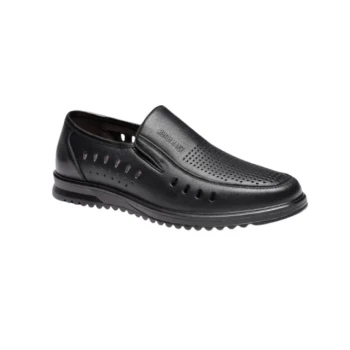
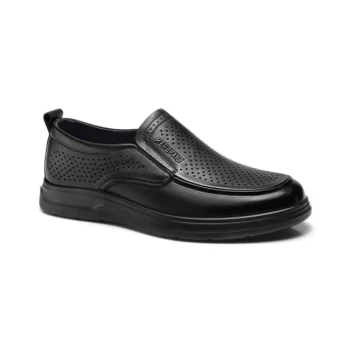
- Dress & Formal: Combining professional aesthetics with reliable stability.
Ready to elevate your inventory with industry-leading footwear? Contact us today to discuss your bulk requirements and discover the value 3515 brings to your brand.
References
- Noor Arifah Azwani Abdul Yamin, Hiroshi Takemura. Correlation between Postural Stability and Lower Extremity Joint Reaction Forces in Young Adults during Incline and Decline Walking. DOI: 10.3390/app132413246
This article is also based on technical information from 3515 Knowledge Base .
Related Products
- Lightweight Breathable Sneakers with Wet-Traction Grip for Wholesale & Private Label
- Wholesale Breathable Perforated Slip-On Loafers Custom Manufacturing
- Durable Leather Moc Toe Work Boots for Wholesale & Custom Manufacturing
- Wholesale Lightweight Cushioned Athletic Sneakers for Custom Bulk Production
- Durable High-Ankle Tactical Boots Wholesale Manufacturer for Custom & Bulk Orders
People Also Ask
- Why are breathable sneakers necessary for tropical commuting? Stay Cool and Dry in High Humidity
- What role do lightweight training shoes play in urban traffic? Boost Agility and Reaction for Safer City Navigation
- How do lightweight shoes provide support? The Science of Efficient Cushioning & Stability
- How do lightweight shoes improve breathability? Discover the Science of Cool, Dry Feet
- What are the style advantages of lightweight shoes? Sleek, Versatile & Modern Comfort