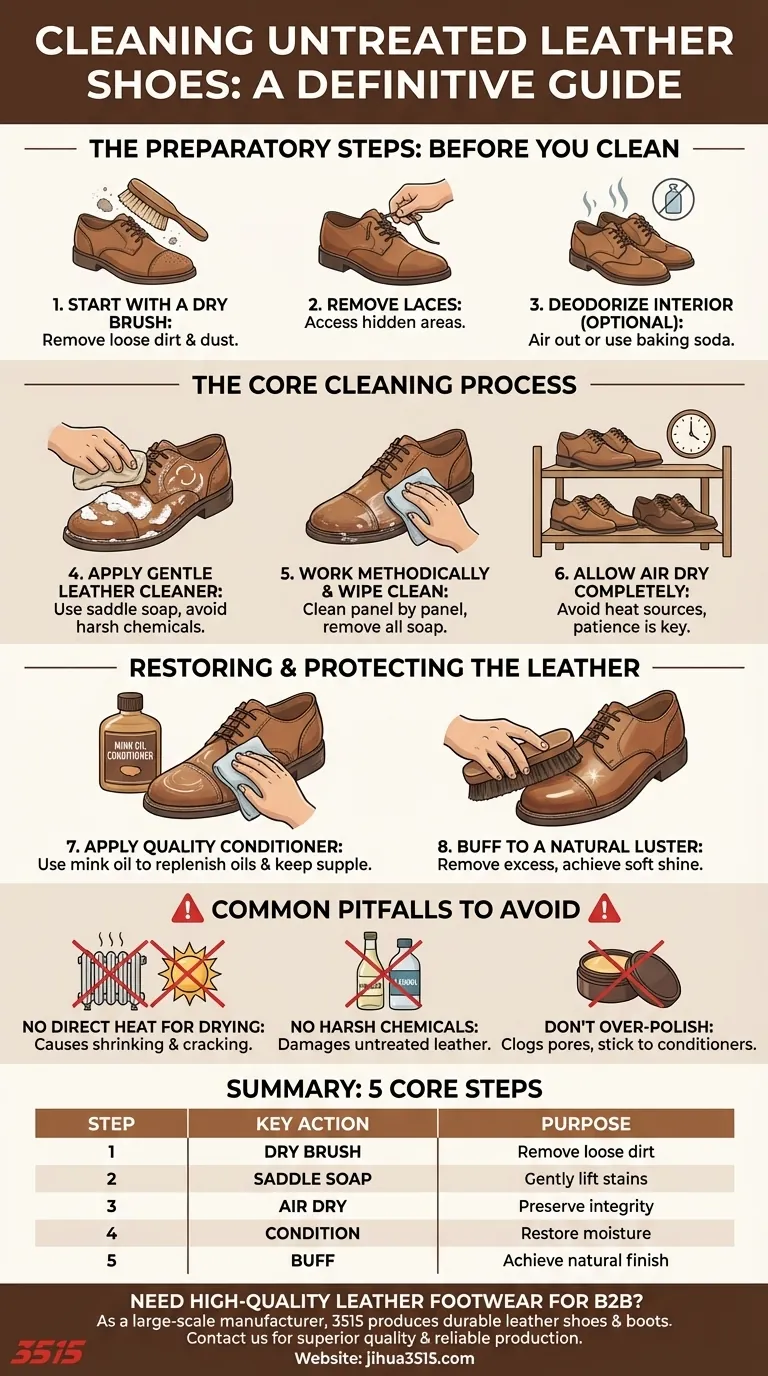
The definitive process for cleaning untreated leather shoes involves five core steps: dry brushing away loose dirt, gently cleaning with saddle soap, allowing the shoes to air dry completely, applying a conditioner like mink oil to restore moisture, and finally, buffing to a natural finish. This method ensures you clean the material without stripping its essential oils or damaging its porous surface.
Untreated leather is highly absorbent and prone to drying out. The goal of cleaning is not just to remove dirt, but to do so gently while preparing the leather to be rehydrated with a proper conditioner.
The Preparatory Steps: Before You Clean
Before applying any cleaner, a few preparatory actions will ensure a more effective and even result.
Start with a Dry Brush
First, remove any loose surface dirt, dust, or mud. Use a soft-bristled shoe brush or a clean microfiber cloth for this.
This crucial step prevents you from rubbing abrasive dirt particles into the leather's pores during the wet cleaning phase.
Remove Laces
Take the laces out of the shoes. This allows you to access the tongue and all the hidden areas around the eyelets, ensuring a thorough cleaning. Laces can be washed separately.
Deodorize the Interior (Optional)
If the inside of the shoes has an odor, let them air out for a day. For persistent smells, sprinkling baking soda inside, letting it sit overnight, and then vacuuming it out is a safe and effective method.
The Core Cleaning Process
With the shoes prepped, you can begin the main cleaning. The key here is to be gentle and methodical.
Apply a Gentle Leather Cleaner
Moisten a clean, soft cloth with a small amount of saddle soap or a certified leather shoe cleaner. Avoid harsh detergents or all-purpose cleaners, which will strip the leather's natural oils.
Gently rub the saddle soap onto the shoe's surface in small, circular motions to create a light lather.
Work Methodically and Wipe Clean
Clean the shoe one panel at a time to ensure you cover every area consistently. Use the lather to lift dirt and scuffs from the surface.
Once an area is clean, use a separate, clean, and slightly damp microfiber cloth to wipe away all soap residue. Leaving soap on the leather can cause it to dry out.
Allow the Leather to Air Dry Completely
Let the shoes dry naturally at room temperature. This can take several hours or even a full day.
Proper drying is essential for the leather to maintain its shape and integrity.
Restoring and Protecting the Leather
Cleaning removes dirt but also some of the leather's natural moisture. This step is non-negotiable for restoring the material's health.
Apply a Quality Conditioner
Once the shoes are completely dry, apply a small amount of a suitable leather conditioner, such as mink oil.
Use a clean, soft cloth to work the conditioner into the leather in small circular motions. This replenishes the oils, keeping the leather supple and preventing cracks.
Buff to a Natural Luster
After letting the conditioner absorb for a few minutes, take another clean cloth or a horsehair brush and buff the entire shoe.
This final step removes any excess conditioner and brings out a soft, natural shine.
Common Pitfalls to Avoid
Untreated leather is sensitive. Avoiding these common mistakes is just as important as following the correct steps.
Never Use Direct Heat to Dry
Do not place your shoes near a radiator, heater, or in direct sunlight to speed up drying. This will cause the leather to shrink, become brittle, and crack.
Avoid Harsh Chemicals
Never use household cleaners, vinegar, or alcohol-based products on your shoes. These substances are far too aggressive for untreated leather and can cause permanent discoloration and damage.
Don't Over-Polish
While conditioning is essential, heavy wax polishes can clog the pores of untreated leather, changing its texture and appearance. Stick to conditioners or light cream polishes designed for this type of material.
How to Apply This to Your Goal
Your approach can be tailored based on the condition of your shoes and your desired outcome.
- If your primary focus is a quick refresh: A thorough dry brushing followed by a light application of conditioner and a buff is often sufficient.
- If your primary focus is removing specific stains or scuffs: Follow the full process, paying special attention to the saddle soap cleaning step on the affected areas.
- If your primary focus is long-term preservation: Perform this deep clean and conditioning process every few months to keep the leather healthy, hydrated, and durable.
Ultimately, treating your untreated leather shoes with care ensures they will last for years and develop a unique, beautiful patina over time.
Summary Table:
| Step | Key Action | Purpose |
|---|---|---|
| 1 | Dry Brush | Remove loose dirt and debris |
| 2 | Saddle Soap Clean | Gently lift stains and dirt |
| 3 | Air Dry | Preserve leather shape and integrity |
| 4 | Condition | Restore moisture and suppleness |
| 5 | Buff | Achieve a natural, protective finish |
Need a reliable source for high-quality leather footwear?
As a large-scale manufacturer, 3515 produces a comprehensive range of durable leather shoes and boots for distributors, brand owners, and bulk clients. Our expertise ensures you receive products built to last, perfectly suited for your market.
Contact us today to discuss your footwear needs and discover how we can support your business with superior quality and reliable production capabilities.
Visual Guide
Related Products
- Wholesale Breathable Perforated Leather Derby Shoes with Modern Comfort Sole
- Custom Breathable Perforated Leather Derby Shoes for Wholesale & Brands
- Wholesale Modern Perforated Leather Derby Shoes with Chunky Sole for Custom Branding
- Factory Direct Wholesale Leather Comfort Shoes with Dial Closure
- Dial Closure Leather Business Casual Shoes for Wholesale & Private Label
People Also Ask
- What are the features and appropriate occasions for wearing derby shoes? A Guide to Versatile Style
- What is the main difference between Derby Shoes and Oxford Shoes? It's All in the Lacing.
- How do Derby shoes fit into business casual attire? Master the Perfect Balance of Professional Style
- What historical figure is associated with the Derby shoe? The Earl of Derby's Comfort Revolution
- What occasions are Derby shoes best suited for? A Guide to Versatile Men's Style