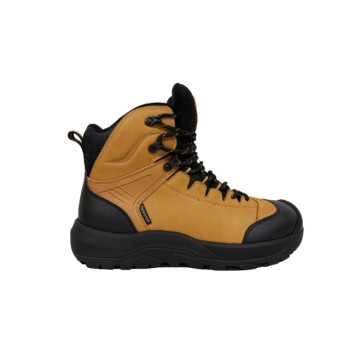
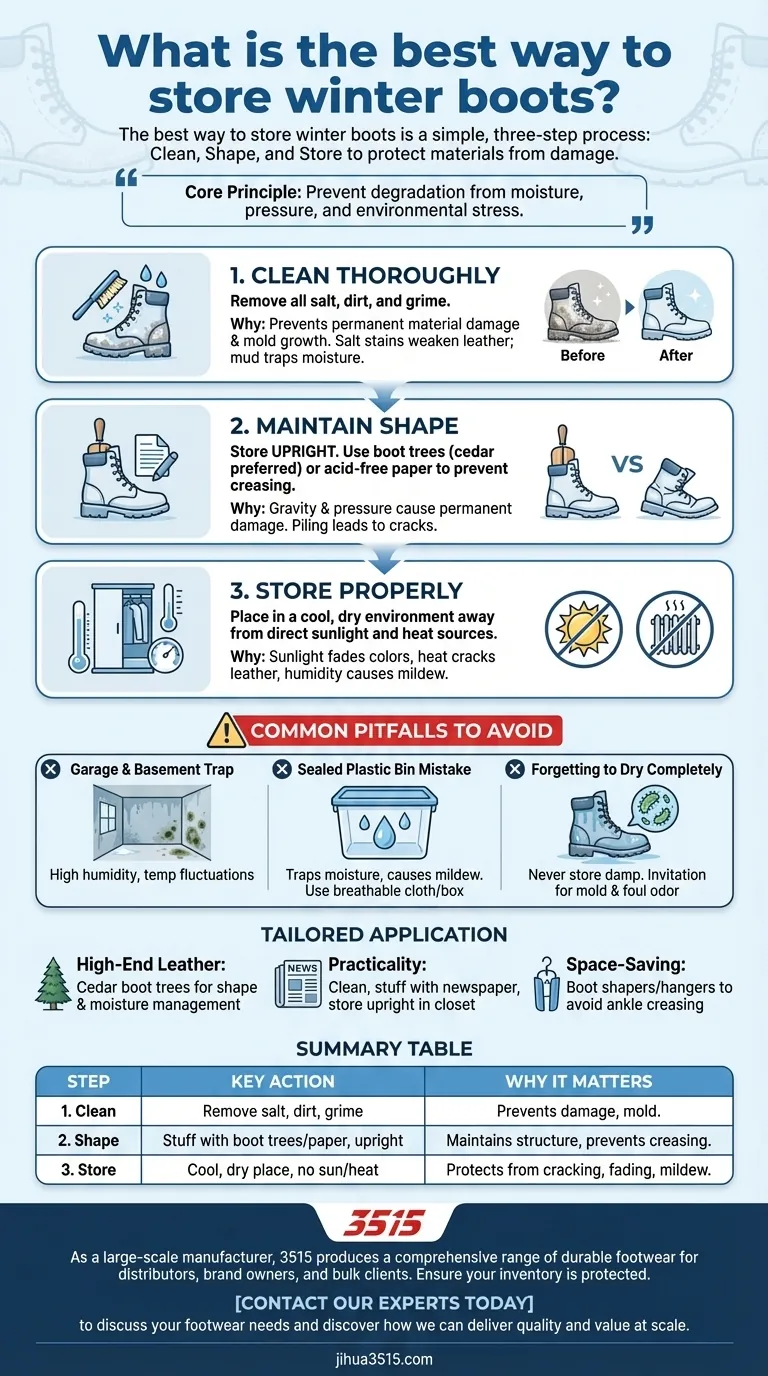
The best way to store winter boots is to first clean them thoroughly, then stuff them to maintain their shape, and finally store them upright in a cool, dry environment. This simple, three-step process protects the materials from damage caused by moisture, creasing, and dirt, ensuring your investment is ready for the next winter.
The core principle of proper boot storage isn't just about putting them away; it's about actively preventing the degradation caused by moisture, pressure, and environmental stress during the off-season.
The Foundation: Why Proper Storage Matters
Winter boots are an investment in comfort and safety, but the materials they are made from—leather, rubber, and high-tech synthetics—are vulnerable when stored improperly. The goal is to create a stable environment that slows their natural aging process.
Step 1: Start with a Clean Slate
Before storing, you must remove all the salt, dirt, and grime from the season. Storing boots dirty is the primary cause of material breakdown.
Salt stains can permanently damage and weaken leather, while caked-on mud can trap moisture against the boot's surface, leading to mold or rot. A thorough cleaning is a non-negotiable first step.
Step 2: Maintain Structural Integrity
How you position your boots in storage is just as important as where you put them. Gravity and pressure can cause permanent damage over several months.
The best practice is to store them standing upright. Piling boots in a heap or laying them on their side causes the shaft and ankle areas to fold and crease, which weakens the material over time.
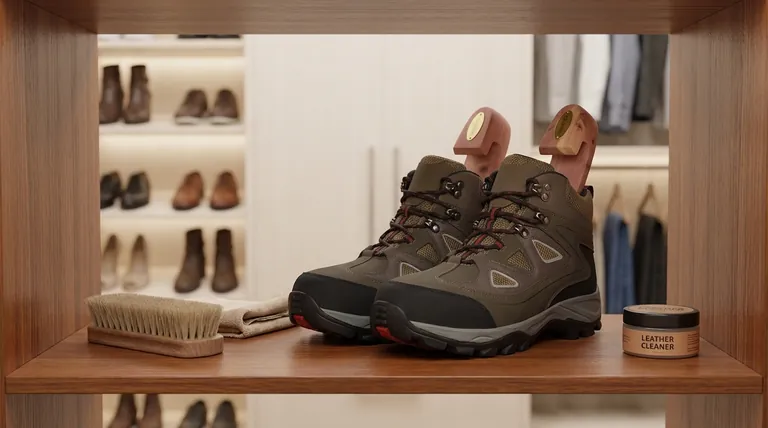
To help them hold their form, use boot trees. Cedar boot trees are ideal as they not only maintain the shape but also absorb residual moisture and leave a fresh scent. If you don't have boot trees, stuffing them with acid-free paper or newspaper is an effective alternative.
Step 3: Control the Environment
The final piece of the puzzle is choosing the right location. The ideal storage spot has a consistent, moderate temperature and low humidity.
Store your boots in a cool, dry place away from direct sunlight. Sunlight can fade colors and make materials like rubber and leather brittle. Heat sources, like vents or radiators, can dry out leather excessively, causing it to crack.
Common Pitfalls to Avoid
Even with good intentions, common mistakes can undermine your efforts and shorten the lifespan of your footwear.
The Garage and Basement Trap
While convenient, unfinished basements and garages are often the worst places to store boots. They typically have high humidity and experience significant temperature fluctuations, creating a perfect environment for mold growth and material disintegration.
The Sealed Plastic Bin Mistake
Storing leather or natural materials in an airtight plastic container is a critical error. These materials need to breathe. Sealing them in a non-breathable container can trap trace amounts of moisture, leading to mildew. A cloth bag or a cardboard box is a far better choice if you need to cover them.
Forgetting to Dry Completely
Never store boots that are even slightly damp. Any remaining moisture is an invitation for mold and bacteria, which can ruin the boots and create a foul odor that is nearly impossible to remove. Ensure they are bone-dry before putting them away.
How to Apply This to Your Boots
Your approach can be tailored slightly based on your specific needs and the type of boots you own.
- If your primary focus is preserving high-end leather boots: Invest in cedar boot trees to perfectly maintain their shape and manage any latent moisture.
- If your primary focus is practicality for standard boots: A thorough cleaning followed by stuffing them with newspaper and placing them upright in a closet is sufficient.
- If your primary focus is saving space: Use boot shapers or hangers that allow the boots to be stored upright without creasing the ankle.
Properly storing your winter boots is a simple discipline that protects your investment and ensures they are ready to perform the moment the first snowflake falls.
Summary Table:
| Step | Key Action | Why It Matters |
|---|---|---|
| 1. Clean | Remove all salt, dirt, and grime. | Prevents permanent material damage and mold growth. |
| 2. Shape | Stuff with boot trees or paper; store upright. | Maintains boot structure and prevents creasing. |
| 3. Store | Place in a cool, dry place away from sunlight. | Protects materials from cracking, fading, and mildew. |
As a large-scale manufacturer, 3515 produces a comprehensive range of durable footwear for distributors, brand owners, and bulk clients. Our production capabilities encompass all types of winter boots designed to last. Ensure your inventory is protected with proper storage knowledge. Contact our experts today to discuss your footwear needs and discover how we can deliver quality and value at scale.
Visual Guide
Related Products
- Premium Insulated Safety Boots and Shoes for Wholesale & Bulk Orders
- Factory Direct Wholesale Rain Boots Durable Waterproof & Fully Customizable
- Durable Waterproof Rain Boots | Custom Manufacturer for Wholesale & Brands
- Wholesale Waterproof Tactical Boots Custom Suede & High-Traction Soles
- Premium Waterproof High-Cut Industrial Safety Boots for Wholesale and Bulk Orders
People Also Ask
- What are the recommended insulation ratings for mild winter conditions? A Guide for Active & Stationary Workers
- How does insulation thickness correlate with temperature ranges? A Guide to Choosing the Right Warmth
- What insulation level is needed for severe cold and stationary work? 1200g or Higher is Essential
- What safety advantages do insulated boots offer beyond warmth? Dielectric Protection & Superior Grip
- How does fleece lining contribute to the warmth of insulated boots? Trapping Air for Superior Cold Protection