
Wearing thick socks inside new boots is a classic technique used to solve the universal problem of painful break-in periods. This method serves two primary functions: it allows you to accurately assess the fit without committing to wear, and it initiates a gentle stretching process that molds the boot to the unique shape of your foot.
The core challenge with new boots, especially leather ones, is their initial stiffness. Using thick socks is a simple, effective strategy to leverage your foot's shape and body heat to customize the fit, significantly reducing the discomfort of the traditional break-in process.
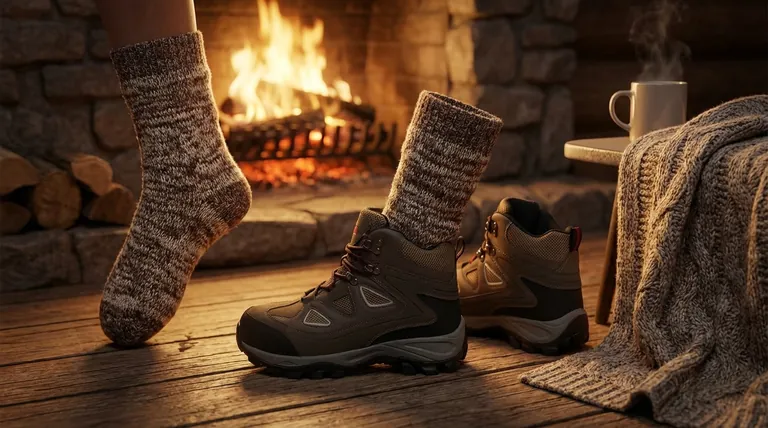
The Mechanics of a Proper Boot Break-in
Breaking in a boot is the process of making a rigid, factory-shaped item conform to the three-dimensional anatomy of your foot. Using thick socks accelerates this process by manipulating pressure and temperature in a controlled way.
The Ultimate Fit Test
Before you even decide to keep a pair of boots, trying them on with the thickest socks you would ever wear with them is the most reliable fit test. It immediately reveals the boot's maximum capacity.
If your foot feels painfully cramped or your toes are pressing hard against the end, the boot is likely the wrong size. This test ensures you make the right sizing decision while keeping the boots in pristine condition for a potential return.
The Principle of Gradual Expansion
The primary benefit of this method is stretching. The extra volume from a thick sock applies firm, consistent pressure from the inside out.
This is especially effective for the width and instep of the boot, which are common problem areas. The gentle, sustained pressure encourages natural materials like leather to give and mold to your foot's contours.
Simulating Real-World Conditions
When you walk, your feet generate heat and moisture, which naturally softens and relaxes leather fibers, making them more pliable.
Wearing thick socks in your new boots while sitting at home mimics this environment. The socks trap body heat, warming the leather and making it more receptive to stretching and molding without the pain and blisters caused by walking in stiff, new boots.
Understanding the Limitations and Pitfalls
While highly effective, this method is a tool for refinement, not a solution for a fundamentally incorrect size. Understanding its limits is key to avoiding frustration.
It Cannot Fix the Wrong Length
This technique excels at creating more room in the width and volume of a boot. However, it cannot change the length.
If your toes are hitting the front of the boot, it is too short. No amount of stretching will fix this, and you must get a larger size.
Material Is a Critical Factor
The thick sock method is most effective on boots made from natural leather, as it has the inherent ability to stretch and conform.
It has a minimal effect on synthetic materials and will not work on boots with rigid plastic shells or heavily reinforced toe boxes. Always consider the boot's construction.
The Risk of Discomfort
While the goal is to avoid pain, wearing extremely tight boots with thick socks for too long can still be uncomfortable and may restrict circulation.
Listen to your body. It's better to perform this technique in several short sessions (e.g., 30-60 minutes) rather than one long, painful one.
How to Apply This to Your New Boots
Use this method strategically based on your specific goal for the boots.
- If your primary focus is confirming the size: Try the boots on with one pair of very thick socks. If you feel intense pinching or your toes are crammed, the boot is too small and should be returned.
- If your primary focus is creating a custom fit: Wear the correctly sized boots with thick socks around the house for 1-2 hour intervals over several days to gradually stretch and mold the leather.
- If your primary focus is accelerating the break-in: While wearing the boots with thick socks, use a hairdryer on a medium setting to gently warm any specific tight spots for 2-3 minutes to make the leather extra pliable.
Ultimately, this technique transforms the boot break-in from a painful chore into a controlled process of shaping the boot perfectly to your foot.
Summary Table:
| Benefit | Key Function | Best For |
|---|---|---|
| Accurate Fit Test | Reveals maximum boot capacity before committing to wear. | Ensuring correct sizing for a return. |
| Gentle Stretching | Applies pressure to stretch the boot's width and instep. | Natural leather boots that need molding. |
| Pain-Free Break-In | Traps body heat to soften leather without blisters. | Accelerating the break-in process comfortably. |
| Simulates Real Use | Mimics the heat and moisture from walking. | Pre-conditioning boots before active wear. |
Ready to Source Boots That Fit Perfectly from the Start?
As a large-scale manufacturer, 3515 produces a comprehensive range of footwear for distributors, brand owners, and bulk clients. Our production capabilities encompass all types of shoes and boots, ensuring your customers experience superior comfort and fit.
Partner with us to provide high-quality footwear that minimizes break-in discomfort for end-users. Let's discuss your specific needs and how our manufacturing expertise can benefit your business.
Contact us today for a consultation!
Visual Guide
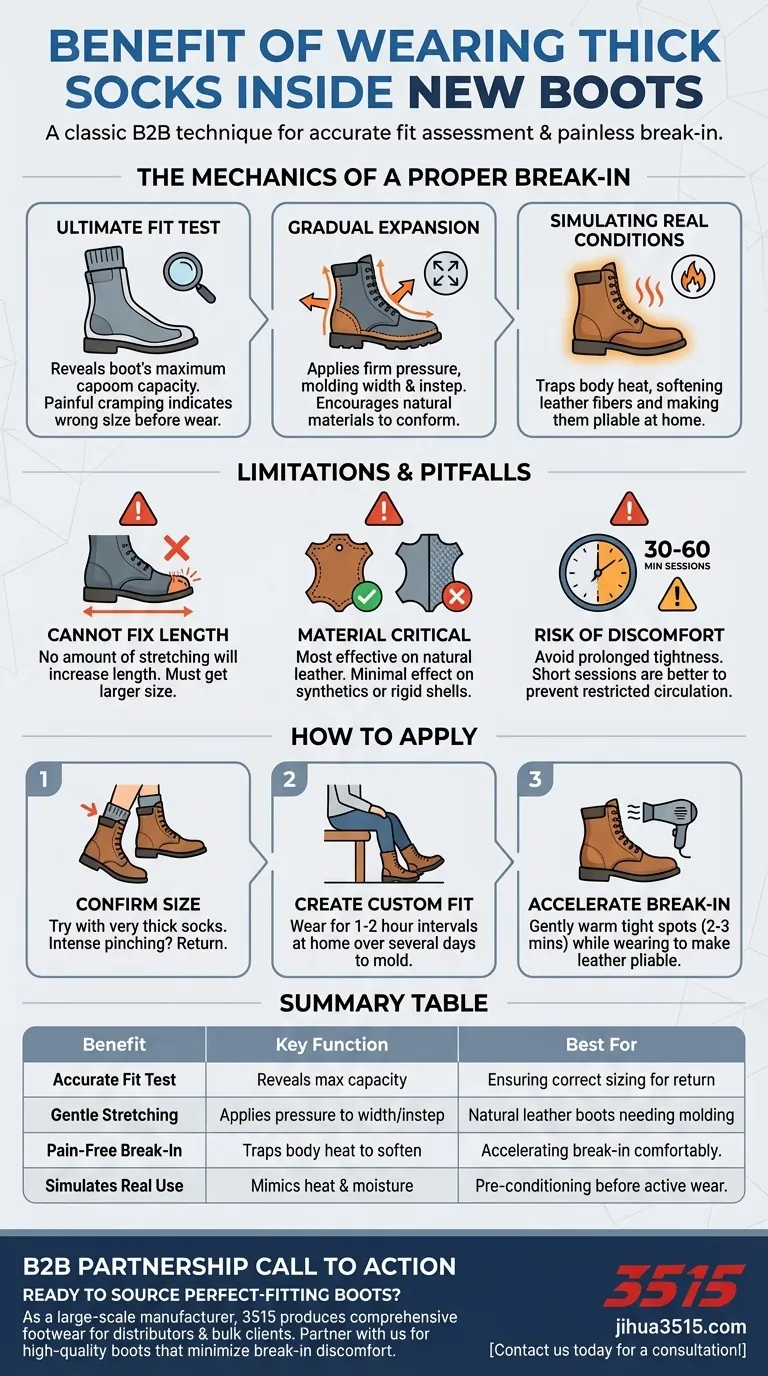
Related Products
- Premium Wholesale Tactical Style Safety Shoes Boots with Quick Lacing
- Wholesale Durable & Breathable Training Shoes for Custom Brands
- Durable Leather Moc Toe Work Boots for Wholesale & Custom Manufacturing
- High-Traction Suede Tactical Boots Wholesale & Custom Manufacturing
- Durable Leather High-Ankle Tactical Boots for Wholesale & Custom Manufacturing
People Also Ask
- How are gait analysis research findings applied to the functional design of safety shoes and tactical boots?
- How can specialized footwear mitigate safety risks? High-Volume OEM/ODM Solutions since 1951
- Why is the synchronization of craftsmanship and UX development emphasized for bulk customization of safety shoes?
- How does anthropomorphic design influence material selection? Enhance Footwear Performance through Biological Alignment
- How do quality certification standards for safety shoes reduce perceived risk? Buy Online with Technical Certainty















