
The most effective core layering system for winter cycling combines a polypropylene fishnet baselayer with a merino wool mid-layer and a highly breathable outer jacket. For colder conditions, an additional light merino layer can be added between the fishnet and the primary wool layer for extra insulation without compromising moisture management.
The fundamental goal of winter cycling apparel is not just to stay warm, but to stay dry. An effective core system prioritizes moving sweat away from your skin, because trapped moisture is what will ultimately make you cold.
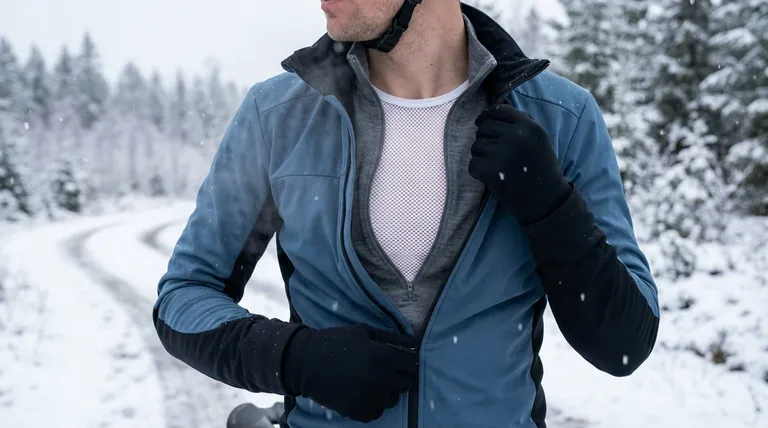
The Anatomy of an Effective Core Layering System
To maintain a stable core temperature during the high-energy output of cycling, you need a system of layers that work together. Each piece has a distinct and critical job to do.
Layer 1: The Base Layer for Moisture Evacuation
The first layer's only job is to get sweat off your skin as fast as possible. This is where a polypropylene fishnet-style shirt, such as a Brynje Super Thermo, excels.
The open-weave design creates a significant layer of trapped air for insulation while minimizing contact with your skin. This structure allows moisture vapor to move away from your body unimpeded, preventing that clammy, chilled feeling.
Layer 2: The Insulating and Wicking Mid-Layer
Over the fishnet, you need a layer that can absorb moisture and continue moving it outward while also providing primary insulation. A long-sleeve merino wool baselayer is ideal for this role.
Merino wool is exceptional at wicking moisture and, crucially, retains its insulating properties even when damp. A weight between 180gm and 260gm provides a versatile range of warmth for most winter conditions.
Layer 3: The Protective, Breathable Shell
Your final layer must protect you from the wind while allowing all the moisture vapor from the inner layers to escape. The key here is breathability.
A jacket that is only windproof and water-resistant, but not a fully waterproof membrane, is often the best choice. This prevents the "boil in the bag" effect where sweat gets trapped, soaks your inner layers, and freezes the moment you stop.
Why This System Works: Managing Sweat is Key
Many cyclists make the mistake of simply piling on thick, warm layers. This approach fails because it doesn't account for the massive amount of heat and sweat you generate while riding.
The Problem with Over-Insulating
When you overdress, you begin to sweat heavily. If that sweat has nowhere to go, it saturates your clothing. As soon as you reduce your effort or stop, that moisture rapidly cools, drawing heat away from your body and leaving you dangerously cold.
How the Layers Work in Concert
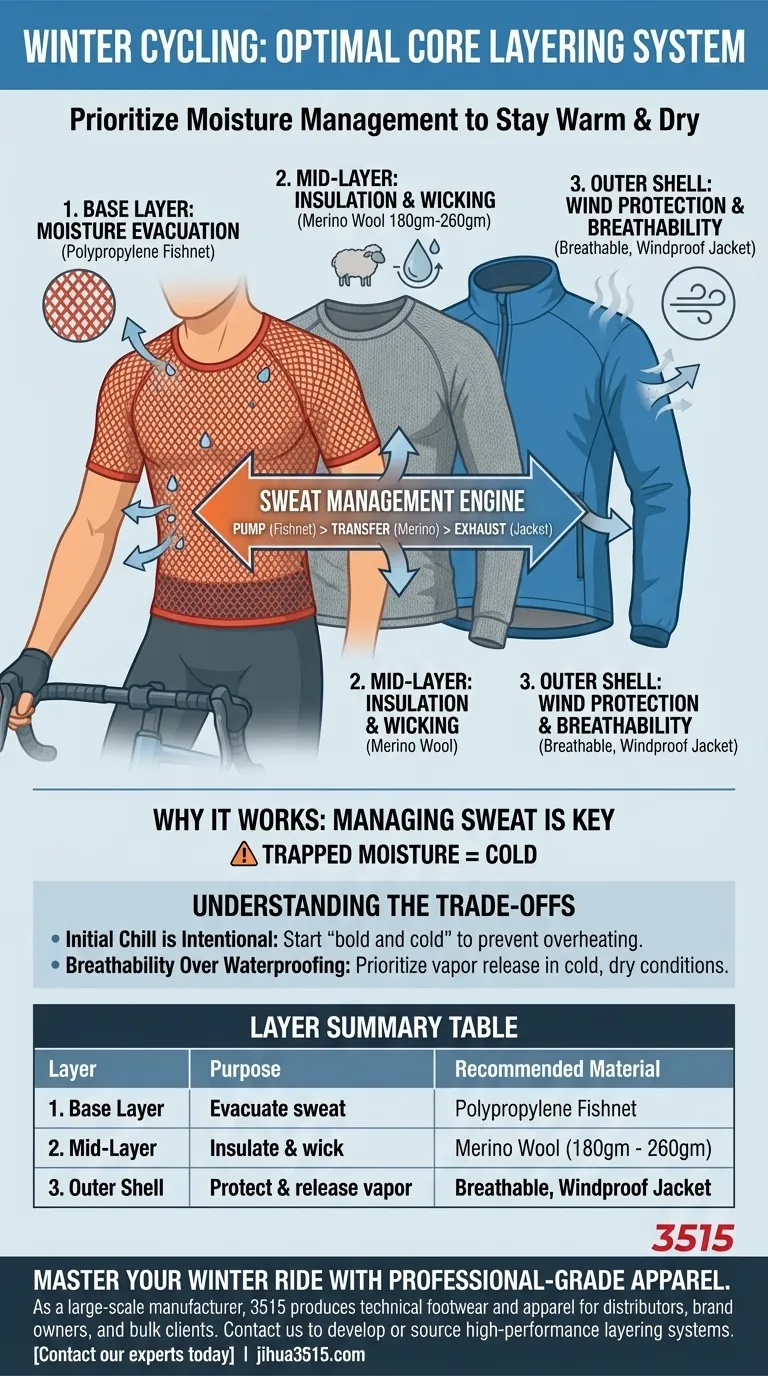
Think of this system as an engine for moisture. The fishnet is the pump, actively pushing moisture off your skin. The merino wool is the transfer pipe, pulling that moisture away and holding it in its fibers without feeling wet. The breathable jacket is the exhaust vent, releasing the moisture vapor into the outside air.
Understanding the Trade-offs
This technical approach is highly effective, but it requires understanding its principles and limitations to get the most out of it.
Initial Chill vs. Long-Term Comfort
With this system, you should feel slightly cool for the first five to ten minutes of your ride. This is intentional. Starting "bold and cold" prevents you from overheating once your body is working hard, ensuring you stay dry and comfortable for the entire ride.
Breathability Over Waterproofing
This setup is optimized for cold, dry conditions. It prioritizes letting sweat out over keeping external moisture from getting in. In freezing rain or very wet snow, you would need to trade some breathability for a more waterproof outer shell.
The Cost of Technical Fabrics
Specialized materials like high-quality merino wool and technical baselayers represent an investment. However, their performance in managing moisture and providing warmth is far superior to standard materials like cotton, which should be avoided at all costs.
How to Adapt This System for Your Ride
You can fine-tune this layering system based on the intensity of your ride and the specific temperature.
- If your primary focus is high-intensity training: Stick with a lighter merino layer (around 180gm). Your high heat output makes moisture management your absolute top priority.
- If your primary focus is steady-state endurance or fat biking: A mid-weight merino (200-260gm) is a reliable choice, offering a great balance of warmth and wicking.
- If you are riding in very cold temperatures (below -10°C / 14°F): Add a second, very light merino layer directly over the fishnet baselayer for a significant boost in insulation.
Mastering your layering system is the key to unlocking a full season of comfortable winter cycling.
Summary Table:
| Layer | Purpose | Recommended Material |
|---|---|---|
| 1. Base Layer | Evacuates sweat from skin | Polypropylene Fishnet (e.g., Brynje Super Thermo) |
| 2. Mid-Layer | Insulates & wicks moisture | Merino Wool (180gm - 260gm) |
| 3. Outer Shell | Protects from wind & releases vapor | Breathable, Windproof Jacket |
Master Your Winter Ride with Professional-Grade Cycling Apparel
Struggling to find the right balance between warmth and breathability on your winter rides? The wrong layers can leave you clammy, cold, and cut your ride short. As a large-scale manufacturer, 3515 produces a comprehensive range of technical footwear and apparel for distributors, brand owners, and bulk clients. Our production capabilities encompass all types of performance gear, engineered to meet the demands of serious cyclists.
We can help you develop or source high-performance layering systems that prioritize moisture management, keeping you comfortable and dry in any condition. Let's discuss your specific needs and how we can bring your vision to life.
Contact our experts today to explore manufacturing possibilities and elevate your winter cycling collection.
Visual Guide
Related Products
- Lightweight Breathable Sneakers with Wet-Traction Grip for Wholesale & Private Label
- Wholesale Lightweight Cushioned Athletic Sneakers for Custom Bulk Production
- Wholesale Breathable Athletic Sneakers - Custom Lightweight Cushioned Footwear Manufacturer
- Wholesale Training Shoes with Dial Lacing System Custom OEM Manufacturing
- Lightweight Breathable Training Shoes for Wholesale & Custom OEM Manufacturing
People Also Ask
- Why are breathable sneakers necessary for tropical commuting? Stay Cool and Dry in High Humidity
- What role do lightweight training shoes play in urban traffic? Boost Agility and Reaction for Safer City Navigation
- How do lightweight shoes provide support? The Science of Efficient Cushioning & Stability
- What are the style advantages of lightweight shoes? Sleek, Versatile & Modern Comfort
- How do lightweight shoes improve breathability? Discover the Science of Cool, Dry Feet



















