
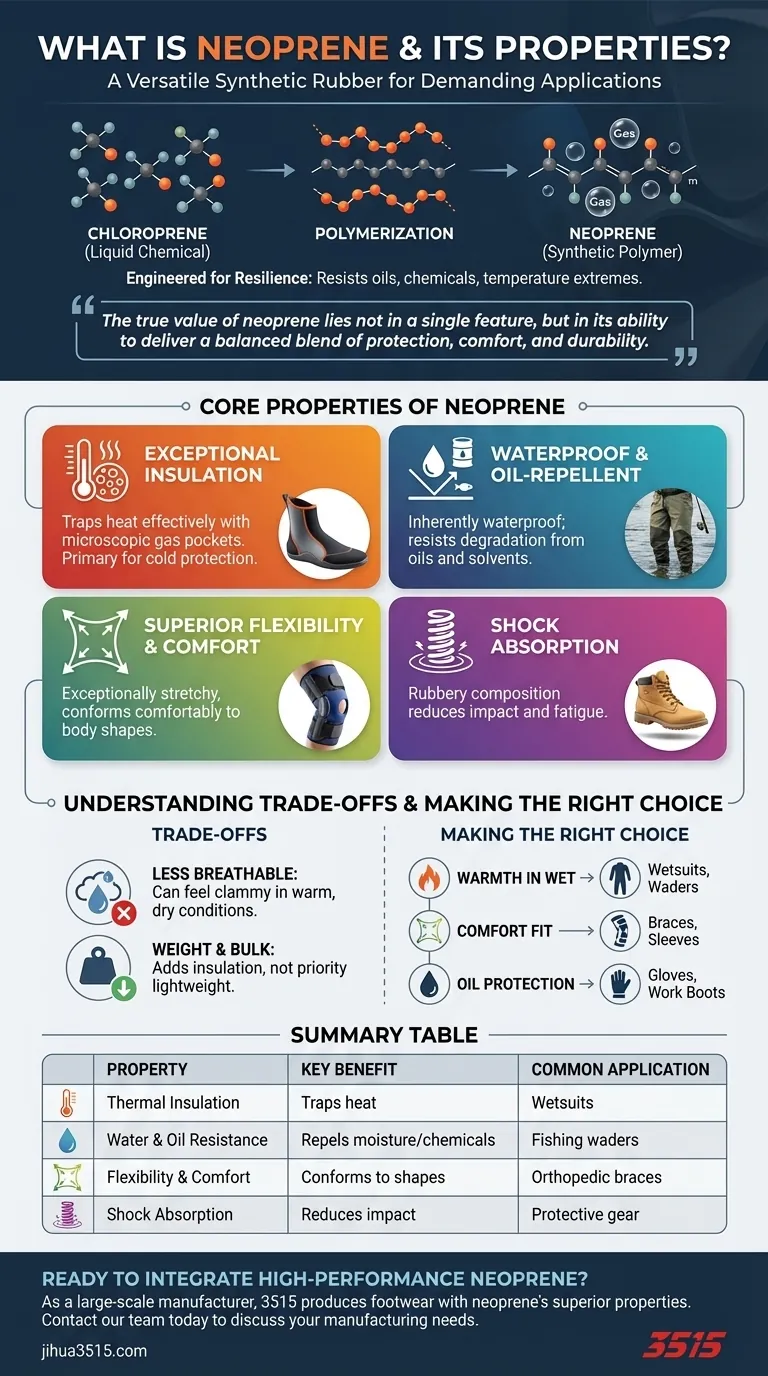
Neoprene is a highly versatile synthetic rubber created by polymerizing chloroprene. It is prized for its unique combination of properties, including excellent thermal insulation, water resistance, flexibility, and chemical stability, making it a go-to material for demanding applications.
The true value of neoprene lies not in a single feature, but in its ability to deliver a balanced blend of protection, comfort, and durability that few other materials can match.
What is Neoprene? A Closer Look
Neoprene is a specific type of synthetic polymer, a family of materials that also includes plastics and synthetic fibers. Its molecular structure gives it a distinct set of valuable characteristics.
From Chloroprene to a Stable Polymer
The material begins as a liquid chemical called chloroprene. Through a chemical process known as polymerization, these individual molecules are linked together into long, stable chains, creating the solid material we know as neoprene.
A Material Designed for Resilience
Neoprene was one of the first commercially successful synthetic rubbers. It was engineered to offer superior performance in environments where natural rubber would degrade, particularly when exposed to oils, chemicals, and temperature extremes.
The Core Properties of Neoprene
The practical applications of neoprene are a direct result of its inherent physical and chemical properties. Each characteristic solves a specific environmental or functional challenge.
Exceptional Insulation
Neoprene contains microscopic gas pockets that trap heat effectively. This makes it an outstanding insulator against cold, which is why it is the primary material used in wetsuits and insulated boots.
Waterproof and Oil-Repellent
The material is inherently waterproof, preventing moisture from passing through it. Critically, it also resists degradation from oils and solvents, a quality that extends to repelling organic oils, such as those that cause persistent fish smells on gear.
Superior Flexibility and Comfort
Neoprene is exceptionally flexible and stretchy. This allows products made from it, like boots, to conform comfortably to a wide variety of body shapes and sizes without restricting movement.
Shock Absorption
Its rubbery composition provides excellent shock-absorbing qualities. This reduces impact and fatigue, enhancing comfort in footwear and protective gear.
Understanding the Trade-offs
While highly effective, neoprene is not a universal solution. Understanding its limitations is key to using it correctly.
Breathability in Context
Although some neoprene products are described as breathable, it is not as breathable as natural fibers like cotton or wool. In warm, dry conditions, it can trap sweat and feel clammy if not paired with moisture-wicking liners.
Weight and Bulk
The same structure that provides excellent insulation also adds weight and bulk. For applications where being lightweight and low-profile is the absolute priority, other materials might be more suitable.
Making the Right Choice for Your Goal
Selecting a neoprene product depends entirely on the environment and the problem you need to solve.
- If your primary focus is warmth in wet conditions: Neoprene is the industry standard for products like wetsuits, fishing waders, and waterproof winter boots.
- If your primary focus is a comfortable, conforming fit: Its flexibility makes it ideal for orthopedic braces, laptop sleeves, and boots that need to accommodate different calf sizes.
- If your primary focus is protection from oils and chemicals: Neoprene gloves and work boots offer durable protection in automotive or industrial settings.
Ultimately, neoprene is a specialized material engineered to provide reliable protection and comfort in challenging environments.
Summary Table:
| Property | Key Benefit | Common Application |
|---|---|---|
| Thermal Insulation | Traps heat effectively | Wetsuits, insulated boots |
| Water & Oil Resistance | Repels moisture and chemicals | Fishing waders, work boots |
| Flexibility & Comfort | Conforms to various shapes | Orthopedic braces, footwear |
| Shock Absorption | Reduces impact and fatigue | Protective gear, safety boots |
Ready to integrate high-performance neoprene into your product line?
As a large-scale manufacturer, 3515 produces a comprehensive range of footwear for distributors, brand owners, and bulk clients. Our production capabilities encompass all types of shoes and boots, and we can expertly incorporate neoprene's superior properties—like thermal insulation, flexibility, and durability—into your designs.
Let us help you create products that offer unmatched protection and comfort. Contact our team today to discuss your manufacturing needs.
Visual Guide
Related Products
- Lightweight Breathable Training Shoes for Wholesale & Custom OEM Manufacturing
- Wholesale Durable & Breathable Training Shoes for Custom Brands
- Wholesale Durable Camouflage Canvas Shoes with High-Traction Cleated Rubber Sole
- Wholesale Breathable Training Shoes Custom Athletic Footwear Manufacturer
- Durable Rubber Sole Outdoor Shoes Wholesale & Custom Manufacturing
People Also Ask
- Why are lightweight training shoes often preferred over professional hiking boots in urban walking? Maximize City Comfort
- What is the primary role of specialized training or orthopedic shoes? Enhance Safety in Elderly Balance Training
- Why are professional-grade training shoes essential for physical therapy? Ensure Patient Safety and Gait Stability
- Why are the slip-resistance and stability performance of training shoes critical in gait analysis? Ensure Data Accuracy
- Why is the use of flat-soled or professional training shoes essential for WBV? Maximize Vibration Energy Transfer








