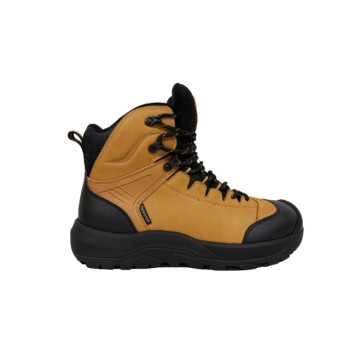
In simple terms, a snow boot is specialized footwear engineered to keep your feet warm and dry in harsh winter conditions like deep snow, slush, and mud. It achieves this through a specific combination of waterproofing, insulation, and a high-profile design that acts as a barrier against the elements.
The defining characteristic of a snow boot isn't just its warmth, but its robust construction focused on two primary goals: keeping moisture out and trapping heat in. Its design prioritizes protection from the elements over the lightweight feel or style of other winter footwear.
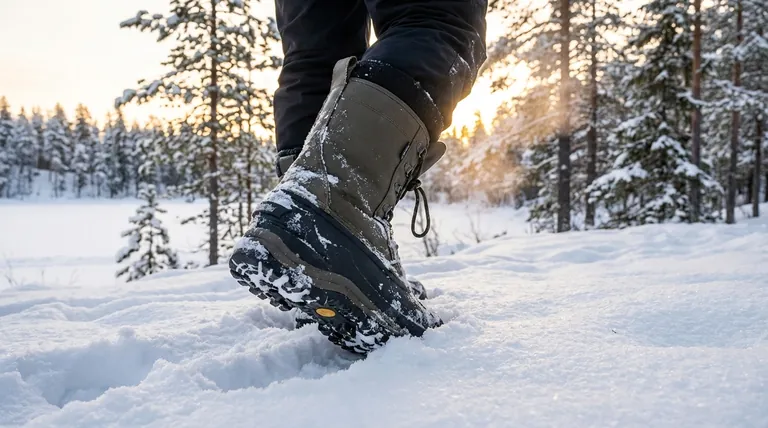
The Core Components of a True Snow Boot
To understand what separates a snow boot from a standard winter boot, we must examine its key characteristics. Each feature serves a specific protective purpose.
A Focus on Waterproofing
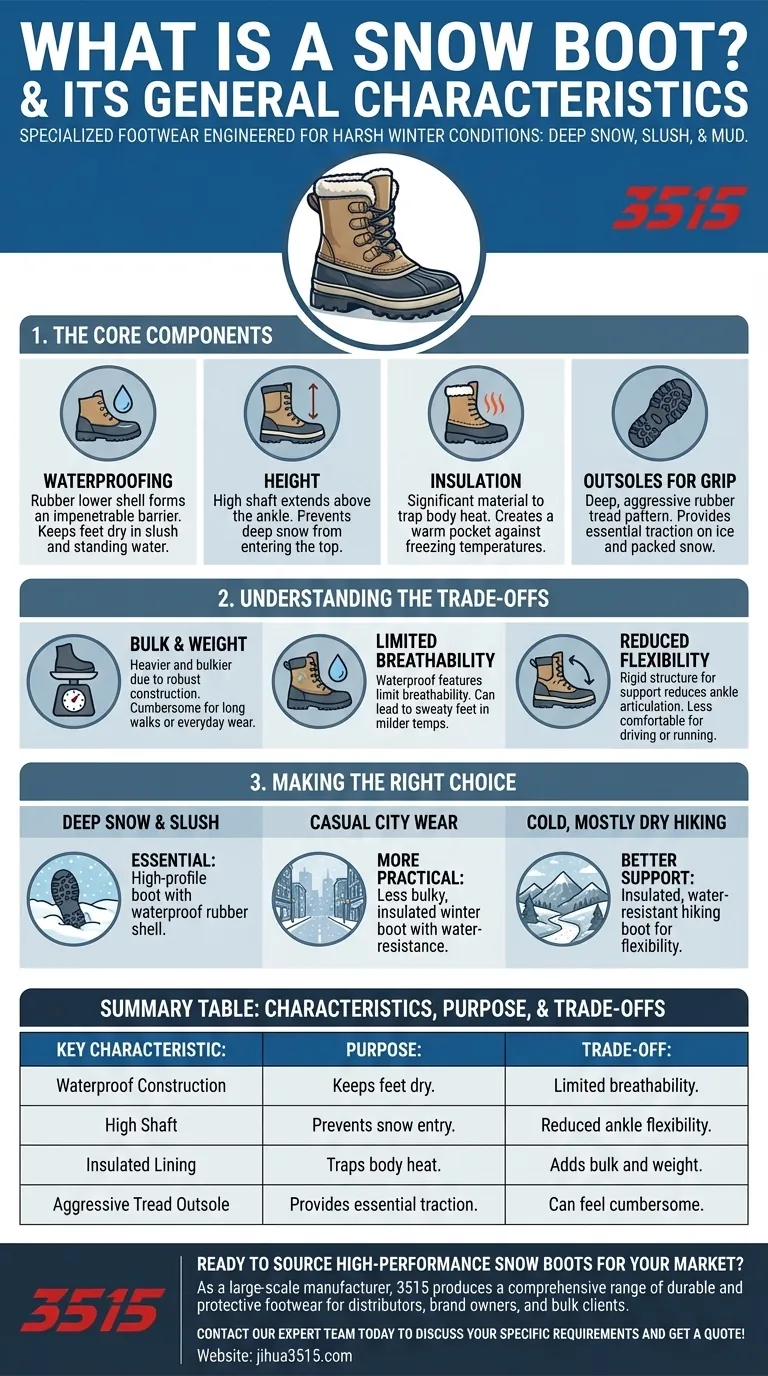
A true snow boot is typically waterproof, not merely water-resistant. This is often achieved with a rubber lower shell that forms an impenetrable barrier against water, which is critical when walking through slush or standing water.
The Importance of Height
Snow boots are designed with a high shaft that extends well above the ankle. This height is a functional barrier, preventing snow from entering the boot from the top, especially when walking through deep drifts.
Insulation for Thermal Protection
Unlike a simple rain boot, a snow boot contains a significant amount of insulation. This material is designed to trap your body heat, creating a warm pocket of air around your foot to protect against freezing temperatures.
Specialized Outsoles for Grip
The sole of a snow boot is made of rubber and features a deep, aggressive tread pattern. Its primary functions are to keep water from seeping in from below and to provide essential traction on slippery surfaces like packed snow and ice.
Understanding the Trade-offs
The highly protective design of a snow boot inherently involves trade-offs that are important to recognize.
Bulk and Weight
The combination of a rubber shell, thick insulation, and a high profile makes snow boots heavier and bulkier than other boots. This robust construction is excellent for protection but can feel cumbersome for everyday wear or long walks.
Limited Breathability
The same features that make a snow boot waterproof also limit its breathability. In milder temperatures or during high-exertion activities, this can lead to sweaty feet, as moisture from inside the boot has no way to escape.
Reduced Flexibility
The rigid structure, particularly around the ankle, provides support but reduces flexibility. This can make them less comfortable for activities that require significant ankle articulation, such as driving or running.
Making the Right Choice for Your Goal
Selecting the correct footwear depends entirely on the conditions you expect to face.
- If your primary focus is keeping feet dry in deep snow and slush: A classic, high-profile snow boot with a waterproof rubber lower shell is essential.
- If your primary focus is warmth during casual city wear: A less bulky, insulated winter boot with water-resistant materials may be more comfortable and practical.
- If your primary focus is hiking in cold but mostly dry conditions: An insulated, water-resistant hiking boot will offer better flexibility and support than a traditional snow boot.
Understanding these core characteristics empowers you to select footwear based on performance, not just appearance.
Summary Table:
| Key Characteristic | Purpose | Trade-off |
|---|---|---|
| Waterproof Construction | Keeps feet dry in snow and slush. | Limited breathability. |
| High Shaft | Prevents snow from entering the boot. | Reduced ankle flexibility. |
| Insulated Lining | Traps body heat for warmth. | Adds bulk and weight. |
| Aggressive Tread Outsole | Provides essential traction on ice and snow. | Can feel cumbersome for everyday wear. |
Ready to source high-performance snow boots for your market?
As a large-scale manufacturer, 3515 produces a comprehensive range of durable and protective footwear for distributors, brand owners, and bulk clients. Our production capabilities encompass all types of snow boots, ensuring your customers get the quality and performance they need.
Contact our expert team today to discuss your specific requirements and get a quote!
Visual Guide
Related Products
- Premium Insulated Safety Boots and Shoes for Wholesale & Bulk Orders
- Durable Waterproof Rain Boots | Custom Manufacturer for Wholesale & Brands
- Factory Direct Wholesale Rain Boots Durable Waterproof & Fully Customizable
- Heavy-Duty Waterproof Nubuck Safety Boots Safety Shoes for Bulk Supply
- Wholesale Durable Camouflage Canvas Shoes with High-Traction Cleated Rubber Sole
People Also Ask
- What are the recommended insulation ratings for mild winter conditions? A Guide for Active & Stationary Workers
- How does insulation thickness correlate with temperature ranges? A Guide to Choosing the Right Warmth
- What insulation level is needed for severe cold and stationary work? 1200g or Higher is Essential
- What safety advantages do insulated boots offer beyond warmth? Dielectric Protection & Superior Grip
- How does fleece lining contribute to the warmth of insulated boots? Trapping Air for Superior Cold Protection