
For riders who engage in multiple disciplines, the most effective footwear setup is not a single "do-it-all" boot, but a strategic two-pair system. This approach involves a comfortable, casual riding shoe for daily use and a dedicated, full-length boot tailored to your most demanding riding discipline. This combination ensures you have the right balance of everyday comfort and specialized protection when it matters most.
The core principle is to match your level of protection to the level of risk for each ride. A single piece of footwear inevitably compromises either safety in demanding situations or comfort and convenience in casual ones; a two-pair system eliminates this compromise.
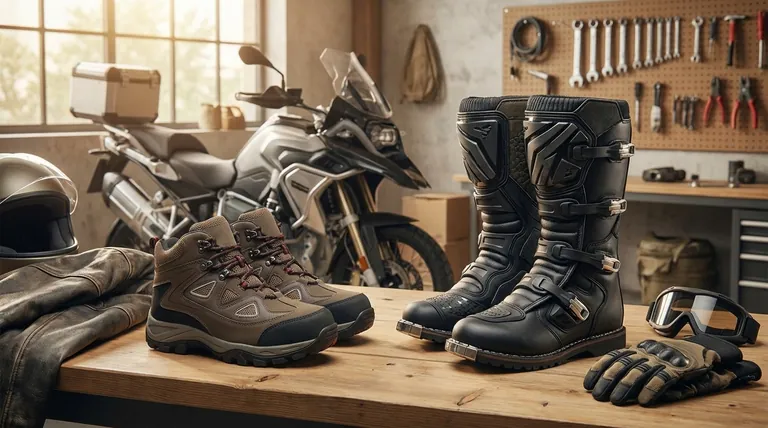
Why a Single Boot Fails the "Do-It-All" Test
The central challenge in motorcycle footwear is balancing conflicting demands. The features that make a boot excellent for one type of riding often become a liability in another.
The Protection vs. Comfort Spectrum
All motorcycle footwear exists on a spectrum. At one end, you have maximum protection with features like rigid ankle bracing, tall shin plates, and stiff soles. At the other, you have maximum off-bike comfort, flexibility, and understated looks.
A single boot trying to cover the entire spectrum will inevitably be a master of none. It will be overbuilt for a quick trip to the store and under-equipped for a spirited canyon ride or a challenging trail.
Mismatched Features for the Task
Consider the specific features needed for different disciplines. An adventure boot's aggressive, lugged sole is perfect for finding grip in the dirt but can feel clumsy and vague on street bike footpegs.
Similarly, the heavy buckles and rigid plastic of a motocross boot offer immense impact protection but are impractical and uncomfortable for commuting. A truly versatile boot would be an exercise in flawed compromises.
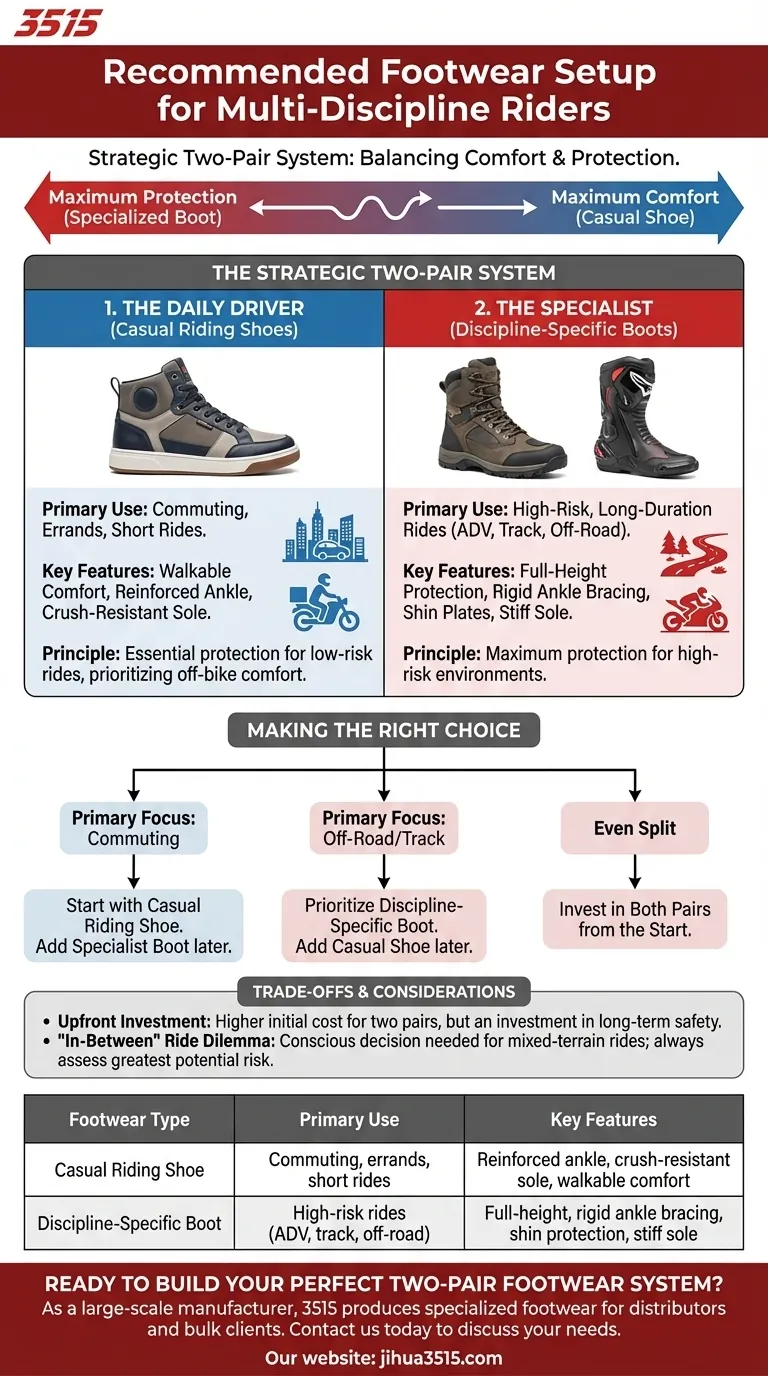
The Strategic Two-Pair System
Instead of searching for one imperfect solution, the optimal approach is to invest in two specialized pieces of footwear that cover the vast majority of your riding needs.
Component 1: The Daily Driver - Casual Riding Shoes
This is your go-to for commuting, running errands, and shorter, less aggressive rides. These look like standard sneakers or short boots but contain critical safety features.
Key characteristics include reinforced ankle cups, a crush-resistant sole, and abrasion-resistant materials. They provide essential protection far beyond a standard shoe while offering the walkability and comfort you need for your destination.
Component 2: The Specialist - Discipline-Specific Boots
This is the boot you wear for your primary, high-risk, or long-duration riding. It is chosen specifically to provide maximum protection and support for that environment.
If you are an adventure or dual-sport rider, this would be a full-height ADV or off-road boot with shin protection and rigid ankle support. If you are a sport or track rider, this would be a dedicated race boot with sliders and advanced torsional protection. This boot is your non-negotiable safety equipment.
Understanding the Trade-offs
While the two-pair system is the most effective solution, it's important to acknowledge the practical considerations.
The Upfront Investment
Purchasing two pairs of high-quality footwear is a larger initial investment than buying a single pair of "all-rounder" boots. However, this should be viewed as an investment in both your long-term comfort and your safety, ensuring you are never dangerously under-equipped.
The "In-Between" Ride Dilemma
This system requires a conscious decision before each ride. For a mixed-terrain day trip, you must choose whether the on-road comfort of the riding shoe outweighs the need for the off-road protection of the full boot. You must always assess the greatest potential risk of your planned route and choose accordingly.
Making the Right Choice for Your Riding
Use your primary riding style as the guide to building your two-pair system.
- If your primary focus is commuting and urban riding: Start by investing in a top-tier casual riding shoe. Add a dedicated touring or sport boot later when you begin to take longer or more aggressive trips.
- If your primary focus is off-road, track, or adventure riding: Prioritize the full-height protective boot first. This is essential equipment for safety in these disciplines, so do not compromise here. You can add a casual shoe later for convenience on shorter trips.
- If your riding is an even split between casual and demanding: Invest in both pairs from the start. This ensures you always have the correct tool for the job and aren't tempted to wear the wrong footwear out of necessity.
Ultimately, choosing the right gear is about honestly assessing the risks of your ride and equipping yourself to manage them.
Summary Table:
| Footwear Type | Primary Use | Key Features |
|---|---|---|
| Casual Riding Shoe | Commuting, errands, short rides | Reinforced ankle, crush-resistant sole, walkable comfort |
| Discipline-Specific Boot | High-risk rides (ADV, track, off-road) | Full-height, rigid ankle bracing, shin protection, stiff sole |
Ready to Build Your Perfect Two-Pair Footwear System?
As a large-scale manufacturer, 3515 produces a comprehensive range of specialized footwear for distributors, brand owners, and bulk clients. Whether you need high-quality casual riding shoes or dedicated discipline-specific boots, our production capabilities cover all types of footwear to meet your exact needs.
Contact us today to discuss how we can provide the right footwear solutions for your riders.
Visual Guide
Related Products
- Wholesale Lightweight Tactical Boots with Dial Closure OEM & Bulk Orders
- Wholesale Waterproof Tactical Boots Custom Suede & High-Traction Soles
- Durable Leather Tactical Boots Wholesale & Custom Manufacturing for Brands
- Premium Wholesale Tactical Style Safety Shoes Boots with Quick Lacing
- Durable Leather High-Ankle Tactical Boots for Wholesale & Custom Manufacturing
People Also Ask
- What steps can be taken to protect the soles of tactical boots? Essential Maintenance for Maximum Durability
- What are some key features of top-tier tactical boots for 2023? Find the Perfect Boot for Your Mission
- Who commonly uses tactical boots? From Military to Outdoor Enthusiasts
- How does creative short video content support functional footwear sales? Boost Trust and Traffic with Visual Proof
- How do manufacturing processes for electronic textiles balance durability with wearing comfort? Innovation in Footwear


















