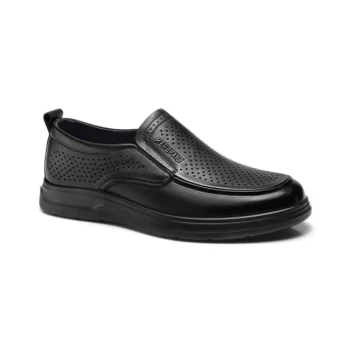
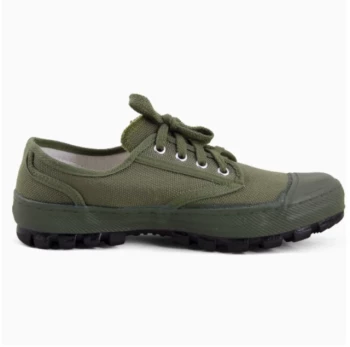
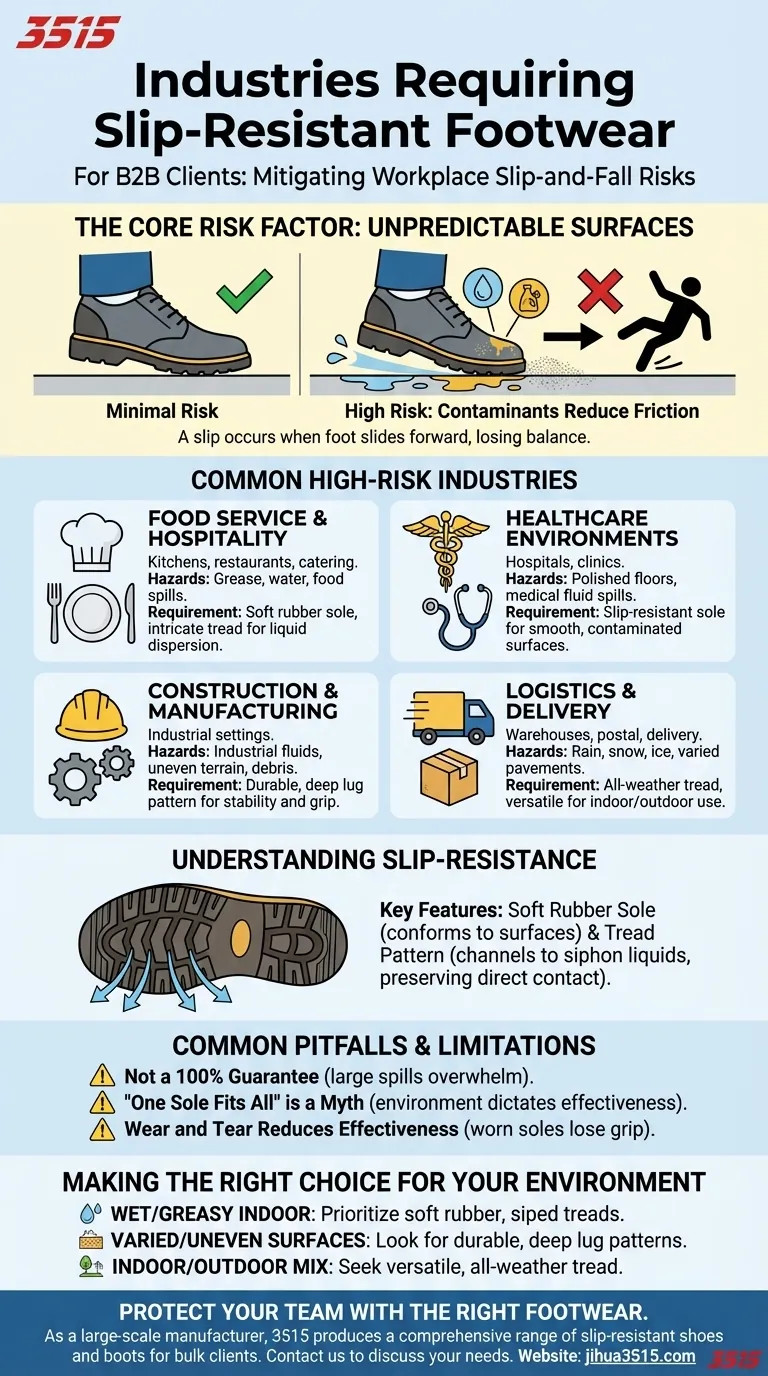
To be direct, the industries that most commonly require slip-resistant footwear are food service, healthcare, construction, and manufacturing. These sectors are defined by work environments where floors are frequently contaminated with water, oils, grease, or other fluids, creating a high and constant risk of slip-and-fall incidents.
The need for slip-resistant shoes is dictated not by a job title, but by the work environment itself. Any role that involves navigating unpredictable, low-friction surfaces—whether due to spills, weather, or polished flooring—demands footwear engineered specifically to mitigate that risk.
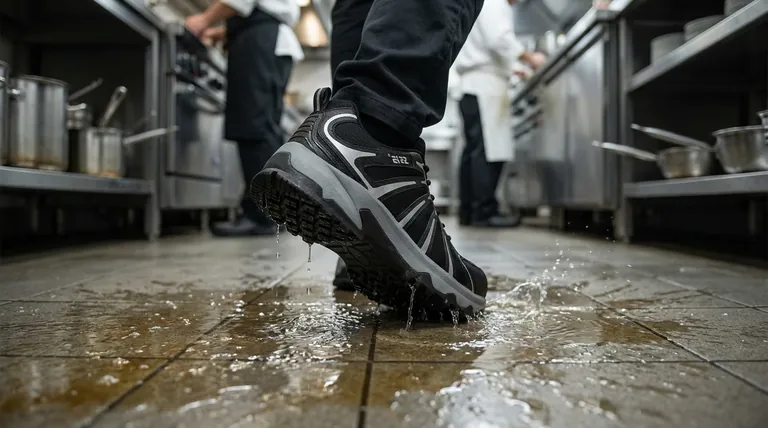
The Core Risk Factor: Unpredictable Surfaces
The fundamental reason for slip-resistant footwear is the presence of unexpected hazards underfoot. A clean, dry floor poses minimal risk, but conditions can change in an instant.
The Role of Contaminants
The most common culprit is a contaminant that reduces the coefficient of friction between the shoe's sole and the floor. This includes water, grease, oil, cleaning solutions, and even fine dust.
The Dynamics of a Slip
A slip occurs when your foot slides forward unexpectedly, causing you to lose your center of balance. Slip-resistant shoes are designed to maintain grip even when a layer of liquid is introduced.
A Breakdown of High-Risk Industries
While many jobs benefit from enhanced traction, several industries mandate or strongly recommend slip-resistant shoes as a primary piece of personal protective equipment (PPE).
Food Service and Hospitality
Kitchens, restaurants, and catering environments are ground zero for spills. Grease from fryers, water from sinks, and dropped food create persistently slick floors, making slip-resistant shoes non-negotiable for staff safety.
Healthcare Environments
Hospitals and clinics feature smooth, polished floors that are easily contaminated. Spills of water, medical fluids, and biohazards create serious slip risks for doctors, nurses, and support staff who are often moving quickly.
Construction and Manufacturing
Industrial settings present a dual threat. Workers face spills of lubricants, coolants, and other industrial fluids. They also navigate uneven terrain, loose debris, and outdoor weather conditions that demand reliable traction.
Logistics and Delivery
Warehouse workers, postal carriers, and delivery drivers constantly move between controlled indoor environments and uncontrolled outdoor surfaces. They encounter rain, snow, ice, and varied pavement types, making consistent grip essential.
Understanding the "Slip-Resistant" Label
It's critical to understand that "slip-resistant" and "non-slip" are marketing terms, not a regulated safety standard. This makes it your responsibility to verify a shoe's actual features.
A Focus on Materials and Design
True slip-resistant shoes rely on two key features: a soft rubber sole and a specific tread pattern. The soft rubber compound is able to conform to microscopic irregularities in a floor surface for a better grip.
How Treads Actually Work
The patterns on the sole are not just for show. They are designed as channels to siphon liquids out from under the shoe. By ejecting water or oil, the tread allows the rubber sole to make direct contact with the floor, preserving traction.
Common Pitfalls and Limitations
Even the best slip-resistant shoes are a tool for risk reduction, not risk elimination. Understanding their limits is crucial for staying safe.
Not a Guarantee of Safety
No shoe can provide 100% protection against all slips. A large-volume spill or a particularly viscous substance like heavy grease can overwhelm any shoe's tread design.
The Myth of "One Sole Fits All"
A tread pattern optimized for dispersing water on a tile floor may not perform as well on a dusty concrete surface or in an oily garage. The environment dictates which sole design is most effective.
Wear and Tear Reduces Effectiveness
As the soft rubber sole and sharp tread patterns wear down over time, the shoe's ability to grip and channel away fluid diminishes significantly. Worn-out footwear offers a false sense of security.
Making the Right Choice for Your Environment
Your specific workplace hazards should guide your selection. Look past the marketing terms and analyze the shoe's construction relative to your daily risks.
- If your primary focus is wet or greasy indoor floors (e.g., kitchens, hospitals): Prioritize shoes with soft rubber soles and intricate, siped tread patterns designed to channel away liquids.
- If your primary focus is varied or uneven surfaces (e.g., construction, delivery): Look for a durable, deeper lug pattern that provides both slip resistance and stability on loose ground.
- If your primary focus is a combination of indoor/outdoor conditions: Seek a versatile, all-weather tread made from a rubber compound that remains flexible in changing temperatures.
Ultimately, selecting the right footwear is a critical decision in managing your personal safety at work.
Summary Table:
| Industry | Primary Slip Hazard | Key Shoe Requirement |
|---|---|---|
| Food Service & Hospitality | Grease, water, food spills | Soft rubber sole, intricate tread for liquid dispersion |
| Healthcare | Polished floors, medical fluid spills | Slip-resistant sole for smooth, contaminated surfaces |
| Construction & Manufacturing | Industrial fluids, uneven terrain, debris | Durable, deep lug pattern for stability and grip |
| Logistics & Delivery | Rain, snow, ice, varied pavements | All-weather tread, versatile for indoor/outdoor use |
Protect your team with the right footwear. As a large-scale manufacturer, 3515 produces a comprehensive range of slip-resistant shoes and boots for distributors, brand owners, and bulk clients. Our production capabilities encompass all types of safety footwear engineered for high-risk environments. Contact us today to discuss your specific needs and benefit from our expertise in durable, reliable PPE.
Visual Guide
Related Products
- Advanced KPU Athletic Safety Shoe with Steel Toe Cap Anti-Slip Rotary Lacing System
- Premium Suede Sport Safety Shoes for Wholesale & Bulk Orders
- Durable High-Traction Canvas Sneakers Wholesale & Custom Manufacturing
- Heavy-Duty Waterproof Nubuck Safety Boots Safety Shoes for Bulk Supply
- Durable Goodyear Welt Leather Work Boots for Wholesale & Private Label
People Also Ask
- What are the key differences between steel toe and composite toe caps? Choose the Right Safety for Your Job
- What impact do steel toe caps have on toe skin health? Prevent Friction and Pressure in Your Safety Shoes
- What are the primary protective functions of safety shoes with steel toes in the automotive repair industry?
- What type of safety shoe is recommended for workers exposed to heavy machinery? Steel Toe Boots for Ultimate Protection
- How does defining specific friction interface models in FEA assist in predicting safety shoe toe cap failure modes?