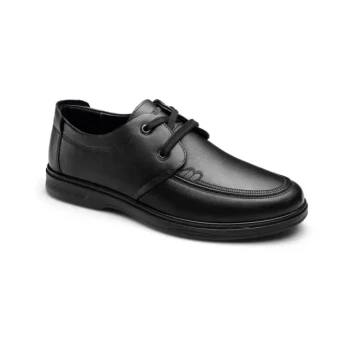
The Cut-Make-Trim (CMT) process functions as the central execution engine in the manufacturing of footwear and apparel. It is the distinct, labor-intensive phase where raw inputs—such as specific fabrics, leathers, and accessories—are physically assembled and transformed into finished, market-ready products.
Core Takeaway While CMT is mechanically defined by assembly, its strategic value lies in establishing structural consistency. It serves as the bridge between design and mass production, validating workflows and ensuring uniformity for both bulk orders and customized products.
The Operational Role of CMT
The primary function of CMT is the physical realization of a product. It takes the conceptual components of a design and applies industrial precision to create a tangible asset.
precise Physical Assembly
At its core, CMT is responsible for the physical processing of goods. This involves cutting raw materials to pattern, making (sewing/assembling) the components, and trimming (finishing) the final output.
Handling Diverse Materials
CMT facilities are equipped to handle a wide spectrum of inputs. This ranges from standard textiles to complex materials like leathers and technical accessories, requiring specialized industrial machinery to process correctly.
Ensuring Consistency at Scale
For large-scale manufacturers, the CMT process is not just about making one item; it is about replicating that item perfectly thousands of times.
Structural Uniformity
A mature CMT production line ensures that every unit produced maintains the exact same structure. This structural consistency is critical for brand reputation and quality control in mass-market apparel.
A Foundation for Customization
By establishing a stable and consistent baseline product, CMT provides the necessary foundation for large-scale customized production. You cannot effectively customize a product at scale if the base unit varies in quality or dimension.
The Role in Validation and Prototyping
Beyond mass production, CMT platforms serve a critical function in the Research and Development (R&D) phase of product creation.
Testing New Materials
CMT platforms allow brands to test innovative materials in a realistic environment. This includes validating how organic fabrics or technical textiles behave under industrial cutting and assembly conditions before full production begins.
Workflow Verification
The process acts as a stress test for production logic. It validates workflow efficiency, ensuring that a design is not only aesthetically pleasing but also manufacturable at an industrial rate without bottlenecks.
Understanding the Trade-offs
While CMT is essential for execution, it is strictly an assembly and validation stage.
Labor Intensity
The process is inherently labor-intensive. Unlike automated chemical processes in other industries, CMT relies heavily on the coordination of machinery and skilled human operators, making efficiency management critical.
Scope Limitations
CMT focuses on execution, not material sourcing or design creation. It is the physical execution stage; therefore, errors in the upstream design or material selection phases will be magnified, not fixed, during the CMT process.
Making the Right Choice for Your Goal
Whether you are scaling a proven product or developing a prototype, the function of CMT changes based on your immediate needs.
- If your primary focus is Mass Production: Prioritize a mature CMT line that guarantees structural consistency, ensuring every unit is identical to support brand reliability.
- If your primary focus is Product Innovation: Utilize CMT platforms to validate new materials and test production workflows, ensuring your new technical textiles can actually be manufactured efficiently.
Successful manufacturing relies on viewing CMT not just as labor, but as the critical quality gate for your final product.
Summary Table:
| Function/Aspect | Key Role/Benefit | Detail |
|---|---|---|
| Operational Role | Physical Assembly & Transformation | Converts raw materials into finished goods (cutting, sewing, trimming). |
| Ensuring Consistency | Structural Uniformity at Scale | Replicates products perfectly for mass production and brand quality. |
| Foundation for Customization | Enables Large-Scale Customization | Provides a stable, consistent base for tailored bulk orders. |
| Validation & Prototyping | Tests Materials & Verifies Workflows | Confirms manufacturability of new designs and materials efficiently. |
| Key Trade-off | Labor Intensity | Requires skilled operators and machinery; efficiency management is key. |
Ready to elevate your footwear and apparel production with expert CMT capabilities? As a large-scale manufacturer serving distributors and brand owners, 3515 offers comprehensive production capabilities for all footwear types. Anchored by our flagship Safety Shoes series, our extensive portfolio covers work and tactical boots, outdoor shoes, training shoes, sneakers, and Dress & Formal shoes to meet diverse bulk requirements. We ensure consistent quality and efficient production for your brand.
Contact us today to discuss your bulk manufacturing needs and how our CMT expertise can benefit your business!
Partner with 3515 for unparalleled production excellence
References
- Emese Dobos. Changing Landscapes but Ingrained Power Relations? The Green Promise of the COVID-19 Pandemic, the (Un)sustainability of the Fashion Industry, and the Central-Eastern European Production Background. DOI: 10.2478/aussoc-2022-0001
This article is also based on technical information from 3515 Knowledge Base .
Related Products
- Wholesale Comfortable Business Casual Shoes Custom Manufacturing
- Wholesale Breathable & Cushioned Training Shoes Custom Factory Production
- Wholesale Lightweight Cushioned Athletic Sneakers for Custom Bulk Production
- Wholesale Breathable Training Shoes Custom Athletic Footwear Manufacturer
- Custom Manufactured Air Cushion Leather Business Shoes for Wholesale
People Also Ask
- What are the key characteristics of business casual shoes? Achieve Polished Versatility for Your Wardrobe
- Which types of shoes should be avoided with business casual attire? Maintain a Polished Professional Image
- What should be considered when selecting shoes for a casual business setting? Achieve the Perfect Balance of Style and Comfort
- What is the recommended approach to trying on business casual shoes? Ensure a Perfect Fit for Your Workday
- What are some types of business casual shoes? Build a Versatile & Professional Footwear Wardrobe