
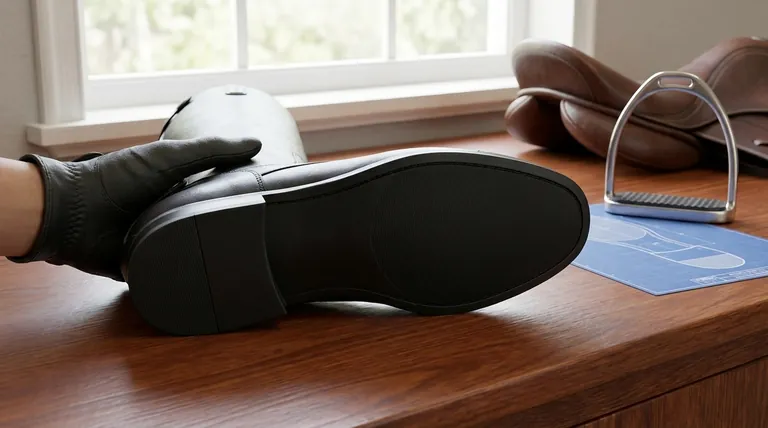
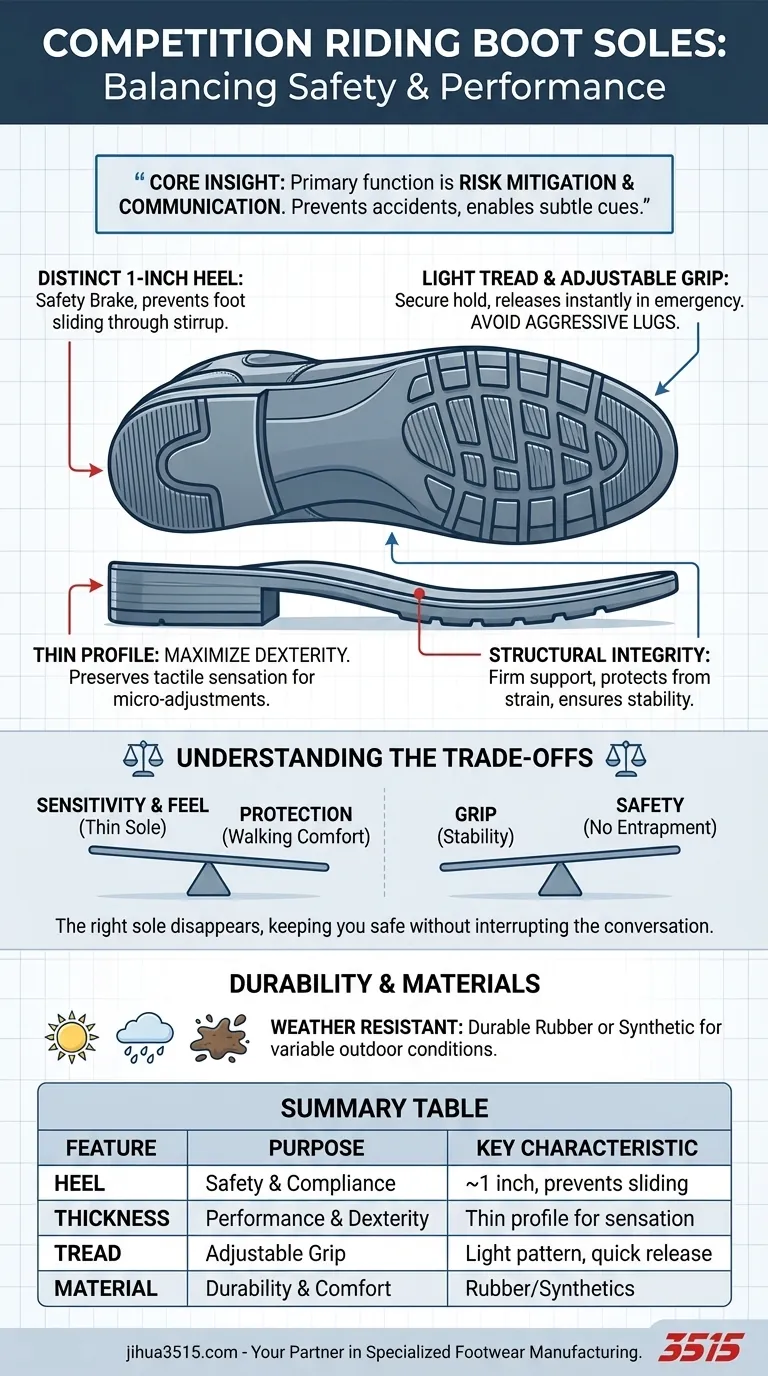
The ideal sole for competition riding boots is defined by a specific balance of safety architecture and tactile sensitivity. To meet competitive standards, the sole must feature a distinct heel of approximately one inch, a thin profile to maximize foot dexterity, and a light tread that provides traction without locking the foot against the stirrup.
Core Insight: While style is often prioritized, the sole’s primary function is risk mitigation and communication. The correct sole geometry prevents life-threatening accidents during a fall while allowing the subtle weight cues necessary for high-level performance.
The Anatomy of Safety and Compliance
In competitive disciplines like dressage and show jumping, the design of your boot sole is often a matter of legal requirement. The features below are not optional; they are structural necessities for safety.
The Critical Role of the Heel
The most important feature of a riding sole is a distinct heel, typically measuring about one inch.
This acts as a physical brake mechanism. It prevents the foot from sliding dangerously through the stirrup iron, which could result in the rider being dragged if unseated.
Tread Pattern and "Adjustable Grip"
A competition sole requires a very specific type of traction, often described as a light tread.
The goal is adjustable grip. The boot must hold its position in the stirrup securely, yet be smooth enough to release instantly in an emergency. Aggressive, deep lugs (like those on hiking boots) are dangerous because they can trap the foot.
Performance: The Sole as a Communication Tool
Beyond safety, the sole is your direct interface with the horse. Its construction dictates how effectively you can transmit aids.
Thickness and Dexterity
For competitive riding, the sole should be thin enough to preserve tactile sensation.
A bulky sole isolates you from the horse. A thinner profile enhances foot dexterity, allowing you to feel the stirrup iron and make micro-adjustments to your weight distribution.
Stability and Support
While the sole must be thin for feel, it must not be flimsy. It requires enough structural integrity to provide firm ankle and lower leg support.
A supportive sole helps protect the rider from strains and bruises, maintaining stability even during strenuous movements.
Durability and Environmental Factors
Equestrian events rarely occur in sterile environments. Your equipment must withstand the elements without degrading.
Weather Resistance
Competition boots face heat, mud, water, and dry dust. The sole material must be capable of withstanding these variable outdoor conditions without cracking or separating.
Material Composition
Entry-level and versatile competition boots often utilize durable rubber soles.
Synthetic molded materials are also common, offering waterproofing benefits to keep the feet dry and comfortable, which is essential for maintaining focus during long hours of riding.
Understanding the Trade-offs
Selecting the right boot involves balancing opposing needs. Being aware of these trade-offs ensures you don't sacrifice essential functions.
Sensitivity vs. Protection
A sole designed for maximum "feel" (thinness) will naturally offer less protection against rough terrain when walking on the ground.
You must accept that high-performance riding boots are specialized tools for the saddle, not heavy-duty walking boots.
Grip vs. Safety
There is a fine line between stability and entrapment.
A sole that feels "locked in" gives a false sense of security. Never prioritize high traction over the ability to slide out of the stirrup. The tread must always allow for a quick escape.
Making the Right Choice for Your Goal
Your choice of sole should depend on your specific competitive level and environment.
- If your primary focus is Safety and Entry-Level Competition: Prioritize a durable rubber sole with a pronounced one-inch heel to ensure compliance and prevent stirrup accidents.
- If your primary focus is High-Level Performance: Look for a thinner, closer-contact sole that maximizes dexterity and allows for subtle weight aids, even if it offers less walking comfort.
- If your primary focus is Versatility: Select a waterproof synthetic option with a breathable liner that can transition easily between lessons, muddy paddocks, and the show ring.
The right sole disappears while you ride, keeping you safe without ever interrupting the conversation between you and your horse.
Summary Table:
| Feature | Purpose | Key Characteristic |
|---|---|---|
| Heel | Safety & Compliance | ~1 inch to prevent foot sliding through stirrup |
| Thickness | Performance & Dexterity | Thin profile for maximum tactile sensitivity |
| Tread | Adjustable Grip | Light pattern for secure hold & quick emergency release |
| Material | Durability & Comfort | Durable rubber or waterproof synthetics for all conditions |
Ready to Equip Your Riders with Perfect Competition Boots?
As a large-scale manufacturer, 3515 produces a comprehensive range of footwear for distributors, brand owners, and bulk clients. Our production capabilities encompass all types of shoes and boots, including specialized competition riding boots built to the exacting standards outlined above.
We can help you:
- Develop safe, compliant boots with the essential 1-inch heel and correct tread pattern.
- Customize soles for optimal balance between sensitivity and support for high-level performance.
- Ensure durability with high-quality materials suited for variable outdoor conditions.
Let's discuss your specific needs and bring your ideal riding boot line to life.
Contact our expert team today to request a quote or discuss your project!
Visual Guide
Related Products
- Durable Leather Tactical Boots Wholesale & Custom Manufacturing for Brands
- Wholesale Tactical Boots High-Traction & Reflective for Bulk & Brand Orders
- High-Traction Suede Tactical Boots Wholesale & Custom Manufacturing
- Durable Leather High-Ankle Tactical Boots for Wholesale & Custom Manufacturing
- Durable High-Ankle Tactical Boots Wholesale Manufacturer for Custom & Bulk Orders
People Also Ask
- What specialized protections do tactical boots offer? Maximize Endurance with High-Performance Footwear
- What features should law enforcement officers look for in tactical boots? Essential Guide for Safety & Performance
- Importance of Professional Tactical Boots in Loess Gully Regions: Ensure Safety and Precision for Field Monitoring
- What is rucking, and why are tactical boots suitable for it? Discover the Ultimate Footwear for Heavy Loads
- What makes the traction of tactical boots superior? Unlock the Science of Unbeatable Grip



















