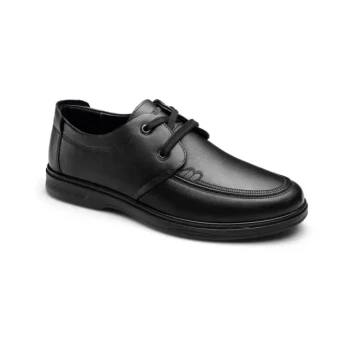
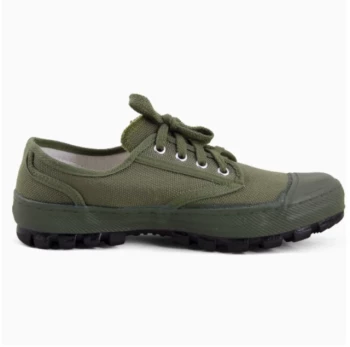
Automated production lines offer systemic superiority over manual cells by decoupling production quality from human physical limitations. By executing high-intensity tasks through preset mechanical instructions, these systems stabilize output consistency while simultaneously mitigating the physical risks associated with manual labor.
Core Takeaway Automation does not merely speed up production; it fundamentally alters the manufacturing environment by removing operator fatigue as a variable. This results in a dual advantage: a drastic reduction in neuromuscular injuries for the workforce and the ability to maintain precision tolerances during 24/7 operations.
The Impact on Workforce Health and Safety
Reducing Neuromuscular Strain
Manual shoe manufacturing often requires operators to perform repetitive motions in awkward positions. Automated lines take over these high-intensity repetitive tasks, such as injection molding.
Minimizing Physical Exposure
By assigning precision stitching and heavy manipulation to machines, the system significantly reduces human exposure to extreme ranges of motion. This effectively lowers the incidence of symptoms related to the skeletal and neuromuscular systems.
Eliminating Fatigue-Based Errors
Human operators naturally experience physical decline over a shift. Automated equipment eliminates process deviations caused by operator fatigue, ensuring that the last shoe produced is identical to the first.
Operational Consistency and Throughput
Achieving Autonomous Operation
Unlike manual cells restricted by shift patterns, robotic lines utilizing artificial intelligence and digital models facilitate 24/7 autonomous operations. This allows for continuous throughput without the downtime inherent in human-staffed lines.
Reducing Human Factor Errors
Manual production cells are susceptible to inconsistencies based on individual skill levels and attention spans. Automated systems execute preset mechanical instructions, significantly reducing operational errors driven by human factors.
Market Responsiveness and Flexibility
Rapid Production Switching
Modern automated lines offer high flexibility regarding product types. Manufacturers can execute rapid switching between different footwear categories, such as safety shoes and tactical boots.
Enhancing Market Responsiveness
The ability to quickly pivot production without extensive re-training of manual cells allows manufacturers to respond faster to shifting market demands. This agility ensures better production consistency across diverse product lines.
Understanding the Operational Trade-offs
Dependence on Digital Models
While manual cells rely on craftsmanship, automated lines are heavily dependent on robust digital models and AI. The system is only as effective as the data and preset instructions programmed into it.
Rigid adherence to Instructions
Automation excels at repetition but lacks human improvisation. Because the system relies on preset mechanical instructions, any error in the digital setup will be replicated perfectly at scale until corrected.
Making the Right Choice for Your Goal
While automation requires a shift in infrastructure, it offers distinct advantages depending on your manufacturing priorities.
- If your primary focus is Worker Health: Automated lines are the definitive choice for reducing injury claims by eliminating exposure to extreme repetitive strain.
- If your primary focus is Scalability: The ability to run 24/7 autonomous operations allows you to increase volume without proportionally increasing headcount.
- If your primary focus is Agility: Robotic lines enable you to switch between complex product types like tactical boots and safety shoes with minimal downtime.
Automation transforms shoe manufacturing from a variable craft into a predictable, scalable engineering process.
Summary Table:
| Feature | Manual Production Cells | Automated Production Lines |
|---|---|---|
| Consistency | High variability (fatigue-based) | High precision (preset instructions) |
| Availability | Restricted by shift patterns | 24/7 autonomous operations |
| Worker Safety | High risk of neuromuscular strain | Minimal exposure to physical risks |
| Switching Speed | Requires extensive re-training | Rapid switching via digital models |
| Scalability | Dependent on labor headcount | Scalable through mechanical output |
Scale Your Global Footwear Brand with 3515 Manufacturing Excellence
As a large-scale manufacturer serving distributors and brand owners worldwide, 3515 leverages advanced automated production to bridge the gap between high-volume output and uncompromising quality. Whether you require our flagship Safety Shoes series, tactical boots, or specialized training sneakers, our facilities are engineered to deliver consistent, precision-built footwear at scale.
Partnering with 3515 offers you:
- Unmatched Production Stability: Eliminate human-factor errors with our AI-driven automated lines.
- Comprehensive Portfolio: Access a diverse range of footwear from rugged outdoor boots to formal dress shoes.
- Market Agility: Rapidly pivot production to meet shifting consumer demands without downtime.
Ready to elevate your supply chain? Contact us today to discuss your bulk requirements and discover how our manufacturing capabilities can drive your brand's growth.
References
- Wilza Karla dos Santos Leite, Elamara Marama de Araújo Vieira. Presenteeism in the footwear industry: an analysis of the workloads. DOI: 10.5935/rpot/2022.1.22829
This article is also based on technical information from 3515 Knowledge Base .
Related Products
- Wholesale Breathable & Cushioned Training Shoes Custom Factory Production
- Wholesale Leather Apron Toe Derby Shoes Custom Factory Production
- Wholesale Comfortable Business Casual Shoes Custom Manufacturing
- Wholesale Lightweight Cushioned Athletic Sneakers for Custom Bulk Production
- Lightweight Breathable Training Shoes for Wholesale & Custom OEM Manufacturing
People Also Ask
- Why is the integration of advanced cushioning in training shoes necessary for athletes? Boost Recovery and Performance
- Why is the use of flat-soled or professional training shoes essential for WBV? Maximize Vibration Energy Transfer
- Why is it necessary for participants to wear professional training shoes? Ensuring Data Accuracy & Patient Safety
- Why are professional-grade training shoes essential for physical therapy? Ensure Patient Safety and Gait Stability
- Why are the slip-resistance and stability performance of training shoes critical in gait analysis? Ensure Data Accuracy