
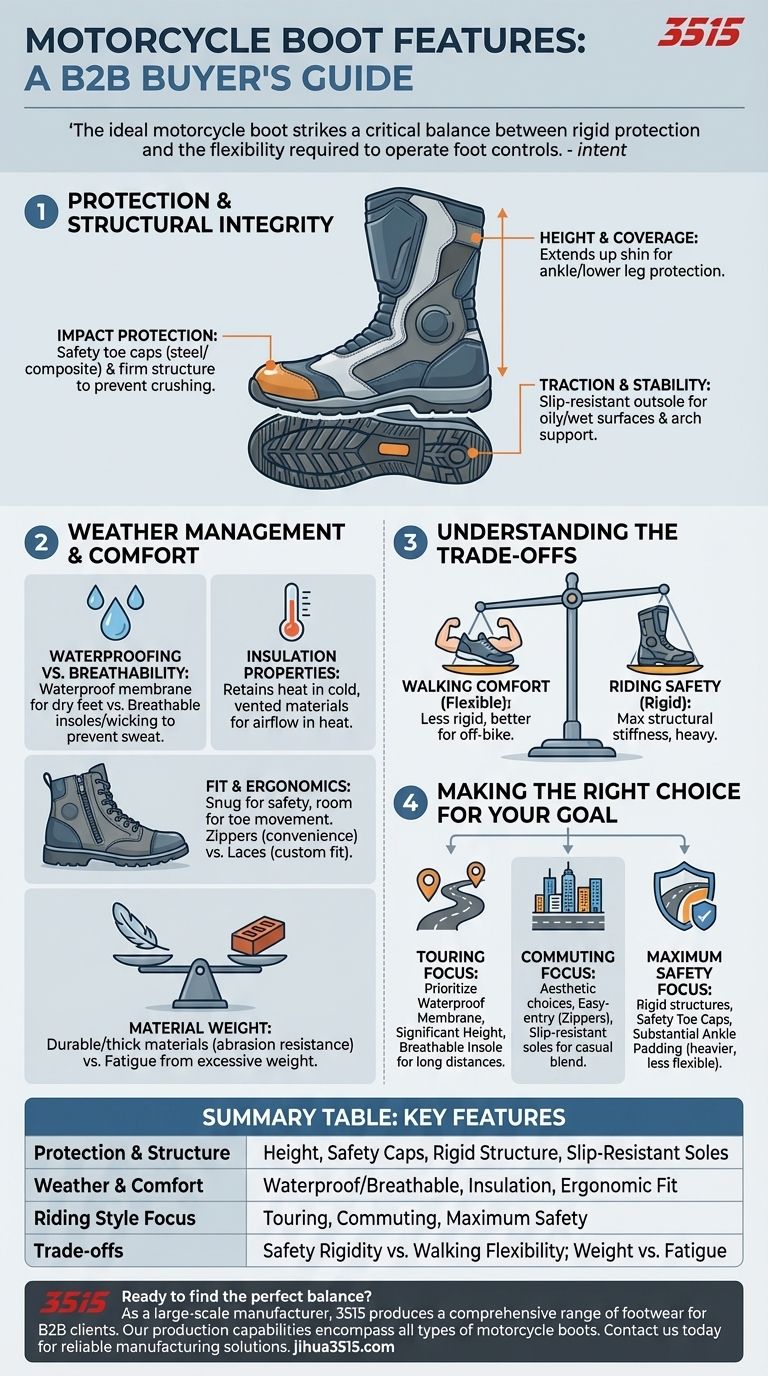
The ideal motorcycle boot strikes a critical balance between rigid protection and the flexibility required to operate foot controls. You should primarily look for adequate boot height for ankle coverage, reinforcement in the toe and heel areas, and weather-specific features like waterproof membranes or breathable insoles to match your riding environment.
The most effective footwear choice is defined by your specific intent. You must weigh the trade-off between structural rigidity for safety and the flexibility needed for walking comfort and tactile feedback on the bike.
Protection and Structural Integrity
Height and Coverage
One of the primary differentiators between a standard shoe and a motorcycle boot is height.
You should prioritize boots that extend up the shin. This ensures adequate coverage for the ankle and lower leg, protecting vulnerable bones during an impact or debris strike.
Impact Protection
Refinements in the toe area are essential. Look for safety toe caps—whether steel, aluminum, or composite—to provide impact protection and prevent crushing injuries.
Additionally, the boot should feature a firm structure with padded sides. This rigidity helps prevent the foot from twisting unnaturally during a fall.
Traction and Stability
The moment you stop your bike, your boots become your landing gear. Slip resistance is a non-negotiable feature.
Your outsole must provide reliable traction to handle oily tarmac, wet painted lines, or loose gravel. Proper stability features also support your arch and ankle when balancing the weight of the motorcycle at a standstill.
Weather Management and Comfort
Waterproofing vs. Breathability
For touring or all-weather riding, a waterproof membrane is critical to keep feet dry during rain.
However, this must be balanced with internal climate control. Look for breathable insoles or moisture-wicking linings to prevent sweat buildup, which can cause blistering and cold feet in the long run.
Insulation Properties
If you ride in colder climates, verify the boot's insulation level.
Proper insulation retains body heat without adding excessive bulk that might interfere with shifting. Conversely, for hot weather, you may prioritize unlined leather or vented materials for better airflow.
Fit and Ergonomics
Long-term wearability relies on a precise fit. A boot should be snug enough to stay on during a crash but provide enough room for toe movement to maintain circulation.
Consider the closure system carefully. Zippers offer convenience for quick removal, while lace-up designs allow for a more customized fit around the instep and calf.
Understanding the Trade-offs
Walking Comfort vs. Riding Safety
There is an inherent conflict between protection and flexibility. A boot with maximum structural stiffness (great for safety) will be heavy and uncomfortable to walk in. Conversely, a casual, flexible boot offers little protection against crushing forces.
Material Weight
Heavier boots often indicate durable materials like thick leather or rubber, which offer superior abrasion resistance.
However, excessive weight can lead to fatigue, especially during active riding or off-bike excursions. You must decide if you prioritize the durability of heavy materials or the agility of lighter, synthetic options.
Making the Right Choice for Your Goal
To select the right gear, you must align the features with your primary riding activity.
- If your primary focus is Touring: Prioritize a waterproof membrane, significant boot height, and a breathable insole to handle changing weather over long distances.
- If your primary focus is Commuting: Look for aesthetic choices that blend with casual clothing, combined with easy-entry zippered designs and slip-resistant soles.
- If your primary focus is Maximum Safety: Prioritize rigid structures, safety toe caps, and substantial ankle padding, accepting that they will be heavier and less flexible off the bike.
Select the boot that protects you in the worst scenario while remaining usable in your daily routine.
Summary Table:
| Feature Category | Key Considerations |
|---|---|
| Protection & Structure | Height for ankle/shin coverage, safety toe caps, rigid structure, slip-resistant soles. |
| Weather & Comfort | Waterproof membrane, breathable insoles, appropriate insulation, ergonomic fit (zippers/laces). |
| Riding Style Focus | Touring: Weatherproofing & comfort. Commuting: Casual look & easy entry. Safety: Maximum rigidity & padding. |
| Trade-offs | Safety rigidity vs. walking flexibility. Material weight (durability) vs. rider fatigue. |
Ready to find the perfect balance of safety, comfort, and style for your riding needs?
As a large-scale manufacturer, 3515 produces a comprehensive range of footwear for distributors, brand owners, and bulk clients. Our production capabilities encompass all types of motorcycle boots and riding gear, ensuring you get high-quality, durable, and purpose-built footwear tailored to your market's demands.
Contact us today to discuss your requirements and discover how we can support your business with reliable manufacturing solutions.
Visual Guide
Related Products
- Wholesale Tactical Boots High-Traction & Reflective for Bulk & Brand Orders
- High Performance Fire-Retardant Waterproof Safety Boots
- Durable Goodyear Welt Leather Work Boots for Wholesale & Private Label
- Wholesale High-Traction Camo Boots - Custom Manufacturer for Brands
- Wholesale Waterproof Tactical Boots Custom Suede & High-Traction Soles
People Also Ask
- How do tactical boots protect against injuries? Discover the Integrated Safety System
- How does additive manufacturing equipment reduce environmental risks? Sustainable Tactics for Modern Footwear Production
- What are the key features to look for in the best tactical boots? A Guide to Peak Performance
- How does the comparative gait analysis between grass and asphalt guide safety shoe R&D? Optimize Tactical Performance
- What are the advantages and disadvantages of tactical boots? Lightweight Comfort vs. Rugged Durability



















