
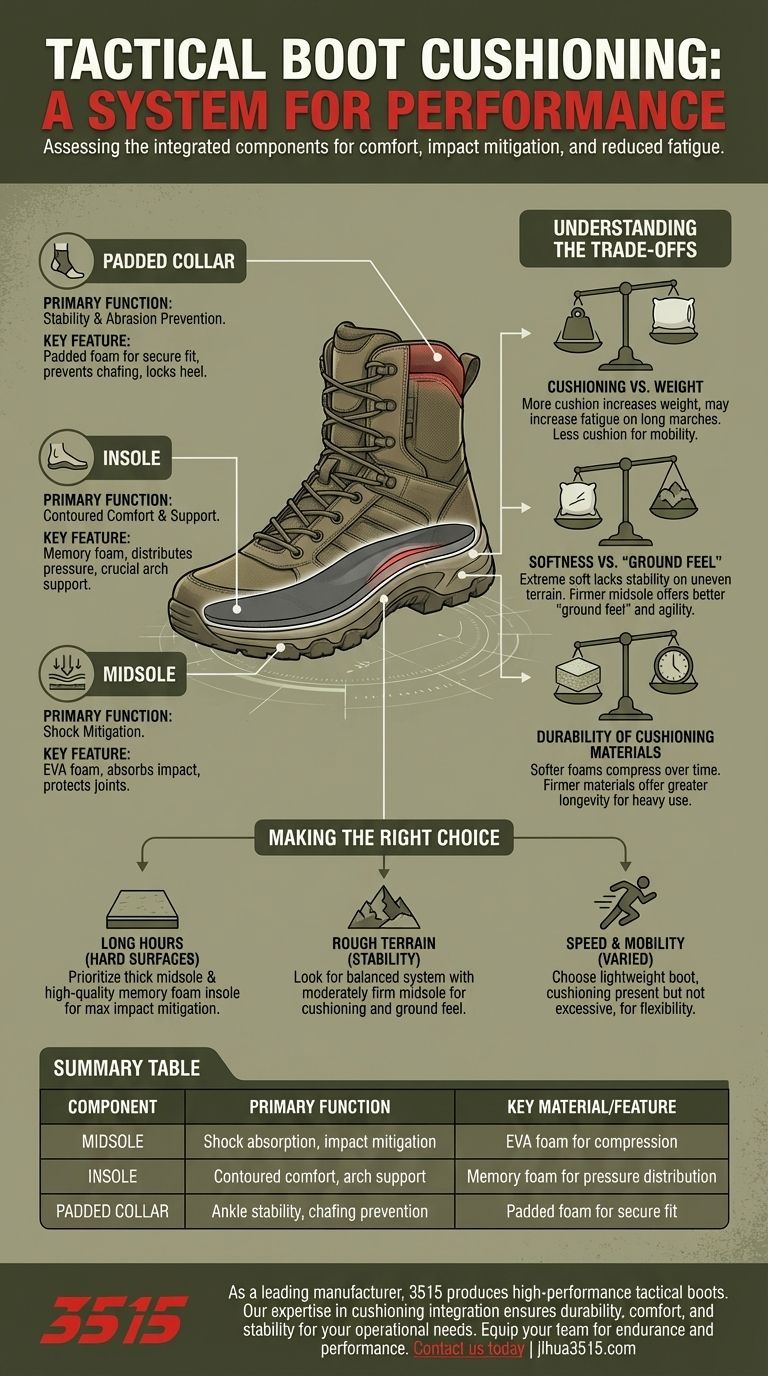
When evaluating cushioning in tactical boots, you must look beyond a single feature and assess a system of components. The most critical elements are a shock-absorbing foam midsole, a contoured and supportive insole (often memory foam), and a padded collar around the ankle. Together, these features work to mitigate impact, provide comfort, and reduce fatigue during long hours on your feet.
The core principle to understand is that effective cushioning is not about maximum softness, but about a balanced system. It's the strategic interplay between the insole, midsole, and collar that absorbs shock and supports your foot's natural mechanics without compromising stability.
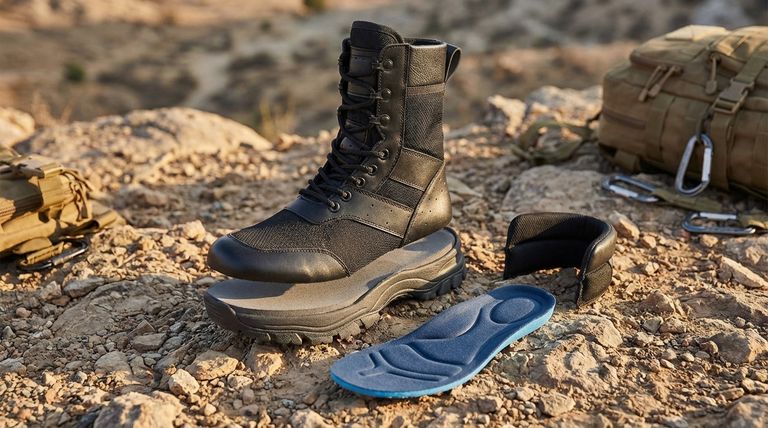
The Anatomy of Cushioning in Tactical Boots
A boot's comfort and performance are directly tied to how its cushioning components are designed and integrated. Each part serves a distinct but complementary purpose.
The Midsole: Your Primary Shock Absorber
The midsole is the thick layer of material sandwiched between the outsole (which touches the ground) and your foot. It is the engine of the boot's cushioning system.
Its primary job is shock mitigation. Midsoles, typically made of EVA foam or similar compounds, compress upon impact to absorb the force of each step, protecting your joints and muscles from repetitive stress.
The Insole: Contoured Comfort and Support
The insole, or footbed, is the removable layer your foot rests on directly. This component is responsible for immediate, underfoot comfort and plays a key role in support.
High-quality tactical boots often use memory foam or other contoured materials for their insoles. This not only provides a plush feel but also helps distribute pressure evenly across the foot and offers crucial arch support, which is vital for preventing fatigue over time.
The Padded Collar: Stability and Abrasion Prevention
The padded collar is the cushioning around the opening of the boot where it meets your ankle and lower shin. While it offers some shock absorption, its main function is comfort and fit.
A well-padded collar prevents chafing and irritation during extensive movement. It also helps lock your heel in place, providing a secure fit that enhances stability and prevents blisters.
Understanding the Trade-offs
Choosing the right level of cushioning requires balancing competing priorities. More is not always better, and the ideal setup depends entirely on your intended use.
Cushioning vs. Weight
There is a direct relationship between the amount of cushioning and the overall weight of the boot. Heavily cushioned boots can provide excellent shock absorption but may increase fatigue on long marches due to their weight.
Conversely, a lightweight boot designed for mobility might sacrifice some plushness for speed and reduced energy expenditure.
Softness vs. "Ground Feel"
Extremely soft cushioning can feel comfortable on flat, hard surfaces but may create a sense of instability on uneven or technical terrain.
Some operators prefer a slightly firmer midsole that provides more "ground feel," allowing them to react more quickly to changes in the surface underfoot. This enhances stability and agility at the cost of some impact absorption.
Durability of Cushioning Materials
The materials used for cushioning have a finite lifespan. Softer foams, while comfortable, can compress and "pack out" over time, losing their ability to absorb shock effectively.
Firmer, denser midsole materials often offer greater longevity, making them a better choice for users who subject their boots to consistent, heavy use.
Making the Right Choice for Your Goal
Select your boot's cushioning profile based on the demands of your most common activity.
- If your primary focus is long hours on hard, flat surfaces: Prioritize a boot with a thick, shock-absorbing midsole and a high-quality memory foam insole to maximize impact mitigation.
- If your primary focus is stability on rough, uneven terrain: Look for a balanced system with a moderately firm midsole that provides both cushioning and crucial ground feel for better agility.
- If your primary focus is speed and mobility in varied environments: Choose a lightweight boot where cushioning is present but not excessive, ensuring it doesn't hinder flexibility or add unnecessary weight.
By analyzing cushioning as an integrated system, you can select a boot that enhances your endurance and performance for the mission at hand.
Summary Table:
| Cushioning Component | Primary Function | Key Material/Feature |
|---|---|---|
| Midsole | Shock absorption and impact mitigation | EVA foam for compression |
| Insole | Contoured comfort and arch support | Memory foam for pressure distribution |
| Padded Collar | Ankle stability and chafing prevention | Padded foam for secure fit |
As a leading manufacturer, 3515 produces high-performance tactical boots for distributors, brand owners, and bulk clients. Our expertise in integrating advanced cushioning systems ensures durability, comfort, and stability tailored to your operational needs. Let us help you equip your team with footwear that enhances endurance and performance. Contact us today to discuss your requirements!
Visual Guide
Related Products
- Durable Leather Tactical Boots Wholesale & Custom Manufacturing for Brands
- High-Traction Suede Tactical Boots Wholesale & Custom Manufacturing
- Durable Leather High-Ankle Tactical Boots for Wholesale & Custom Manufacturing
- Durable Mid-Cut Tactical Boots for Wholesale & Private Label
- Wholesale Waterproof Tactical Boots Custom Suede & High-Traction Soles
People Also Ask
- What specialized protections do tactical boots offer? Maximize Endurance with High-Performance Footwear
- What features should law enforcement officers look for in tactical boots? Essential Guide for Safety & Performance
- Importance of Professional Tactical Boots in Loess Gully Regions: Ensure Safety and Precision for Field Monitoring
- What is rucking, and why are tactical boots suitable for it? Discover the Ultimate Footwear for Heavy Loads
- What makes the traction of tactical boots superior? Unlock the Science of Unbeatable Grip















