Okay, so the user wants to know what specifically makes the inside of a high-quality shoe feel luxurious and comfortable. They're looking for the telltale signs of true craftsmanship, not just marketing fluff. It's about helping them spot the genuine article. The goal is to equip them with the knowledge to make informed decisions and understand the value behind that price tag.
The references are a good starting point, highlighting leather, smooth padding, and seamless construction as key factors. But it's my job to go deeper than that. I need to explain why these elements are important and how they contribute to long-term comfort and durability. The real value is in the complete and integrated construction, not just individual components.
I'll structure the response with a clear breakdown:
First, let's start with the key elements: a full leather lining, smooth padding, and seamless construction. This is the direct answer, but it's just the tip of the iceberg. The core takeaway is that the true mark of a quality shoe interior isn't just the material but how it's completely and integrally put together. This integration directly impacts the comfort and durability that a shoe offers.
Then, I'll dive into the details. The anatomy of a high-quality interior includes:
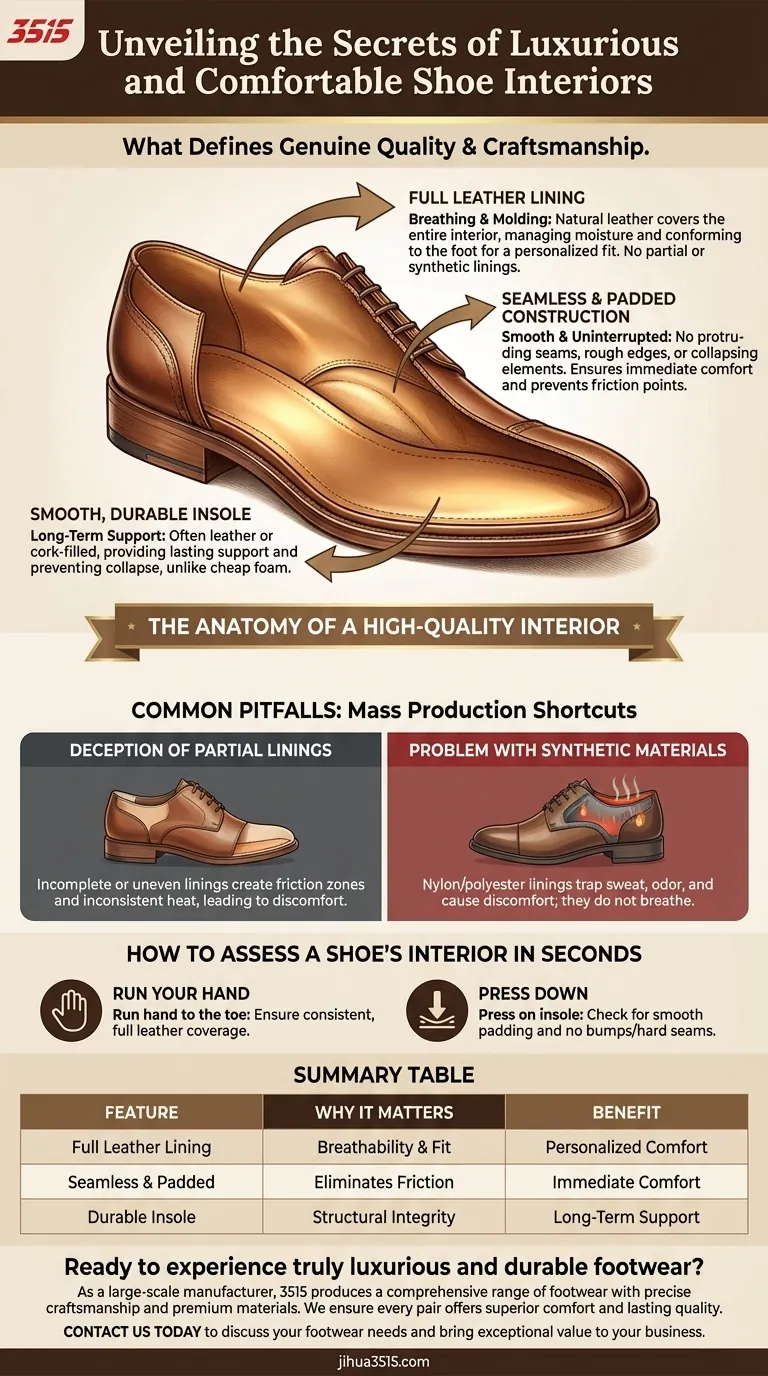
- The Foundation: Full Leather Lining: It's about more than just aesthetics; full leather lining breathes, conforms to your foot, and manages moisture, unlike partial or synthetic linings. This is fundamental for comfort and long-term wear.
- Structural Integrity: Seamless and Padded Construction: It’s vital that there are no protruding or collapsing elements; the interior needs to feel smooth and uninterrupted to prevent friction and blisters. This smoothness is a sign of careful craftsmanship.
- The Unseen Detail: A Smooth Insole: While not explicitly mentioned, I'm inferring this is also part of the smooth, padded finish. Leather or cork-filled insoles mold to the foot, providing lasting comfort and support that cheap foam insoles can't.
Now, to maintain credibility, I must address the pitfalls of mass production and the common shortcuts. This is where I can really show my expertise:
- The Deception of Partial Linings: Many manufacturers cut costs by only lining the visible areas, leading to friction and heat in unlined spots. That's a huge red flag!
- The Problem with Synthetic Materials: Synthetic linings might feel soft initially, but they don't breathe, leading to sweaty, uncomfortable feet.
- Overlooking the Insole: Often, the insole is overlooked. Many shoes have a nice upper, but a cheap, non-breathable foam insole that collapses quickly, offering no support. That's a major durability issue.
Finally, I'll provide actionable advice for the user:
How to Assess a Shoe's Interior in Seconds:
- Focus on Long-Term Comfort and Durability: Look for a full, seamless leather lining that covers the entire interior.
- Focus on Immediate 'Out-of-the-Box' Feel: Ensure the padding is smooth and consistent, with no rough seams or bumps, especially around the heel and toe.
The key is that true quality is felt, not just seen. It's a combination of materials and craftsmanship that creates the luxurious feel. The definitive features ensuring a luxurious and comfortable shoe interior are a full leather lining and a seamless, padded construction. This combination creates a smooth, breathable environment for your foot, free from the friction points and collapsing elements that define lower-quality footwear.
The true indicator of a high-quality shoe interior is not just the material used, but the completeness and integrity of its construction. A fully lined, seamless interior is a direct investment in long-term comfort, breathability, and the structural lifespan of the shoe itself.
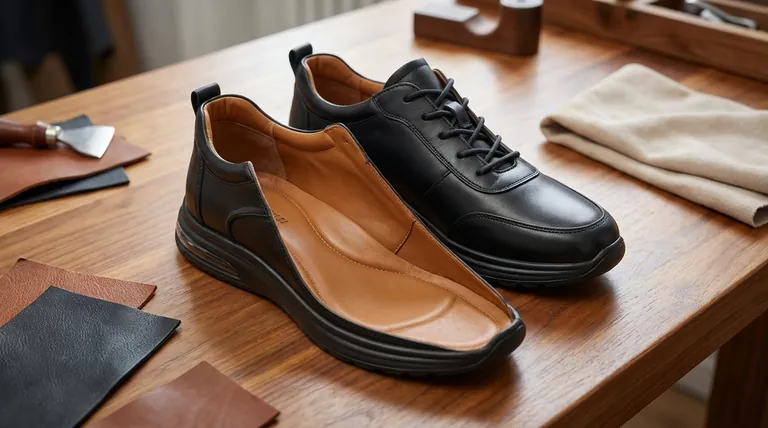
The Anatomy of a High-Quality Interior
Understanding what separates exceptional footwear from the merely adequate requires looking beyond the exterior. The interior is where craftsmanship translates directly into comfort and durability.
The Foundation: Full Leather Lining
A full leather lining is the most critical feature. Unlike partial or synthetic linings, a complete leather interior covers the entire inside of the shoe.
This is non-negotiable for two reasons. First, leather is a natural, porous material that breathes and wicks away moisture, keeping your feet dry and comfortable. Second, it conforms to the unique shape of your foot over time, creating a personalized fit.
Structural Integrity: Seamless and Padded Construction
The interior should feel like a single, smooth surface. High-quality construction ensures there are no protruding seams, rough edges, or collapsing elements that can cause friction, irritation, or blisters.
This seamless quality is achieved through meticulous craftsmanship, where every component is securely attached and padded to create a uniform, protected environment for your foot.
Common Pitfalls: Where Mass Production Cuts Corners
Recognizing the shortcuts taken in lower-quality shoes is key to making an informed decision. These compromises directly impact comfort and the shoe's longevity.
The Deception of Partial Linings
A frequent cost-saving measure is the use of incomplete or uneven linings. A shoe might have a leather heel counter but leave the vamp (the front of the shoe) unlined or use a cheaper fabric.
This creates friction zones and inconsistent heat management, leading to discomfort and premature wear in the unlined areas. A quick look or feel inside the toe box will often reveal this compromise.
The Problem with Synthetic Materials
While a synthetic lining might feel soft to the touch in the store, materials like nylon or polyester do not breathe. They trap heat and moisture, creating an environment prone to sweat, odor, and discomfort during extended wear.
How to Assess a Shoe's Interior
You can determine the quality of a shoe's interior in seconds by focusing on a few key actions.
- If your primary focus is long-term comfort and durability: Run your hand all the way to the toe, ensuring the lining material is consistent and fully covers every surface.
- If your primary focus is immediate fit and feel: Press down on the insole and around the inner walls to check for smooth, consistent padding with no noticeable bumps or hard seams.
Ultimately, a superior shoe interior is an intentional system designed for performance, not just appearance.
Summary Table:
| Feature | Why It Matters |
|---|---|
| Full Leather Lining | Provides breathability, moisture-wicking, and a personalized fit over time. |
| Seamless & Padded Construction | Eliminates friction points and blisters for immediate comfort. |
| Durable Insole | Offers long-term support and structural integrity, preventing collapse. |
Ready to experience the difference of truly luxurious and durable footwear?
As a large-scale manufacturer, 3515 produces a comprehensive range of footwear for distributors, brand owners, and bulk clients. Our production capabilities encompass all types of shoes and boots, built with the precise craftsmanship and premium materials detailed above. We ensure every pair offers superior comfort and lasting quality.
Contact us today to discuss your footwear needs and let us bring exceptional value to your business.
Visual Guide
Related Products
- Wholesale Comfort Leather Business Shoes with Dial Lacing System
- Factory Direct Wholesale Leather Comfort Shoes with Dial Closure
- Wholesale Leather Apron Toe Derby Shoes Custom Factory Production
- Wholesale Leather Derby Shoes Manufacturer | Customizable Business & Dress Footwear
- Wholesale Breathable Perforated Leather Derby Shoes with Modern Comfort Sole
People Also Ask
- What kind of shoes do businessmen wear? Master the Dress Code for Professional Success
- What are the essential business shoes every man should own? Build a Professional Wardrobe Foundation
- What type of boots are suitable for challenging weather conditions in a business setting? | Durable & Professional Footwear
- How does leather compare to other shoe materials in terms of durability and comfort? A Material Guide for Footwear
- What are the options for waterproofing leather shoes? Protect Your Footwear for the Long Haul