To find a comfortable composite toe work boot, you must look beyond the safety toe itself and focus on features that support your foot's natural mechanics. Key elements include advanced cushioning systems like anatomical footbeds, materials that manage moisture and temperature, and an ergonomic design that allows for freedom of movement. The most comfortable boots integrate these features into a cohesive system designed for all-day wear.
The central challenge is not just finding a "soft" boot, but one that provides the correct structural support and environmental management. True comfort comes from a combination of ergonomic design, responsive cushioning, and materials that keep your feet dry and at a stable temperature, reducing fatigue over a long workday.
The Foundation of Comfort: Cushioning & Support
A boot's internal structure is the primary defense against foot fatigue. This system must absorb impact and support the complex anatomy of your foot.
Insoles and Midsoles
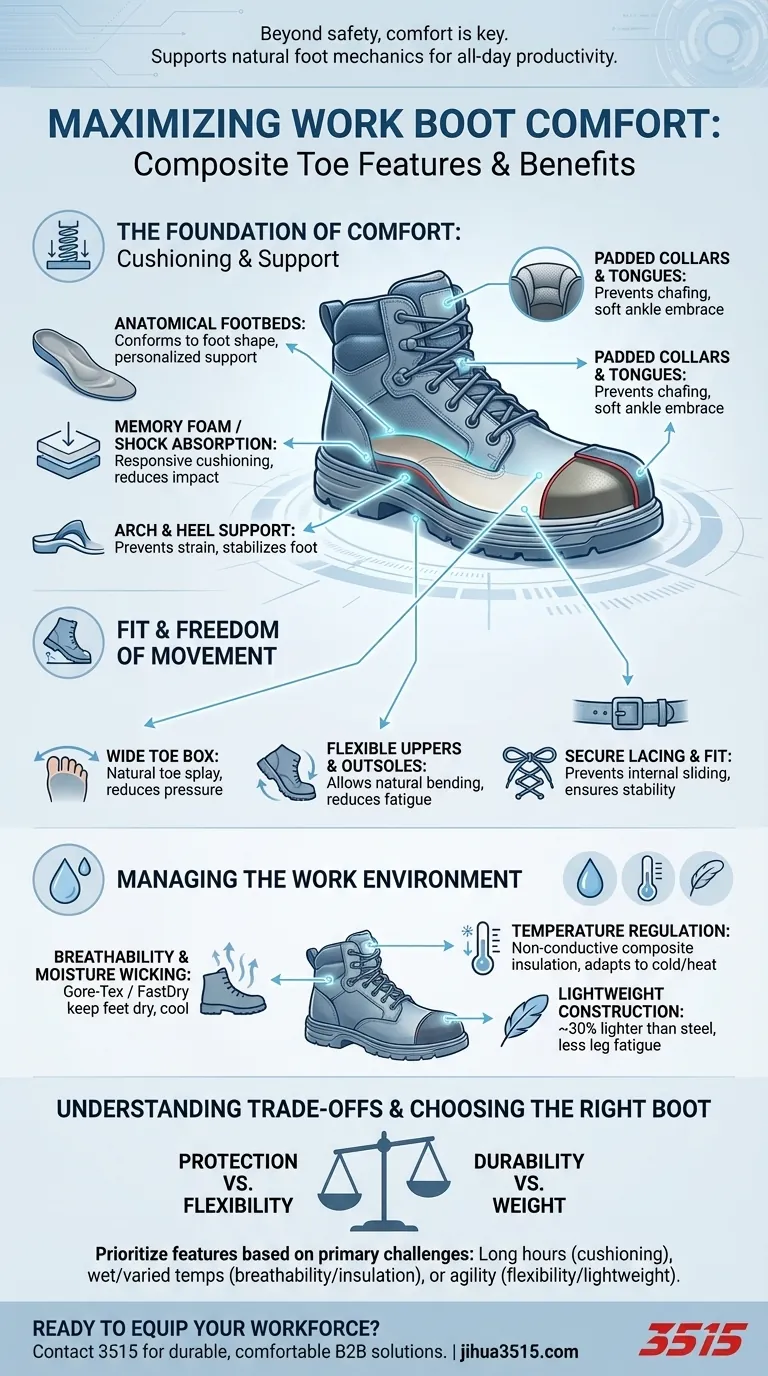
Modern insoles go far beyond simple foam inserts. Look for anatomical footbeds that are ergonomically designed to conform to the natural shape of your foot.
Technologies like memory foam or proprietary "All Day Cushioning" systems provide personalized, responsive support that adapts to your unique pressure points.
Arch and Heel Support
Proper arch support is critical for preventing strain and conditions like plantar fasciitis. The boot's design, whether a traditional heel-sole or a flat wedge-sole, can significantly impact stability and comfort depending on your foot type and work surface.
Padded Collars and Tongues
Soft, padded collars and tongues prevent chafing and irritation around the ankle. This small detail makes a significant difference in overall comfort, especially during tasks that require frequent flexing and movement.
Fit and Freedom of Movement
A protective boot should not feel like a cast. Modern designs prioritize a secure fit while allowing for the natural movement of your foot.
The Importance of the Toe Box
The toe box is the area surrounding your toes, and its design is crucial. A wide or "square" toe box gives your toes room to spread out naturally, reducing pressure and preventing cramping during long shifts.
Flexible Uppers and Outsoles
Comfortable boots often use materials like full-grain leather that conform to your foot over time. Paired with a flexible outsole, this allows your foot to bend and move naturally, which is essential for reducing stiffness and fatigue.
Secure Lacing and Fit
Adjustable laces or straps are fundamental to achieving a proper fit. A secure fit prevents your foot from sliding inside the boot, which can cause blisters and instability.
Managing the Work Environment
Your work environment subjects your feet to heat, cold, and moisture. The right boot materials can neutralize these challenges.
Breathability and Moisture Wicking
Technologies like Gore-Tex linings provide a waterproof yet breathable barrier, keeping external moisture out while allowing sweat vapor to escape.
Interior linings with FastDry technology actively wick sweat away from your skin, which is crucial for preventing blisters and maintaining comfort.
Temperature Regulation
Composite materials have a distinct advantage over steel in that they do not conduct heat or cold as readily. This keeps your feet more comfortable in extreme temperatures.
Some boots also incorporate advanced temperature-regulating fabrics that adapt to ambient conditions, helping to keep your feet warm in the cold and cool in the heat.
Lightweight Construction
A primary benefit of composite toe caps is their weight. They are approximately 30% lighter than steel, and this reduction in weight translates directly to less fatigue at the end of the day.
Understanding the Trade-offs
No single feature guarantees comfort. It is the balance of design, materials, and personal fit that creates a truly comfortable work boot.
Protection vs. Flexibility
Enhanced protective features, such as heavy-duty rubber toe caps or taller uppers for leg protection, can sometimes add stiffness and weight. These features may require a break-in period to achieve maximum comfort.
Durability vs. Weight
The most durable materials are not always the lightest. You must balance the need for a boot that can withstand your job site with the desire for a lightweight design that minimizes fatigue.
The Critical Role of Proper Fit
No technology can make up for a poorly fitting boot. A boot packed with features will still cause pain if it is the wrong size or shape for your foot. A proper fitting is the most important step in finding a comfortable boot.
How to Choose the Right Boot
Your specific needs should guide your decision. Prioritize features that solve the biggest challenges of your workday.
- If your primary focus is long hours on concrete: Prioritize advanced cushioning systems, including anatomical footbeds and shock-absorbing midsoles.
- If your primary focus is working in wet or varied temperatures: Look for waterproof and breathable linings like Gore-Tex and take advantage of composite's natural thermal insulation.
- If your primary focus is agility and frequent movement: Seek out boots with flexible outsoles and a wide, accommodating toe box that allows for natural foot splay.
Ultimately, investing in a properly fitted boot with features tailored to your work environment is a direct investment in your daily well-being and productivity.
Summary Table:
| Key Comfort Feature | Benefit |
|---|---|
| Anatomical Footbeds & Cushioning | Personalized support, reduces impact, prevents foot fatigue. |
| Wide Toe Box & Flexible Design | Allows natural toe splay and movement, reduces cramping. |
| Breathable, Moisture-Wicking Linings | Keeps feet dry, prevents blisters, regulates temperature. |
| Lightweight Composite Toe | ~30% lighter than steel, significantly reduces leg fatigue. |
Ready to equip your workforce with boots that combine safety and superior comfort?
As a large-scale manufacturer, 3515 produces a comprehensive range of high-performance work footwear for distributors, brand owners, and bulk clients. Our production capabilities encompass all types of safety boots and shoes, integrating the latest comfort technologies like anatomical cushioning, flexible outsoles, and advanced linings to ensure all-day productivity and well-being.
Contact 3515 today to discuss your specific needs and discover how our durable, comfortable work boots can add value to your product line or operation.
Visual Guide
Related Products
- Wholesale Durable Safety Boots Manufacturer Customizable Steel Toe Work Boots
- Durable Leather Moc Toe Work Boots for Wholesale & Custom Manufacturing
- Durable Moc-Toe Wedge Work Boots | Wholesale Manufacturing for Brands
- Durable Moc Toe Wedge Sole Work Boots for Wholesale and Private Label
- Wholesale Customizable Safety Boots Durable & Protective Footwear Manufacturing
People Also Ask
- What are the pros and cons of steel toe work boots? A Guide to Maximum Protection vs. Comfort
- What are the different types of steel toe work boots? Choose the Right Boot for Your Job
- What is the history of steel toe work boots? From German Invention to Modern Safety Standard
- How much weight can steel toe work boots withstand? Unpacking the 3,372 lb. Safety Standard
- What are some common myths about steel toe work boots? Debunked for Modern Workers