To choose the right cowboy boots for work, you must prioritize the demands of your job environment, focusing on safety features like slip-resistant outsoles and protective toes, and ensuring all-day comfort through proper fit and supportive insoles. The ideal boot is a direct match for the surfaces you walk on and the tasks you perform.
The most common mistake is choosing a boot based on style alone. The key to a successful purchase is to first deconstruct the functional needs of your specific work environment and then select the boot features that directly address those needs.
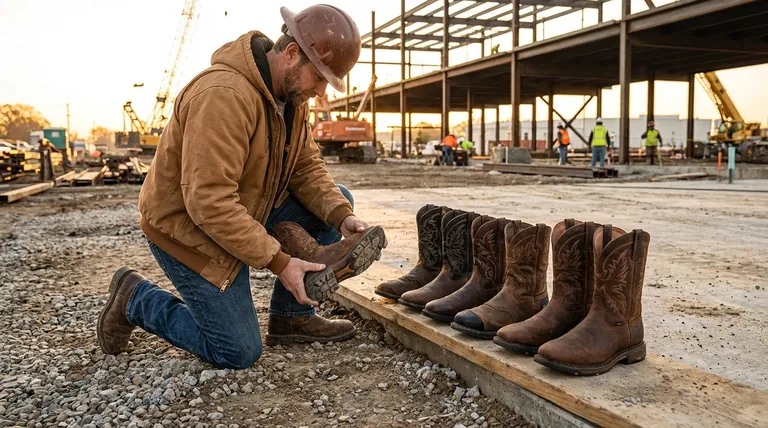
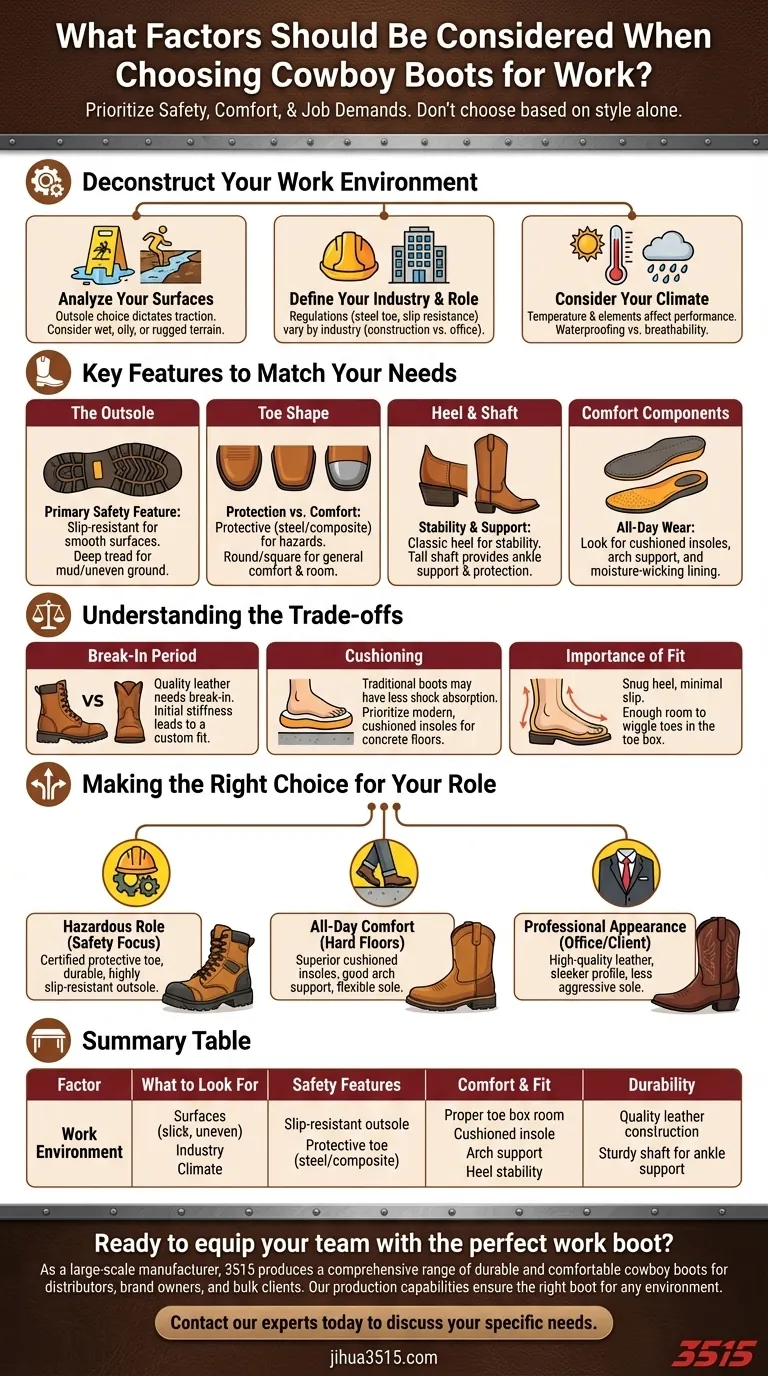
Deconstruct Your Work Environment
Before you look at a single boot, you must analyze where and how you will be wearing it. This context is the single most important factor in your decision.
Analyze Your Surfaces
The ground beneath your feet dictates the most critical safety feature: the outsole. Consider if you regularly encounter wet floors, oily or slick surfaces, or uneven and rugged terrain. Each surface requires a different type of traction.
Define Your Industry and Role
The requirements for a construction worker are vastly different from those for someone in a casual office. Your industry may have specific regulations for footwear, such as requiring a steel toe or a certain level of slip resistance.
Consider Your Climate
Temperature, rain, snow, and ice have a significant impact on footwear performance. A boot used outdoors in a wet climate needs waterproofing and an aggressive tread, while one for a climate-controlled warehouse may prioritize breathability.
Key Features to Match Your Needs
Once you have a clear picture of your work environment, you can evaluate a boot's specific features to see how they align with your requirements.
The Outsole: Your Connection to the Ground
This is your primary safety feature. Look for explicitly labeled slip-resistant soles if you work on smooth, wet, or oily surfaces. For outdoor or farm work, a deeper, more aggressive tread pattern provides better traction on mud and uneven ground.
Toe Shape: Balancing Protection and Comfort
For hazardous environments, a protective toe (steel or composite) is non-negotiable. For general wear, a round or square toe offers more room and is often more comfortable for long days than a traditional pointed design, especially for wider feet.
The Heel and Shaft: Stability and Support
The classic cowboy boot heel is designed for stability. The tall, sturdy shaft is not just for style; it provides crucial ankle support and protects your lower leg from debris, scuffs, and potential hazards.
Comfort Components: Insoles and Linings
Modern work boots incorporate features for all-day wear. Look for cushioned insoles, built-in arch support, and a moisture-wicking lining to keep your feet dry and reduce fatigue over a long shift.
Understanding the Trade-offs
No single boot is perfect for every situation. Being aware of the inherent compromises is key to making an informed choice and managing your expectations.
The Break-In Period
Quality leather boots require a break-in period. They may feel stiff at first, which is normal. This initial discomfort gives way to a custom fit as the leather molds to your foot.
Cushioning and Shock Absorption
Compared to modern athletic shoes, many traditional cowboy boots offer less cushioning and shock absorption. If you spend all day walking on hard concrete, prioritizing a boot with a modern, cushioned insole is critical.
The Importance of Fit
A proper fit is essential. The boot should be snug around your heel and the top of your foot, with minimal slipping. However, you should still have enough room to wiggle your toes freely in the toe box.
Making the Right Choice for Your Role
Filter your options based on the primary function the boot needs to serve.
- If your primary focus is safety in a hazardous role (construction, farm, factory): Prioritize a certified protective toe and a highly durable, slip-resistant outsole designed for your specific surfaces.
- If your primary focus is all-day comfort on hard floors (retail, warehouse, workshop): Seek out boots with superior cushioned insoles, good arch support, and a more flexible sole.
- If your primary focus is a professional appearance in an office or client-facing setting: Choose a boot made from high-quality leather with a sleeker profile, a less aggressive sole, and a classic toe shape.
Ultimately, the right work boot enhances your safety and comfort, allowing you to focus on the job at hand.
Summary Table:
| Key Selection Factor | What to Look For |
|---|---|
| Work Environment | Surfaces (slick, uneven), Industry, Climate |
| Safety Features | Slip-resistant outsole, Protective toe (steel/composite) |
| Comfort & Fit | Proper toe box room, Cushioned insole, Arch support, Heel stability |
| Durability | Quality leather construction, Sturdy shaft for ankle support |
Ready to equip your team with the perfect work boot?
As a large-scale manufacturer, 3515 produces a comprehensive range of durable and comfortable cowboy boots for distributors, brand owners, and bulk clients. Our production capabilities ensure you get the right boot for any work environment—from hazardous sites requiring certified safety toes to demanding roles needing all-day comfort.
Contact our experts today to discuss your specific needs and discover how we can support your business with reliable footwear solutions.
Visual Guide
Related Products
- Wholesale High-Traction Camo Boots - Custom Manufacturer for Brands
- Durable Spiked Camouflage Boots Wholesale & Factory Production
- High-Traction Suede Tactical Boots Wholesale & Custom Manufacturing
- Wholesale Lightweight Tactical Boots Custom Manufacturer for Desert & Combat Use
- Wholesale Durable Mid-Cut Tactical Boots for Custom & Private Label Brands
People Also Ask
- What are the key features of the new line of camo boots? Built for Extreme Cold & Rugged Terrain
- Are camo boots necessary for hunting success? Prioritize Performance Over Pattern
- What is the technical logic behind using closed-eye testing for tactical boots? Unlocking Peak Footwear Stability
- How does the Rank Score Test identify the primary causes of premature failure in tactical and work boots? Key Insights
- What shoes to wear for a security job? Durable, Protective Footwear for Long Shifts