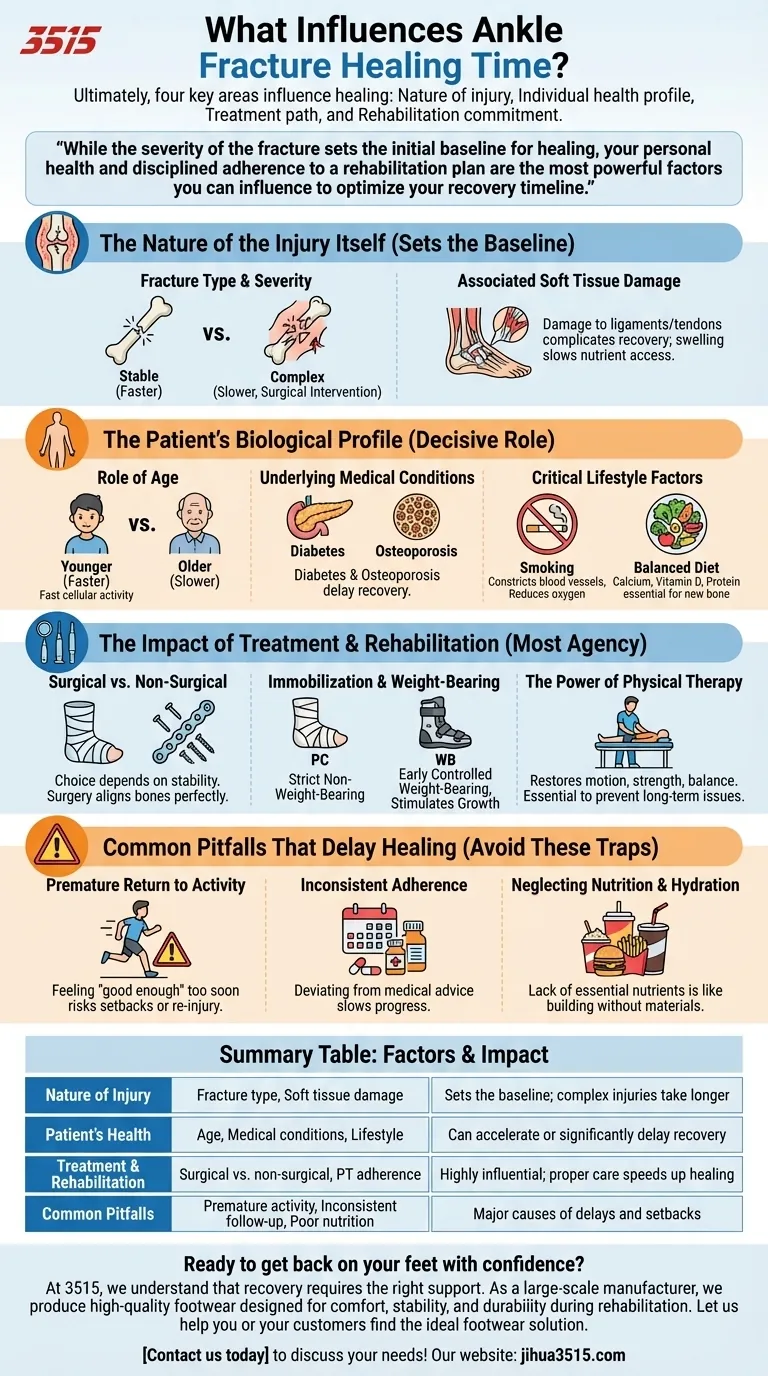
Ultimately, four key areas influence the healing time of an ankle fracture: the specific nature of the injury, your individual health profile, the treatment path chosen, and your commitment to rehabilitation. While some factors are fixed, others are well within your control and can significantly impact the speed and quality of your recovery.
While the severity of the fracture sets the initial baseline for healing, your personal health and disciplined adherence to a rehabilitation plan are the most powerful factors you can influence to optimize your recovery timeline.
The Nature of the Injury Itself
The characteristics of the break establish the foundation for the entire healing process. These factors are determined at the moment of injury and are largely out of your control.
Fracture Type and Severity
A simple, stable fracture, where the bone pieces are well-aligned, will inherently heal faster than a complex one. Fractures that are displaced (out of alignment), comminuted (broken into multiple pieces), or open (piercing the skin) require more extensive healing and often surgical intervention, extending the timeline.
Associated Soft Tissue Damage
Ankle fractures rarely happen in isolation. Significant damage to the surrounding ligaments, tendons, and muscles can complicate recovery. Swelling and compromised blood flow from severe soft tissue injury can slow down the bone's access to the nutrients it needs to mend.
The Patient's Biological Profile
Your body's inherent ability to heal plays a decisive role. Several personal health factors can either accelerate or impede the bone regeneration process.
The Role of Age
Younger individuals generally heal faster. Children and teenagers have more robust cellular activity and a thicker periosteum (the membrane covering bones), which contributes to quicker and more reliable bone formation. Healing potential naturally slows with age.
Underlying Medical Conditions
Certain chronic health issues can significantly delay recovery. Diabetes can impair circulation and nerve function, while conditions like osteoporosis mean the bone itself is less dense and slower to rebuild. Any condition affecting vascular health can be an impediment.
Critical Lifestyle Factors
Lifestyle choices have a direct impact. Smoking is one of the most significant obstacles to bone healing, as nicotine constricts blood vessels and reduces oxygen flow to the healing site. Conversely, a balanced diet rich in calcium, vitamin D, and protein provides the essential building blocks for new bone.
The Impact of Treatment and Rehabilitation
The decisions made by you and your medical team after the injury are critical. This is the area where you have the most agency to positively influence your outcome.
Surgical vs. Non-Surgical Treatment
The choice between casting alone or surgical fixation with plates and screws depends on the fracture's stability. While surgery is more invasive, it is often necessary to perfectly align the bones, creating an optimal environment for them to heal correctly and often allowing for earlier, controlled movement.
Immobilization and Weight-Bearing
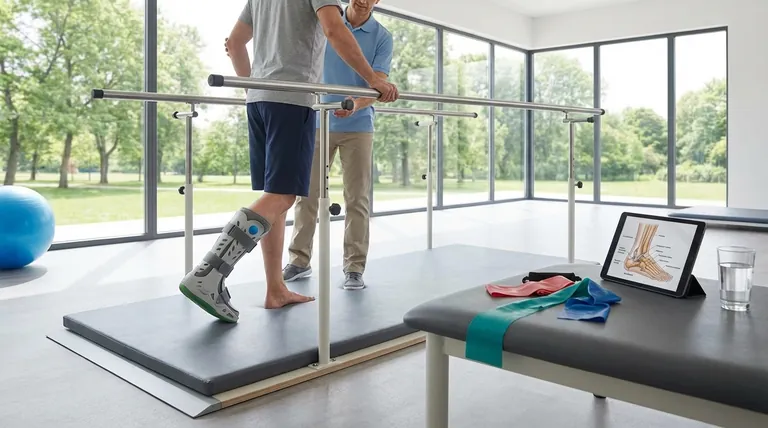
Post-treatment protocols are crucial. The debate between traditional plaster casting (PC) with strict non-weight-bearing and modern approaches using a walking boot (WB) with early, controlled weight-bearing depends on the fracture's stability. For certain stable fractures, early weight-bearing can stimulate bone growth and reduce muscle atrophy, potentially speeding up functional recovery.
The Power of Physical Therapy
Rehabilitation is not an optional step; it is essential. A physical therapist guides you in safely restoring range of motion, strength, and balance. Skipping or shortcutting this process is a primary cause of long-term stiffness, weakness, and risk of re-injury, even after the bone is fully healed.
Common Pitfalls That Delay Healing
Avoiding common mistakes is just as important as following the correct procedures. Acknowledging these potential traps can help you stay on the fastest path to recovery.
Premature Return to Activity
One of the most common errors is feeling "good enough" and returning to demanding activities too soon. This puts immense stress on the still-fragile bone, risking a setback or even a new fracture that resets your entire recovery clock.
Inconsistent Adherence to Medical Advice
Your orthopedic specialist and physical therapist provide a precise roadmap for recovery. Deviating from weight-bearing restrictions, missing therapy appointments, or failing to perform prescribed home exercises will inevitably slow your progress and can compromise the final outcome.
Neglecting Nutrition and Hydration
The body requires a significant amount of energy and specific nutrients to build new bone. Failing to support this process with adequate protein, vitamins, and minerals is like asking a construction crew to build a house without enough bricks and mortar.
Making the Right Choice for Your Goal
Understanding these factors empowers you to be an active participant in your recovery. Your focus should align with your primary objective.
- If your primary focus is the fastest possible bone healing: Prioritize strict adherence to your surgeon's weight-bearing protocol and optimize your nutrition, ensuring you get enough calcium, vitamin D, and protein while avoiding smoking.
- If your primary focus is the best long-term function: Commit completely to your physical therapy regimen to rebuild strength, flexibility, and balance, which are essential for preventing future issues like stiffness or instability.
By actively managing the factors within your control, you can create the best possible environment for your body to heal efficiently and effectively.
Summary Table:
| Factor Category | Key Elements | Impact on Healing Time |
|---|---|---|
| Nature of Injury | Fracture type (stable vs. displaced/comminuted), soft tissue damage | Sets the baseline; complex injuries take longer |
| Patient's Health | Age, medical conditions (e.g., diabetes, osteoporosis), lifestyle (smoking, nutrition) | Can accelerate or significantly delay recovery |
| Treatment & Rehabilitation | Surgical vs. non-surgical, immobilization method, physical therapy adherence | Highly influential; proper care speeds up healing |
| Common Pitfalls | Premature activity, inconsistent follow-up, poor nutrition | Major causes of delays and setbacks |
Ready to get back on your feet with confidence? At 3515, we understand that recovery requires the right support—both medically and in your daily life. As a large-scale manufacturer, we produce a comprehensive range of high-quality footwear designed for comfort, stability, and durability, perfect for distributors, brand owners, and bulk clients during rehabilitation. Let us help you or your customers find the ideal footwear solution to aid recovery. Contact us today to discuss your needs!
Visual Guide