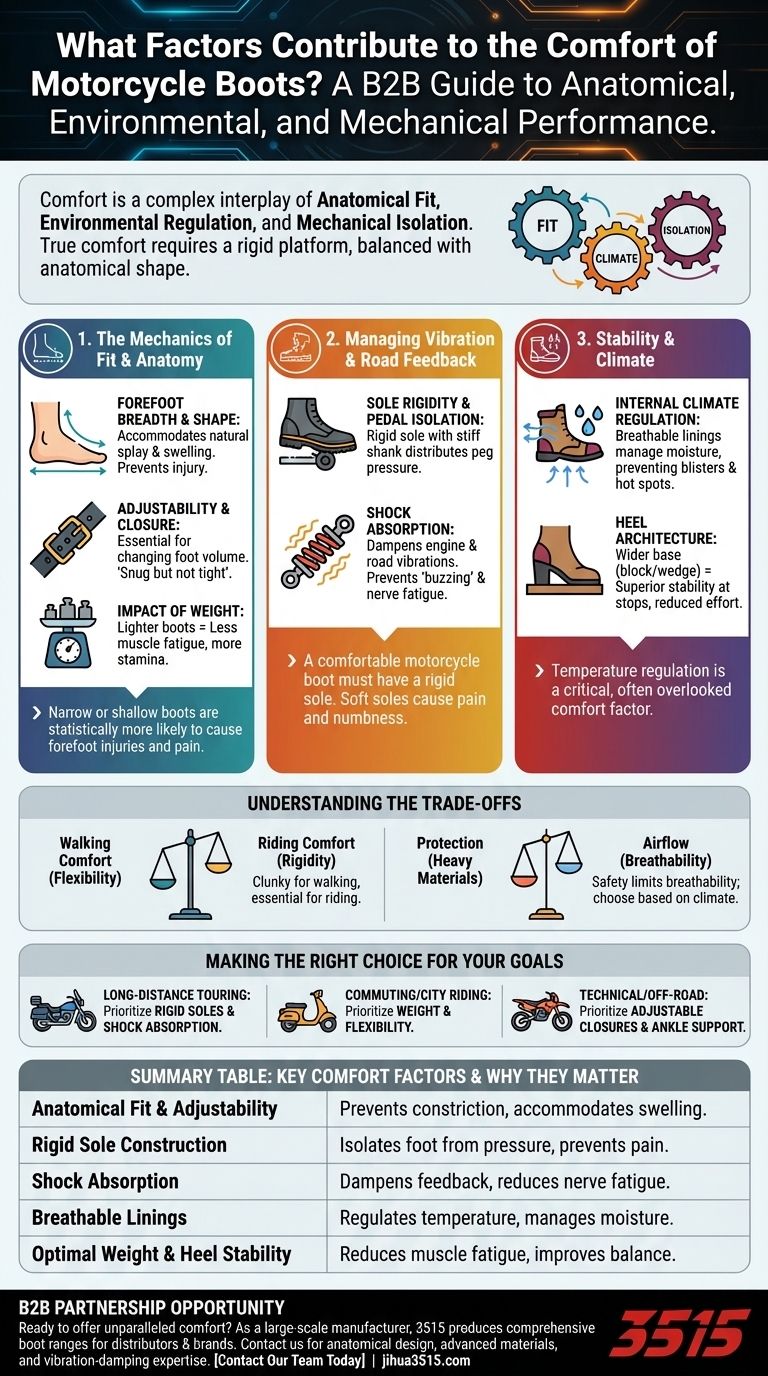
Motorcycle boot comfort is a complex interplay of anatomical fit, environmental regulation, and mechanical isolation. It relies on a snug but adjustable fit to secure the foot without constriction, breathable linings for temperature control, and specialized sole construction to absorb road vibration and prevent pedal pressure during extended rides.
True rider comfort goes beyond soft padding; it requires a rigid platform to isolate the foot from engine vibration and peg pressure, balanced with an anatomical shape that accommodates natural foot swelling and muscle activity.
The Mechanics of Fit and Anatomy
Forefoot Breadth and Shape
The most common source of discomfort is a mismatch between the boot’s last (mold) and your foot shape. Narrow or shallow boots are statistically more likely to cause forefoot injuries and pain.
You must look for a boot with adequate forefoot breadth. This allows your toes to splay naturally and accommodates the slight swelling that occurs during long rides or warm weather.
Adjustability and Closure Systems
Static fit is rarely sufficient because foot volume changes throughout the day. Adjustable closures—such as laces, zippers, and buckles—are essential for comfort.
These systems allow you to tighten the boot for security while riding and loosen it slightly to relieve pressure when off the bike, ensuring a "snug but not overly tight" fit.
The Impact of Weight on Muscle Activity
Every ounce on your foot requires energy to move. Heavy boots increase muscle activity, leading to premature fatigue in the legs and hips.
Modern materials that offer protection without excessive weight contribute significantly to stamina, allowing you to ride longer without feeling weighed down.
Managing Vibration and Road Feedback
Sole Rigidity and Pedal Isolation
Unlike walking shoes, a comfortable motorcycle boot must have a rigid sole.
Soft soles allow the narrow footpegs to press into the arch of the foot, causing pain and numbness. A stiff shank distributes this pressure evenly across the entire foot, making long rides significantly more bearable.
Shock Absorption
The boot acts as the primary damper between the rider and the machine.
High-quality boots feature internal structures designed to absorb shocks and vibrations from the engine and the road surface. This reduction in high-frequency vibration prevents the "buzzing" sensation that leads to nerve fatigue.
Stability and Climate
Internal Climate Regulation
Temperature regulation is a critical, often overlooked comfort factor.
Boots must feature breathable linings or membranes. If moisture from perspiration cannot escape, friction increases, leading to blisters and hot spots regardless of how well the boot fits.
Heel Architecture
The shape of the heel directly influences stability when you put your foot down at a stoplight.
A wider base, such as a block heel or wedge, provides superior stability compared to narrower designs. This stability reduces the physical effort required to balance the bike, contributing to overall lower fatigue levels.
Understanding the Trade-offs
While comfort is the goal, it often sits in tension with other performance metrics.
Walking vs. Riding: The rigid sole necessary to prevent peg pressure makes walking feel unnatural and "clunky." A boot that feels like a sneaker while walking will likely cause foot pain after an hour on the highway.
Protection vs. Airflow: High-protection boots often use heavy leathers or plastics that limit breathability. You must balance the need for physical safety with the need for thermal comfort based on your riding climate.
Making the Right Choice for Your Goals
To select the most comfortable boot, you must identify your primary riding context.
- If your primary focus is Long-Distance Touring: Prioritize rigid soles and shock absorption to prevent pedal pressure and vibration fatigue over hundreds of miles.
- If your primary focus is Commuting/City Riding: Prioritize weight and flexibility, ensuring the boot is light enough for frequent stops and comfortable enough for short walks.
- If your primary focus is Technical/Off-Road: Prioritize adjustable closures and ankle support to manage intense muscle activity and changing terrain.
Comfort is not a luxury; it is a safety feature that keeps your mind focused on the road rather than your feet.
Summary Table:
| Key Comfort Factor | Why It Matters |
|---|---|
| Anatomical Fit & Adjustability | Prevents constriction, accommodates foot swelling, and reduces injury risk. |
| Rigid Sole Construction | Isolates foot from pedal pressure and engine vibration, preventing pain and numbness. |
| Shock Absorption | Dampens road feedback to reduce nerve fatigue and the "buzzing" sensation. |
| Breathable Linings | Regulates temperature and manages moisture to prevent blisters and hot spots. |
| Optimal Weight & Heel Stability | Reduces muscle fatigue and improves balance, lowering overall riding effort. |
Ready to experience unparalleled comfort and protection?
As a large-scale manufacturer, 3515 produces a comprehensive range of motorcycle boots for distributors, brand owners, and bulk clients. Our expertise in anatomical design, advanced materials, and vibration-damping construction ensures your customers get the perfect blend of safety and all-day comfort.
Contact our team today to discuss your motorcycle boot needs and explore our production capabilities.
Visual Guide
Related Products
- High Performance Fire-Retardant Waterproof Safety Boots
- Wholesale Tactical Boots High-Traction & Reflective for Bulk & Brand Orders
- Premium High-Cut Waterproof Safety Boots Manufacturing & Wholesale Solutions
- Durable Goodyear Welt Leather Work Boots for Wholesale & Private Label
- Wholesale High-Traction Camo Boots - Custom Manufacturer for Brands
People Also Ask
- Why are waterproof safety boots recommended for certain work environments? Essential Protection for Wet & Hazardous Jobs
- What roles do 3D vision systems and industrial robots play in the manufacturing of fire safety boots? Smart Automation
- How can you ensure your feet stay dry during winter walks? A Two-Part Defense System for Total Comfort
- How should you maintain waterproof boots? A Simple 3-Step Guide to Long-Lasting Performance
- What is the difference between waterproof, water-resistant, and water-repellent boots? Choose the Right Protection for Your Feet