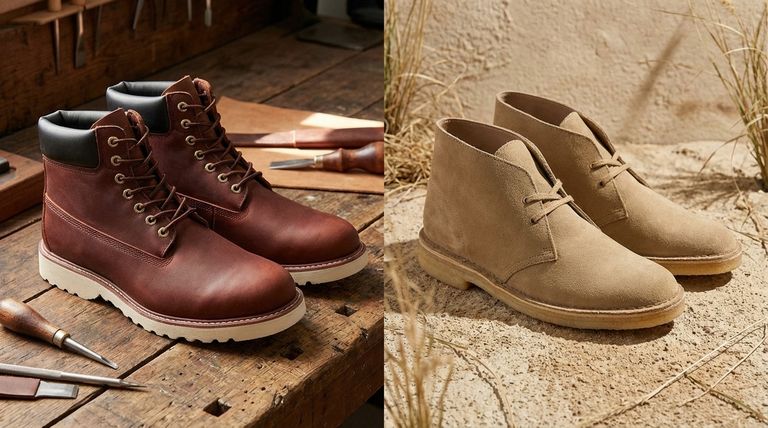
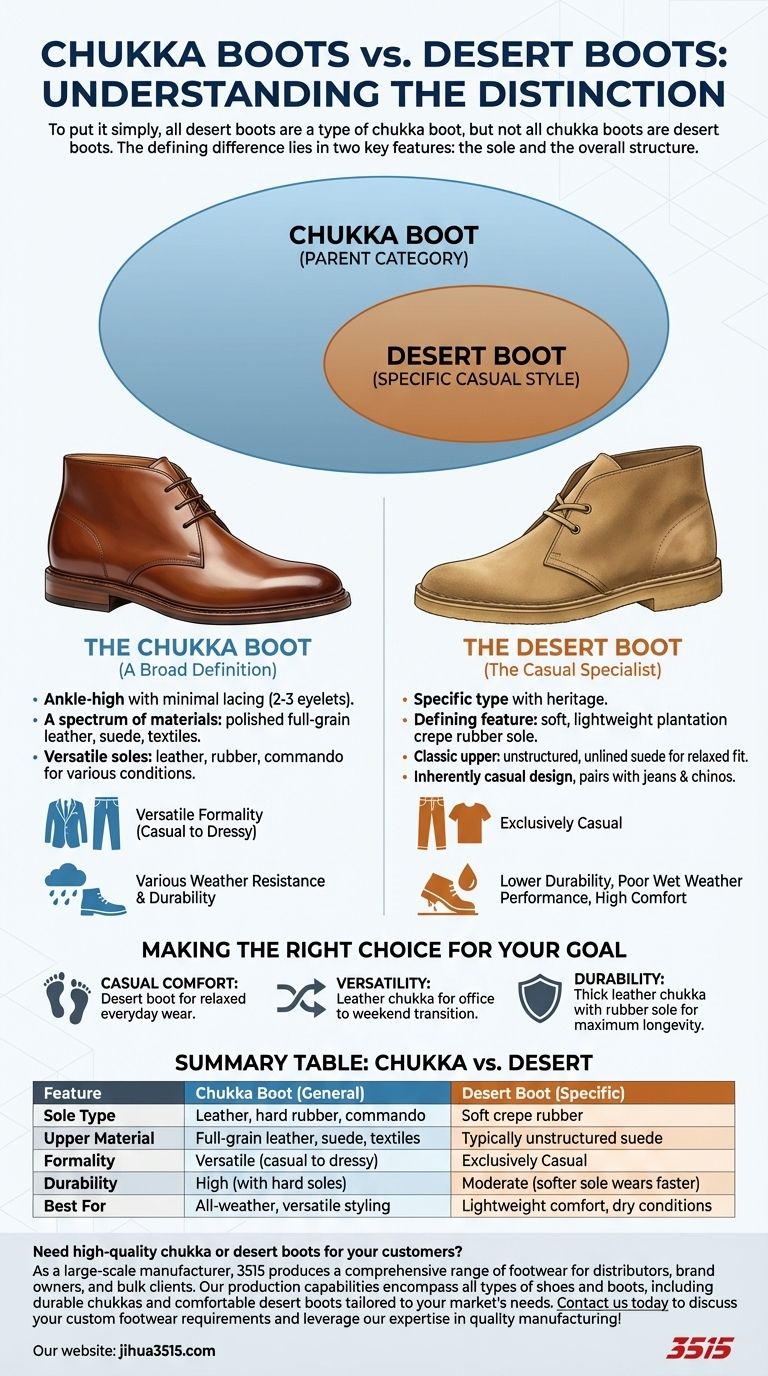
To put it simply, all desert boots are a type of chukka boot, but not all chukka boots are desert boots. The defining difference lies in two key features: the sole and the overall structure. A desert boot is a specific, casual variation of the chukka, characterized by its soft crepe rubber sole and typically unstructured suede upper.
The core distinction is one of general versus specific. "Chukka" describes a broad category of ankle-high boots, while "Desert Boot" refers to a very specific, historically-defined style within that category, notable for its casual construction.
The Chukka Boot: A Broad Definition
The term "chukka" refers to a general style of ankle-high boot. Think of it as the parent category, which allows for significant variation in materials and construction.
Ankle-High with Minimalist Lacing
The foundational design of any chukka is its height, which hits at the ankle. It is also defined by a simple open-lacing system, almost always featuring just two or three pairs of eyelets.
A Spectrum of Materials
Chukka uppers can be made from a wide array of materials. You will commonly find them in polished full-grain leather, versatile suede, or other textiles. This material choice is the primary factor in determining the boot's formality.
Versatility in Soles
This is a key differentiator. Chukkas can be fitted with many different soles, from elegant leather soles for dressier versions to hard-wearing rubber or commando soles for more rugged, all-weather use.
The Desert Boot: The Casual Specialist
The desert boot is a specific type of chukka with a distinct heritage and construction. Its features were born from the need for a lightweight, comfortable boot for British officers in desert climates.
The Defining Feature: The Crepe Sole
The single most identifiable feature of a true desert boot is its plantation crepe rubber sole. This material is soft, springy, and lightweight, providing exceptional comfort for walking. Its slightly tacky texture offers good grip on dry surfaces.
The Classic Upper: Unstructured Suede
Traditionally, desert boots feature an unstructured suede upper. This means the boot is often unlined and made from softer, more pliable materials, creating a relaxed fit that molds to the foot. While some modern versions use leather, sandy-colored suede is the classic choice.
An Inherently Casual Design
Because of its soft sole and unstructured upper, the desert boot is an exclusively casual piece of footwear. It pairs naturally with jeans, chinos, and other relaxed apparel but is not suitable for formal or most business-casual settings.
Understanding the Trade-offs
Choosing between a broader chukka and a specific desert boot involves clear trade-offs in function and style.
Formality and Occasion
A leather chukka with a slim profile and a leather sole can be worn with a suit or business-casual trousers. A desert boot, by contrast, is fundamentally casual and looks out of place in a formal environment.
Durability and Weather Resistance
The desert boot's crepe sole offers superior comfort but lacks durability. It wears down faster than hard rubber and can become sticky in high heat. It also performs poorly in wet weather, absorbing water and offering little traction. A chukka with a commando or Dainite rubber sole provides far better longevity and all-weather grip.
Maintenance
The classic suede of a desert boot requires more careful maintenance—including regular brushing and waterproofing spray—than the smooth, full-grain leather often found on more versatile chukka boots, which can simply be wiped clean and conditioned.
Making the Right Choice for Your Goal
Your final decision should be guided by how you intend to use the boot.
- If your primary focus is casual comfort: The desert boot's soft suede and cushioned crepe sole make it the ideal choice for relaxed, everyday wear.
- If your primary focus is versatility: A leather chukka boot with a hard rubber or leather sole can easily transition from a business-casual office to a weekend outing.
- If your primary focus is durability: Choose a chukka made from thick leather with a stitched, hard-wearing rubber sole for maximum longevity and all-weather performance.
By understanding these key distinctions, you can select the boot that truly aligns with your specific needs for style, comfort, and function.
Summary Table:
| Feature | Chukka Boot (General) | Desert Boot (Specific) |
|---|---|---|
| Sole Type | Leather, hard rubber, commando | Soft crepe rubber |
| Upper Material | Full-grain leather, suede, textiles | Typically unstructured suede |
| Formality | Versatile (casual to dressy) | Exclusively casual |
| Durability | High (with hard soles) | Moderate (softer sole wears faster) |
| Best For | All-weather, versatile styling | Lightweight comfort, dry conditions |
Need high-quality chukka or desert boots for your customers?
As a large-scale manufacturer, 3515 produces a comprehensive range of footwear for distributors, brand owners, and bulk clients. Our production capabilities encompass all types of shoes and boots, including durable chukkas and comfortable desert boots tailored to your market's needs.
Contact us today to discuss your custom footwear requirements and leverage our expertise in quality manufacturing!
Visual Guide
Related Products
- Wholesale High-Traction Camo Boots - Custom Manufacturer for Brands
- Durable Leather Tactical Boots Wholesale & Custom Manufacturing for Brands
- High-Traction Suede Tactical Boots Wholesale & Custom Manufacturing
- Durable Leather High-Ankle Tactical Boots for Wholesale & Custom Manufacturing
- Durable Leather Work Boots Wholesale Manufacturer & Custom Factory
People Also Ask
- What are the key features of the new line of camo boots? Built for Extreme Cold & Rugged Terrain
- Are camo boots necessary for hunting success? Prioritize Performance Over Pattern
- How does the Rank Score Test identify the primary causes of premature failure in tactical and work boots? Key Insights
- What is the technical logic behind using closed-eye testing for tactical boots? Unlocking Peak Footwear Stability
- What shoes to wear for a security job? Durable, Protective Footwear for Long Shifts