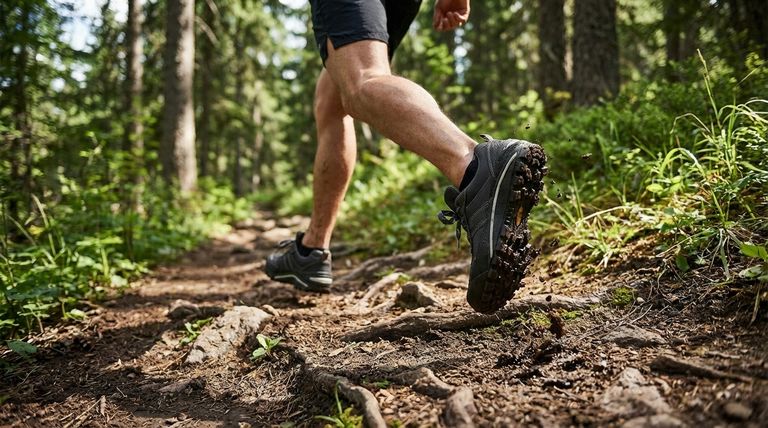
At their core, trail shoes are engineered for one primary purpose: to allow for fast, agile, and precise movement over uneven and rugged terrain. They are specifically designed for the dynamic demands of trail and mountain running, prioritizing speed and a responsive feel for the ground over the heavy protection of traditional hiking boots.
The fundamental trade-off of a trail shoe is stability for agility. By sacrificing the rigid ankle support of a boot, they provide the lightweight flexibility, grip, and responsiveness needed for confidently running on natural, unpredictable surfaces.
The Anatomy of a Trail Shoe: Built for Agility
To understand what trail shoes are for, you must first understand how their specific design features support the goal of moving quickly over technical terrain.
Aggressive Outsoles
The most distinct feature of a trail shoe is its outsole. It is equipped with deep, widely-spaced lugs made of sticky rubber.
These lugs are designed to dig into soft surfaces like mud and dirt for reliable traction, while the tacky rubber compound provides exceptional grip on wet rock and roots.
Lightweight Construction
Every gram matters when you're running. Trail shoes use lightweight mesh and synthetic materials to reduce the energy required for each stride.
This focus on minimizing weight is a direct contrast to hiking boots, which use heavier, more durable materials like leather to prioritize longevity and protection.
Responsive Midsoles
While cushioned, the midsoles of trail shoes are designed to be responsive, providing good ground-feel. This allows a runner to feel the terrain underfoot and react quickly.
Many models also include a thin, hard rock plate sandwiched in the midsole to protect the foot from sharp rocks and roots without adding significant weight or stiffness.
Precise and Secure Fit
Trail shoes typically feature a narrower sole profile. This allows for more precise and confident foot placement when navigating narrow, rocky, or technical sections of a trail.
They combine this with a secure heel cup and lacing system to prevent the foot from sliding inside the shoe, which is critical for stability when moving quickly downhill.
Understanding the Trade-offs: Where Trail Shoes Fall Short
The design choices that make trail shoes excellent for running also create distinct limitations. Understanding these trade-offs is crucial for choosing the right footwear.
Minimal Ankle Support
The primary weakness of a trail shoe is its lack of ankle support. The low-cut, flexible design that enables agility offers virtually no protection against ankle rolls.
This makes them a poor choice for activities that put high rotational stress on the ankle, such as carrying a heavy backpack, which raises your center of gravity.
Limited Underfoot Protection
While rock plates help, the flexible soles of trail shoes offer less protection from constant impact than the rigid shanks of hiking boots.
When hiking slowly with a heavy pack, the force is concentrated over a smaller area for a longer time, which can lead to foot fatigue and bruising that a stiffer boot would prevent.
Reduced Durability
The lightweight materials used to enhance performance are inherently less durable than the thick leather and rubber used in hiking boots. A trail shoe will almost always wear out faster than a comparable hiking boot under the same conditions.
Making the Right Choice for Your Goal
Your choice between trail shoes and other footwear depends entirely on your intended activity, the terrain, and the weight you'll be carrying.
- If your primary focus is running or fast-hiking on trails: Trail shoes are the ideal tool, offering the necessary grip, flexibility, and lightweight design for speed.
- If your primary focus is technical hiking with a heavy pack: A dedicated hiking boot with high ankle support and a stiffer sole is the safer and more comfortable choice.
- If your primary focus is casual day hiking on well-maintained paths: Either a trail shoe or a lighter hiking shoe can work well, depending on your personal preference for ground-feel versus support.
Matching your footwear's design to your specific goal is the most important step in ensuring comfort, performance, and safety on the trail.
Summary Table:
| Feature | Purpose | Trade-off |
|---|---|---|
| Aggressive Outsoles | Dig into mud, grip wet rock | Less durable on pavement |
| Lightweight Construction | Reduces energy per stride | Less durable than heavy boots |
| Responsive Midsoles | Provides good ground-feel | Less protection from impact |
| Precise, Secure Fit | Confident foot placement | Minimal ankle support |
Need high-performance footwear for your brand or bulk orders?
As a large-scale manufacturer, 3515 produces a comprehensive range of athletic and outdoor footwear for distributors, brand owners, and bulk clients. Our production capabilities encompass all types of shoes and boots, including technical trail running shoes designed for agility and speed.
Let us help you bring superior footwear to your market. Contact our team today to discuss your manufacturing needs!
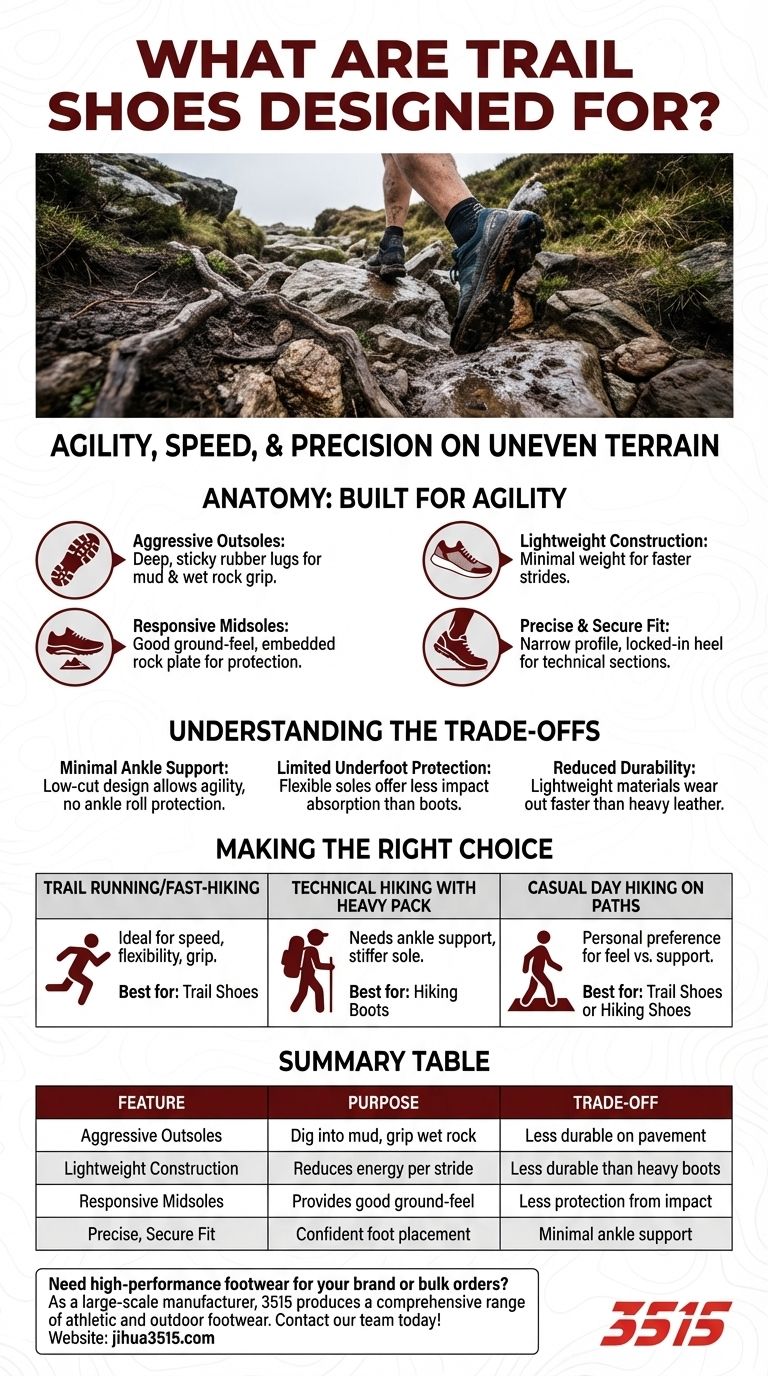
Visual Guide
Related Products
- Durable Rubber Sole Outdoor Shoes Wholesale & Custom Manufacturing
- Wholesale Durable Camouflage Canvas Shoes with High-Traction Cleated Rubber Sole
- Wholesale Modern Perforated Leather Derby Shoes with Chunky Sole for Custom Branding
- Wholesale Breathable Perforated Leather Derby Shoes with Modern Comfort Sole
- Custom Breathable Perforated Leather Derby Shoes for Wholesale & Brands
People Also Ask
- What is the function of the sole in outdoor shoes? Find the Perfect Grip and Support
- What role do outdoor shoes and sneakers play in navigating external terrains? Engineered Stability for Every Surface
- How is AI utilized in the design of outdoor and safety footwear? Harnessing Big Data for Market-Driven Shoe Innovation
- Why is durability important when selecting outdoor shoes? A Guide to Safety & Long-Term Value
- What are the key components of outdoor shoes that affect comfort and sturdiness? A Guide to Durable, High-Performance Footwear