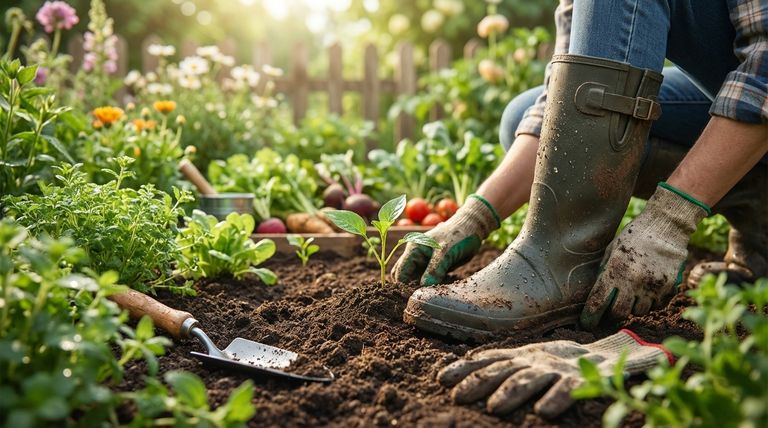
The key features of excellent gardening shoes are comprehensive waterproofing, durable materials, excellent traction, all-day comfort, and a design that is easy to clean. These elements work together to ensure your feet are protected, stable, and comfortable while withstanding the rigors of dirt, water, and uneven terrain.
Your choice in gardening footwear is more than a matter of comfort; it's a critical decision for safety and efficiency. The right shoe provides a necessary barrier against the specific hazards of a garden, preventing injury and fatigue while allowing you to focus on your work.
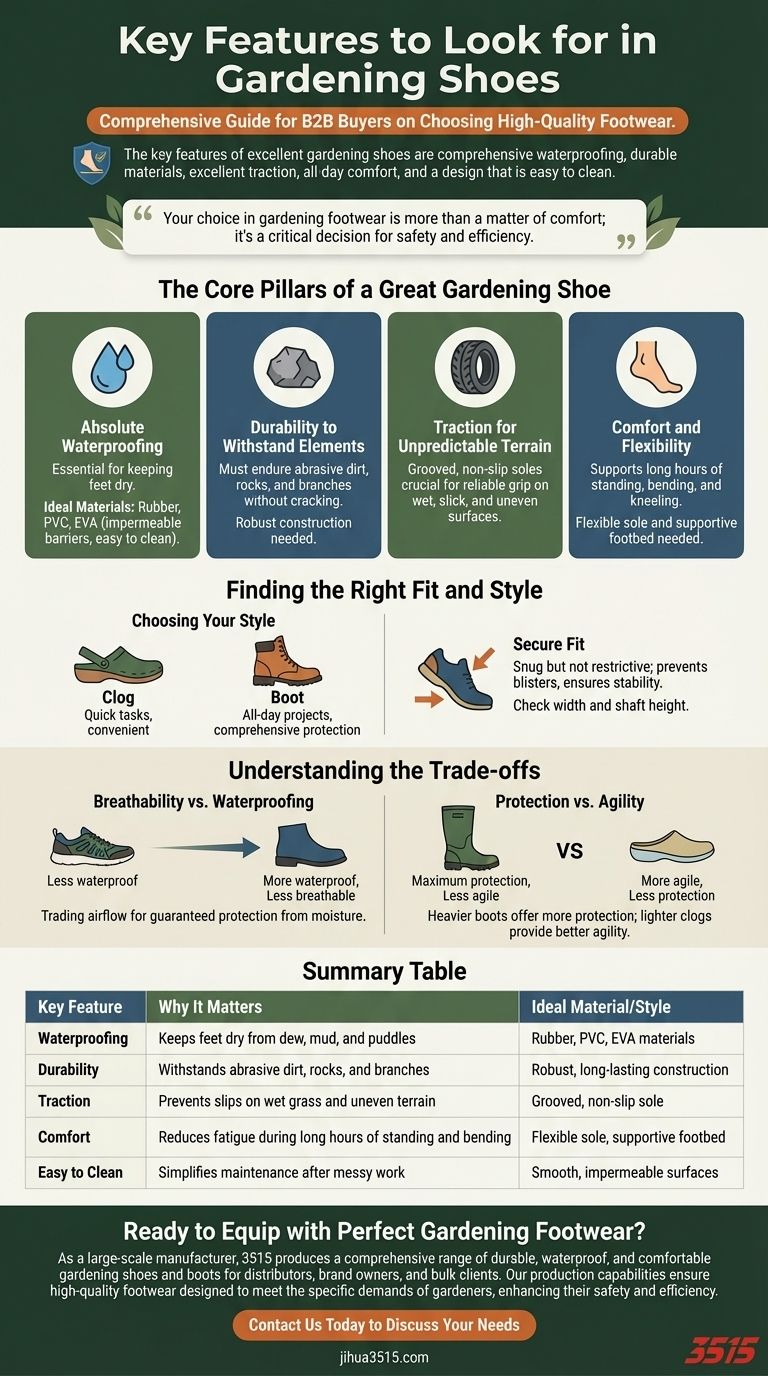
The Core Pillars of a Great Gardening Shoe
To make an informed choice, you must understand the functional role of each feature. A great gardening shoe isn't just a rugged sneaker; it's a purpose-built tool.
Absolute Waterproofing is Non-Negotiable
Your feet will inevitably encounter water, from morning dew to mud puddles. Waterproofing is essential for keeping them dry and comfortable.
Materials like rubber, PVC, and EVA (ethylene-vinyl acetate) are ideal because they form an impermeable barrier. This not only keeps moisture out but also makes the shoes incredibly easy to clean.
Durability to Withstand the Elements
Gardening involves constant contact with abrasive materials like dirt, rocks, and branches. Everyday shoes degrade quickly under these conditions.
Look for shoes made from robust materials that can endure frequent scuffs, flexing, and exposure to mud and sun without cracking or wearing out prematurely.
Traction for Unpredictable Terrain
Safety is paramount in the garden, where surfaces can be slippery and unstable. The sole of your shoe is your primary point of contact with the ground.
A grooved, non-slip sole is crucial. This design provides reliable grip on wet grass, slick mud, and uneven surfaces, significantly reducing the risk of slips and falls.
Comfort and Flexibility for Long Hours
Gardening is a physical activity that involves long periods of standing, bending, and kneeling. Your footwear must support these movements without causing strain.
A flexible sole allows your foot to bend naturally as you crouch, while a well-designed footbed provides the support needed to prevent fatigue during extended tasks.
Finding the Right Fit and Style
Beyond the core materials, the specific style and fit of the shoe determine its suitability for you and your gardening habits.
Choosing Your Style: Clogs vs. Boots
The most common styles are clogs, ankle boots, and tall boots, each suited for different tasks.
Clogs are perfect for quick trips into the garden and light tasks, offering convenience and ease of use. Boots provide more comprehensive protection and ankle support for more intensive, all-day projects.
The Importance of a Secure Fit
A proper fit prevents blisters and ensures stability. Your shoe should be snug enough to secure your foot but not so tight that it restricts movement.
Pay attention to width, as some clog styles can be too wide. If considering tall boots, ensure the shaft height doesn't uncomfortably hit below your knee.
Understanding the Trade-offs
No single shoe is perfect for every person and every task. Recognizing the inherent trade-offs is key to selecting the best option for your needs.
Breathability vs. Waterproofing
The same materials that make a shoe completely waterproof, like rubber and EVA, also make it non-breathable. On hot days, your feet may sweat more in these shoes.
This is a fundamental compromise: you are trading airflow for guaranteed protection from external moisture.
Protection vs. Agility
A tall, heavy-duty boot offers maximum protection from mud, water, and scratches. However, it can feel heavier and less agile than a lightweight clog.
Consider your most common gardening tasks. If you are frequently working in deep mud or wet conditions, the added protection of a boot outweighs the need for agility.
Why Everyday Shoes Don't Make the Cut
Using old sneakers for gardening is a common mistake. They lack true waterproofing, are difficult to clean, and provide inadequate protection.
Specialized gardening shoes are designed to solve these exact problems, ultimately enhancing your safety and making the experience more comfortable and efficient.
Making the Right Choice for Your Garden
Your final decision should be based on the type of gardening you do most often.
- If your primary focus is quick, light tasks like watering pots: A slip-on clog offers the ultimate convenience and sufficient protection.
- If your primary focus is all-day projects on varied terrain: An ankle boot provides the ideal balance of support, protection, and flexibility.
- If your primary focus is working in wet, muddy, or overgrown conditions: A tall rubber boot delivers the maximum waterproofing and leg protection you need.
Investing in proper gardening shoes is an investment in your safety, comfort, and enjoyment of your time outdoors.
Summary Table:
| Key Feature | Why It Matters | Ideal Material/Style |
|---|---|---|
| Waterproofing | Keeps feet dry from dew, mud, and puddles | Rubber, PVC, EVA materials |
| Durability | Withstands abrasive dirt, rocks, and branches | Robust, long-lasting construction |
| Traction | Prevents slips on wet grass and uneven terrain | Grooved, non-slip sole |
| Comfort | Reduces fatigue during long hours of standing and bending | Flexible sole, supportive footbed |
| Easy to Clean | Simplifies maintenance after messy work | Smooth, impermeable surfaces |
Ready to equip yourself with the perfect gardening footwear?
As a large-scale manufacturer, 3515 produces a comprehensive range of durable, waterproof, and comfortable gardening shoes and boots for distributors, brand owners, and bulk clients. Our production capabilities ensure you receive high-quality footwear designed to meet the specific demands of gardeners, enhancing their safety and efficiency.
Contact us today to discuss your footwear needs and discover how we can bring value to your business.
Visual Guide
Related Products
- Durable Rubber Sole Outdoor Shoes Wholesale & Custom Manufacturing
- Wholesale Durable Camouflage Canvas Shoes with High-Traction Cleated Rubber Sole
- Wholesale Durable Camo Canvas Shoes with High-Traction Rubber Soles
- Premium Lightweight Safety Shoes for Wholesale & Bulk Orders
- Wholesale Comfortable Business Casual Shoes Custom Manufacturing
People Also Ask
- What is the function of the sole in outdoor shoes? Find the Perfect Grip and Support
- What role do outdoor shoes and sneakers play in navigating external terrains? Engineered Stability for Every Surface
- How is AI utilized in the design of outdoor and safety footwear? Harnessing Big Data for Market-Driven Shoe Innovation
- Why is durability important when selecting outdoor shoes? A Guide to Safety & Long-Term Value
- What are the key components of outdoor shoes that affect comfort and sturdiness? A Guide to Durable, High-Performance Footwear