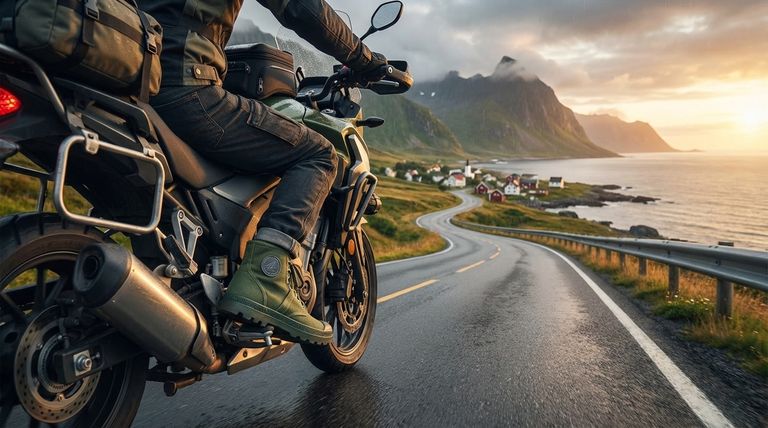
At their core, touring motorcycle boots are purpose-built for one primary scenario: long-distance riding on paved roads. They are engineered to provide an optimal balance of all-day comfort, robust weather protection, and essential safety features for riders who spend hours, or even days, in the saddle.
The defining characteristic of a touring boot isn't maximum protection or ultimate performance, but a carefully engineered blend of comfort, weather resistance, and walkability, making it the ideal companion for the long-haul rider.
The Anatomy of a Dedicated Touring Boot
To understand what touring boots are best for, it's essential to look at their core design principles. They are not simply general-purpose boots; every feature is a deliberate choice aimed at the specific demands of multi-day travel.
Prioritizing All-Day Comfort
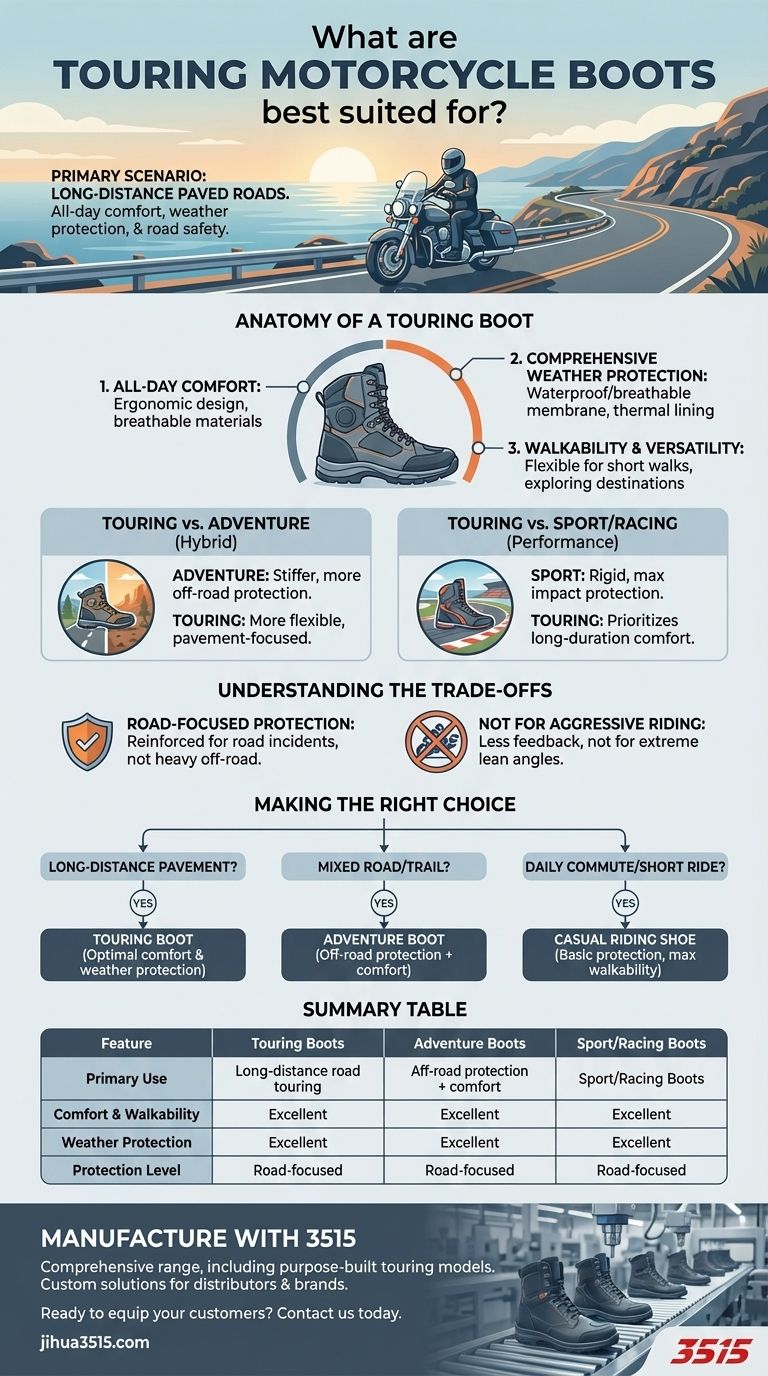
The main focus of a true touring boot is comfort. Riders often wear them for up to 12 hours at a time, covering hundreds of miles.
This comfort is achieved through an ergonomic design, high-quality materials, and features like breathable insoles that help manage temperature and moisture over a long day.
Comprehensive Weather Protection
Long-distance travel inevitably involves unpredictable weather. Touring boots are designed to handle these changing conditions effectively.
Most models include a waterproof and breathable membrane to keep your feet dry from rain while allowing perspiration to escape. Many also incorporate thermal linings to provide warmth in low temperatures.
Walkability and Versatility
A touring rider doesn't just ride; they stop to explore towns, visit sights, and walk to restaurants.
Unlike highly specialized racing or motocross boots, touring boots are designed with enough flexibility to be comfortable for walking short distances, making them far more practical when you arrive at your destination.
How Touring Boots Differ from Other Styles
Understanding where touring boots fit in the broader spectrum of motorcycle footwear is key to knowing if they are right for you. Their balanced design stands in contrast to more specialized options.
Touring vs. Adventure Boots
This is the most common point of comparison. Adventure boots are a hybrid, blending the comfort of touring boots with the enhanced protection of off-road boots.
Adventure boots are stiffer and offer more impact resistance for riders who split their time between pavement and unpaved trails. This added protection, however, often comes at the cost of some on-road flexibility and walkability.
Touring vs. Sport/Racing Boots
Sport or racing boots sit at the opposite end of the comfort spectrum. They prioritize maximum rigidity, ankle support, and impact absorption for high-speed riding.
This single-minded focus on protection makes them extremely stiff and generally uncomfortable for long-duration wear or walking.
Understanding the Trade-offs
No single boot can do everything perfectly. The balanced nature of touring boots means accepting specific compromises.
Protection is Road-Focused
The protective elements in a touring boot—like reinforced ankle, heel, and toe boxes—are designed for road-related incidents.
They typically lack the heavy-duty shin plates and rigid anti-twist systems found on adventure or off-road boots, making them unsuitable for significant off-road riding.
Not Ideal for Aggressive Riding
The emphasis on comfort and flexibility means touring boots offer less feedback and a less "connected" feel to the controls than a rigid sport boot.
While perfectly safe for spirited road riding, they are not designed for the extreme lean angles and forces of a racetrack.
Making the Right Choice for Your Ride
Selecting the correct boot is about aligning the gear's purpose with your primary riding style.
- If your primary focus is long-distance pavement riding: A dedicated touring boot is your optimal choice, providing unmatched comfort and weather protection for multi-day trips.
- If your primary focus is a mix of road touring and unpaved trails: An adventure boot is the better solution, offering the necessary off-road protection while retaining long-ride comfort.
- If your primary focus is daily commuting or short-distance riding: While touring boots work, you might also consider shorter, more casual riding shoes that offer basic protection with maximum walkability.
Choosing the right boot begins with an honest assessment of your journey, ensuring your gear is a true partner on the road.
Summary Table:
| Feature | Touring Boots | Adventure Boots | Sport/Racing Boots |
|---|---|---|---|
| Primary Use | Long-distance road touring | Mixed on/off-road riding | High-speed track/aggressive riding |
| Comfort & Walkability | Excellent for all-day wear | Good, but stiffer | Very stiff, poor for walking |
| Weather Protection | Excellent (waterproof/breathable) | Good to Excellent | Varies |
| Protection Level | Road-focused | Enhanced for off-road impacts | Maximum for high-speed crashes |
As a large-scale manufacturer, 3515 produces a comprehensive range of footwear for distributors, brand owners, and bulk clients. Our production capabilities encompass all types of shoes and boots, including purpose-built touring models designed for maximum comfort and durability on long journeys.
Ready to equip your customers with the perfect touring boot? Contact our team today to discuss our manufacturing solutions, customization options, and competitive pricing for your business.
Visual Guide
Related Products
- Durable Spiked Camouflage Boots Wholesale & Factory Production
- Wholesale High-Traction Camo Boots - Custom Manufacturer for Brands
- Durable Goodyear Welt Leather Work Boots for Wholesale & Private Label
- Wholesale Tactical Boots High-Traction & Reflective for Bulk & Brand Orders
- Wholesale Waterproof Tactical Boots Custom Suede & High-Traction Soles
People Also Ask
- How does boot height affect waterproofing? Choose the Right Height for Ultimate Protection
- What are the best types of shoes for different gardening conditions? Find Your Perfect Match.
- What role does camouflage play in hunting boots? It's More Than Just a Pattern
- What should you look for to ensure boots are fully waterproof? The Essential 2-Part System
- How does boot construction affect waterproofing? The Science Behind Truly Dry Feet