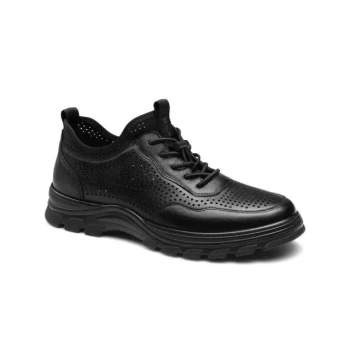
MDF serves as the foundational rigid substrate required to maintain mechanical stability under high compressive force. In footwear sensor repeatability validation, high-density fiberboard (MDF) provides a non-deforming base that prevents observable deflection when subjected to loads as high as 100kg. This structural integrity ensures that force is applied uniformly and vertically, which is critical for isolating the sensor's performance from mechanical artifacts.
To achieve accurate sensor repeatability data, the test fixture must be more stable than the sensor itself. Using dense, multi-layer MDF creates an ultra-rigid platform that eliminates structural flexing, ensuring that force is captured accurately by the sensor array without interference from the hardware.
The Role of Material Rigidity in Data Integrity
Eliminating Structural Deflection
Repeatability testing requires the physical environment to remain constant across multiple cycles. MDF, especially in thick, multi-layer configurations, resists bending or bowing even when subjected to significant loads.
If the base were to flex under a 100kg load, the sensor would record the movement of the fixture rather than the pressure of the load itself. This would introduce external variables that skew the repeatability metrics and invalidate the results.
Ensuring Vertical Force Transmission
For a footwear sensor to report accurate data, the pressure must be applied perfectly vertically across the array. A rigid MDF base prevents the "tilting" or "crowning" effect that often occurs with softer materials.
This uniform pressure distribution allows researchers to evaluate the sensor’s inherent precision. By removing base deformation, you ensure that every Newton of force is directed exactly where the sensor expects it.
Understanding the Trade-offs
Material Selection and Density
Not all fiberboards provide the same level of performance; standard-density boards may fail under high-load requirements. Only high-density configurations provide the necessary resistance to the microscopic deformation that compromises high-precision data.
Sensitivity to Environmental Factors
While MDF is exceptionally rigid, it is more susceptible to moisture and humidity than metal alternatives. In controlled laboratory settings, this is rarely an issue, but the material must be monitored to ensure it does not warp over long-term storage.
Cost vs. Performance
MDF is often chosen because it provides near-metallic rigidity at a fraction of the weight and cost. However, for loads significantly exceeding 100kg, researchers must verify if the specific fiberboard thickness can still guarantee zero observable deflection.
How to Apply This to Your Validation Setup
Selecting the right base material depends on your specific testing parameters and the force required for your footwear application.
- If your primary focus is high-load repeatability (up to 100kg): Use thick, multi-layer high-density fiberboard to ensure zero observable deflection during the compression cycle.
- If your primary focus is isolating sensor performance metrics: Utilize a non-deforming substrate like MDF to eliminate mechanical interference and ensure perfectly vertical force application.
- If your primary focus is long-term fixture durability: Ensure your MDF base is stored in a climate-controlled environment to prevent moisture absorption from altering the material's flatness.
A truly rigid foundation is the only way to guarantee that your sensor data reflects the product's true performance rather than the fixture's limitations.
Summary Table:
| Feature | High-Density Fiberboard (MDF) Benefit | Impact on Sensor Validation |
|---|---|---|
| Material Rigidity | Resists bending/bowing under 100kg+ loads | Eliminates structural deflection and hardware artifacts |
| Force Transmission | Maintains a perfectly flat, non-deforming surface | Ensures uniform, vertical pressure across the sensor array |
| Cost-Efficiency | Provides near-metallic stability at lower cost/weight | Allows for scalable and accessible high-precision testing |
| Data Integrity | Isolates sensor performance from fixture movement | Guarantees repeatable, accurate metrics for R&D |
Elevate Your Footwear Performance with 3515
Precision in testing is the foundation of superior footwear. As a large-scale manufacturer serving distributors and brand owners, 3515 offers comprehensive production capabilities for all footwear types. Anchored by our flagship Safety Shoes series, our extensive portfolio includes work and tactical boots, outdoor shoes, training shoes, and sneakers, as well as Dress & Formal shoes.
Whether you need robust footwear engineered for high-load durability or specialized designs that meet rigorous validation standards, our expert team is ready to deliver bulk solutions tailored to your requirements. Partner with us to bring reliable, high-performance footwear to your market.
Contact 3515 Today for a Consultation and Quote
References
- Sarah De Guzman, Gautam Anand. The Development of a Built-In Shoe Plantar Pressure Measurement System for Children. DOI: 10.3390/s22218327
This article is also based on technical information from 3515 Knowledge Base .
Related Products
- Wholesale Durable Safety Boots Manufacturer Customizable Steel Toe Work Boots
- Lightweight Breathable Sneakers with Wet-Traction Grip for Wholesale & Private Label
- Wholesale Comfortable Business Casual Shoes Custom Manufacturing
- Lightweight Breathable Training Shoes for Wholesale & Custom OEM Manufacturing
- Wholesale Durable & Breathable Training Shoes for Custom Brands
People Also Ask
- What are the pros and cons of steel toe work boots? A Guide to Maximum Protection vs. Comfort
- What are the different types of steel toe work boots? Choose the Right Boot for Your Job
- What is the history of steel toe work boots? From German Invention to Modern Safety Standard
- How much weight can steel toe work boots withstand? Unpacking the 3,372 lb. Safety Standard
- What are some common myths about steel toe work boots? Debunked for Modern Workers