
Okay, here's the game plan. My task is to guide a fellow professional on how to avoid plantar fasciitis while wearing wellies, acting as their trusted Technical Advisor. The main goal is to provide a complete, unbiased solution, not just a list of random tips. This is for someone who is likely wearing wellies frequently and values a comprehensive strategy. The strategy will be in a clear, easy-to-read format, because that's what a busy professional needs.
First, I need to understand the user's situation and what they need to know.
I'm starting by getting into the mind of the user. I know they want to avoid heel pain. The root of the problem is the lack of support in typical wellies. I'll need to offer advice that involves both the gear (the wellies/insoles) and personal habits (stretching, exercise).
I also need to focus on structure:
- The Big Picture: Explain why standard wellies are problematic and offer two major solutions.
- Detailed Actionable Steps: Then provide ways to modify the gear and habits in detail.
- Realistic Expectations: I'll include trade-offs and common pitfalls so they can trust the advice.
Next, I'll break down the information I've got.
The references are the key here. The gear-related tips are insoles and supportive wellies. The habit-related tips include regular stretching, low-impact exercise, and maintaining a healthy weight.
To make this work:
- Opening Hook: Directly answer the "what" with the two main solutions: modify boots and modify habits.
- Core Takeaway Box: Frame the problem as the poor support of wellies and offer a two-part solution: augmented footwear and proactive care.
- Main Body (Addressing the "Why"):
- Explain why wellies cause heel pain.
- Provide solutions like:
- Improving the footwear: Use insoles and choose supportive boots.
- Improving habits: Perform daily stretching.
- Combine all habits to reduce strain on the feet.
- Trade-offs section: Be upfront about the "break-in" period of insoles, the potential pitfalls of cheap inserts, and the fact that there's no magic bullet. Insole are tools, not cures.
- Actionable advice: End with a clear action plan based on their goals:
- Occasional use: Good insoles.
- Daily discomfort: Quality insoles, supportive boots, and a strict stretching routine.
- Demanding jobs: Premium support, and habits.
Finally, I will review:
- Make sure it matches the structure.
- Keep the tone objective.
- Make it easy to scan.
- Answer the surface need and the deep need.
- Use the references logically.
- Be honest.
The plan is set. Now to write the piece. To prevent plantar fasciitis in wellies, your strategy must focus on two key areas: introducing proper arch support and shock absorption into the boot, and adopting habits that reduce overall strain on your feet. The most effective immediate actions are to use high-quality, arch-supporting insoles and to perform regular foot and calf stretches.
The fundamental problem is that standard wellies are notoriously flat and unsupportive, placing immense strain on the plantar fascia. The definitive solution involves transforming the boot into a supportive piece of footwear with inserts while also proactively managing foot health through targeted stretching and strain reduction.
Why Standard Wellies Cause Heel Pain
Understanding the root cause of the pain is the first step toward effective prevention. Wellies are designed for waterproofing, not ergonomics, which creates an environment where foot problems can easily develop.
The Lack of Arch Support
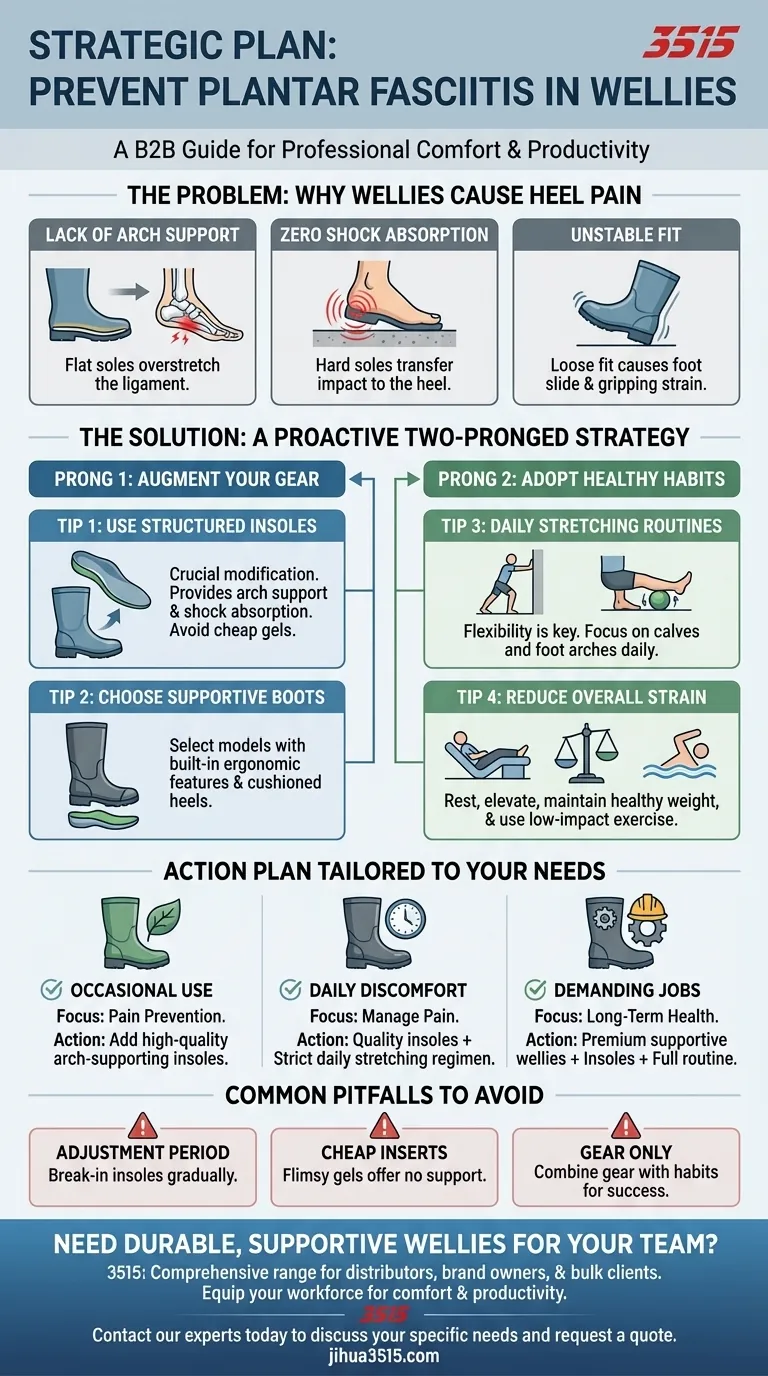
Most wellies have a completely flat footbed. This forces your foot's arch to flatten with every step, which overstretches and irritates the plantar fascia, the ligament connecting your heel to the front of your foot.
Zero Shock Absorption
The thin, hard rubber sole of a typical welly does little to cushion the impact of walking. This repetitive stress is transferred directly to your heel, a primary trigger for the micro-tears and inflammation characteristic of plantar fasciitis.
An Unstable Fit
Wellies are often loose-fitting by design. This causes your foot to slide and your toes to grip for stability, placing additional, unnatural strain on the muscles and ligaments in your feet and lower legs.
A Proactive Strategy for Foot Health
You can effectively counteract the poor design of wellies by focusing on both the gear you use and the habits you practice.
Tip 1: Augment Your Wellies with Insoles
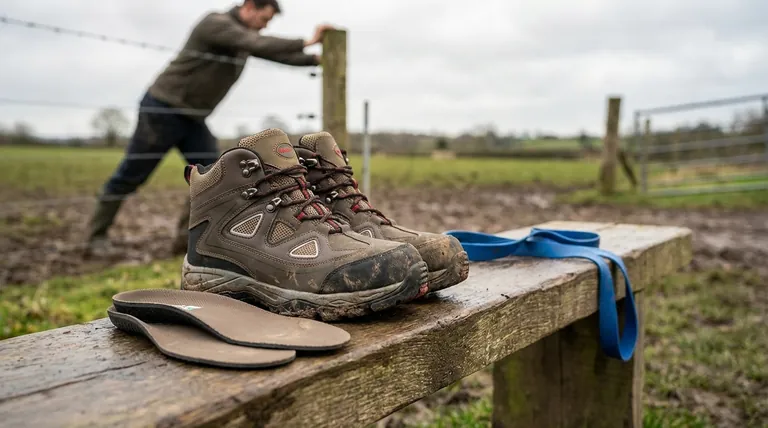
This is the single most important modification you can make. Remove the flimsy liner that came with your boots and replace it with a structured, arch-supporting insole.
These orthotic inserts provide the contouring your foot needs, preventing the arch from collapsing and absorbing the shock that would otherwise impact your heel. Cushioned heel pads can offer additional relief.
Tip 2: Choose Supportive Wellies from the Start
If you are purchasing new boots, look for models specifically designed with foot health in mind. Key features include an ergonomic and contoured footbed built directly into the boot.
Seek out designs that advertise an anti-fatigue sole or shock-absorbing heel inserts. These are engineered to dissipate impact and reduce stress during long periods of standing or walking.
Tip 3: Implement Daily Stretching Routines
Stretching is a critical preventative measure that keeps the plantar fascia and surrounding muscles flexible.
Focus on calf stretches, as a tight Achilles tendon can pull on the heel and worsen symptoms. Gently rolling the arch of your foot over a tennis ball or frozen water bottle for a few minutes each day can also provide significant relief.
Tip 4: Reduce Overall Strain on Your Feet
Your daily habits play a major role in foot health. When possible, rest and elevate your feet after a long day in wellies to reduce inflammation.
Maintaining a healthy weight significantly lessens the load on your feet and joints. Additionally, incorporating low-impact exercises like swimming or cycling can improve fitness without aggravating your heels.
Understanding the Common Pitfalls
Simply buying an accessory is not a complete solution. To achieve long-term success, you must be aware of the potential challenges.
The Adjustment Period for Insoles
Structured orthotic insoles will feel unfamiliar at first, especially if you are used to a flat footbed. It is wise to gradually increase the time you wear them over several days to allow your feet to adapt.
Not All Inserts are Created Equal
Avoid cheap, flimsy gel inserts. While they may feel soft initially, they provide no structural support for your arch and will do little to prevent the underlying cause of plantar fasciitis. Invest in a semi-rigid orthotic that provides genuine support.
Relying Solely on Gear
Insoles and supportive boots are powerful tools, but they are not a cure-all. True prevention comes from combining supportive footwear with consistent stretching and other healthy habits. Ignoring the need for flexibility and strain reduction will limit your success.
Making the Right Choice for Your Goal
Your approach should be tailored to your specific situation and how frequently you wear wellies.
- If your primary focus is preventing pain during occasional use: Invest in a high-quality pair of arch-supporting insoles to use in your existing wellies.
- If your primary focus is managing existing discomfort from daily wear: Combine supportive insoles with a strict daily regimen of calf and foot stretches.
- If your primary focus is long-term health for a demanding job: Invest in premium wellies with built-in ergonomic support and make inserts, stretching, and strain reduction a permanent part of your routine.
Ultimately, taking proactive control of your footwear and daily habits is the key to wearing wellies without pain.
Summary Table:
| Tip Category | Key Action | Primary Benefit |
|---|---|---|
| Footwear Modification | Use arch-supporting insoles | Prevents arch collapse and absorbs shock |
| Boot Selection | Choose wellies with contoured footbeds | Provides built-in ergonomic support |
| Daily Habits | Perform calf and foot stretches | Increases flexibility and reduces strain |
| Strain Reduction | Rest feet and maintain healthy weight | Lowers overall load on the plantar fascia |
Need durable, supportive wellies for your team or bulk order? As a large-scale manufacturer, 3515 produces a comprehensive range of footwear designed for comfort and long-term foot health. We provide high-quality boots with ergonomic support for distributors, brand owners, and bulk clients. Let us help you equip your workforce with the right footwear to prevent pain and improve productivity.
Contact our experts today to discuss your specific needs and request a quote.
Visual Guide
Related Products
- Lightweight Breathable Sneakers with Wet-Traction Grip for Wholesale & Private Label
- Durable High-Ankle Tactical Boots Wholesale Manufacturer for Custom & Bulk Orders
- Wholesale Breathable Athletic Sneakers - Custom Lightweight Cushioned Footwear Manufacturer
- Wholesale Durable Safety Boots Manufacturer Customizable Steel Toe Work Boots
- Durable Waterproof Rain Boots | Custom Manufacturer for Wholesale & Brands
People Also Ask
- Why are breathable sneakers necessary for tropical commuting? Stay Cool and Dry in High Humidity
- What role do lightweight training shoes play in urban traffic? Boost Agility and Reaction for Safer City Navigation
- How do lightweight shoes provide support? The Science of Efficient Cushioning & Stability
- What are the style advantages of lightweight shoes? Sleek, Versatile & Modern Comfort
- How do lightweight shoes improve breathability? Discover the Science of Cool, Dry Feet



















