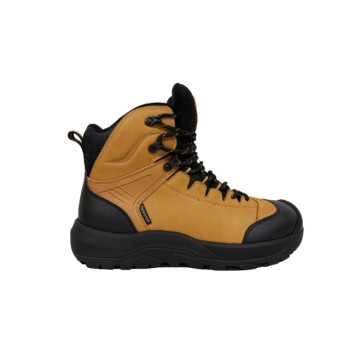
To maintain warmth in your winter biking boots, the most effective method is a system-based approach. This begins with ensuring your boots are completely dry before every ride, choosing the right moisture-wicking socks, and only resorting to supplemental heat sources like chemical toe warmers in extremely cold conditions. Success depends on managing moisture as much as it does on insulation.
The battle against cold feet in winter cycling isn't won with thicker boots alone. It's a strategic management of three critical factors: trapping air for insulation, eliminating all moisture, and promoting healthy blood circulation.
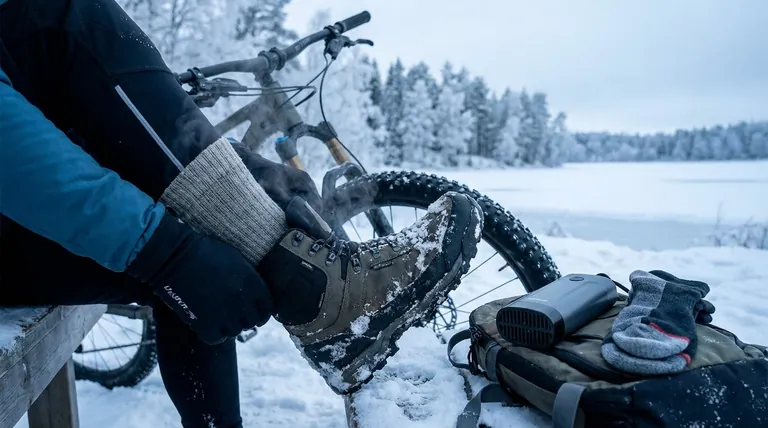
The Core Principles of Warm Feet
To solve the problem of cold feet, we must first understand the environmental and physiological forces at play. Keeping your feet warm is not about a single piece of gear, but about controlling these three principles.
Principle 1: Insulation
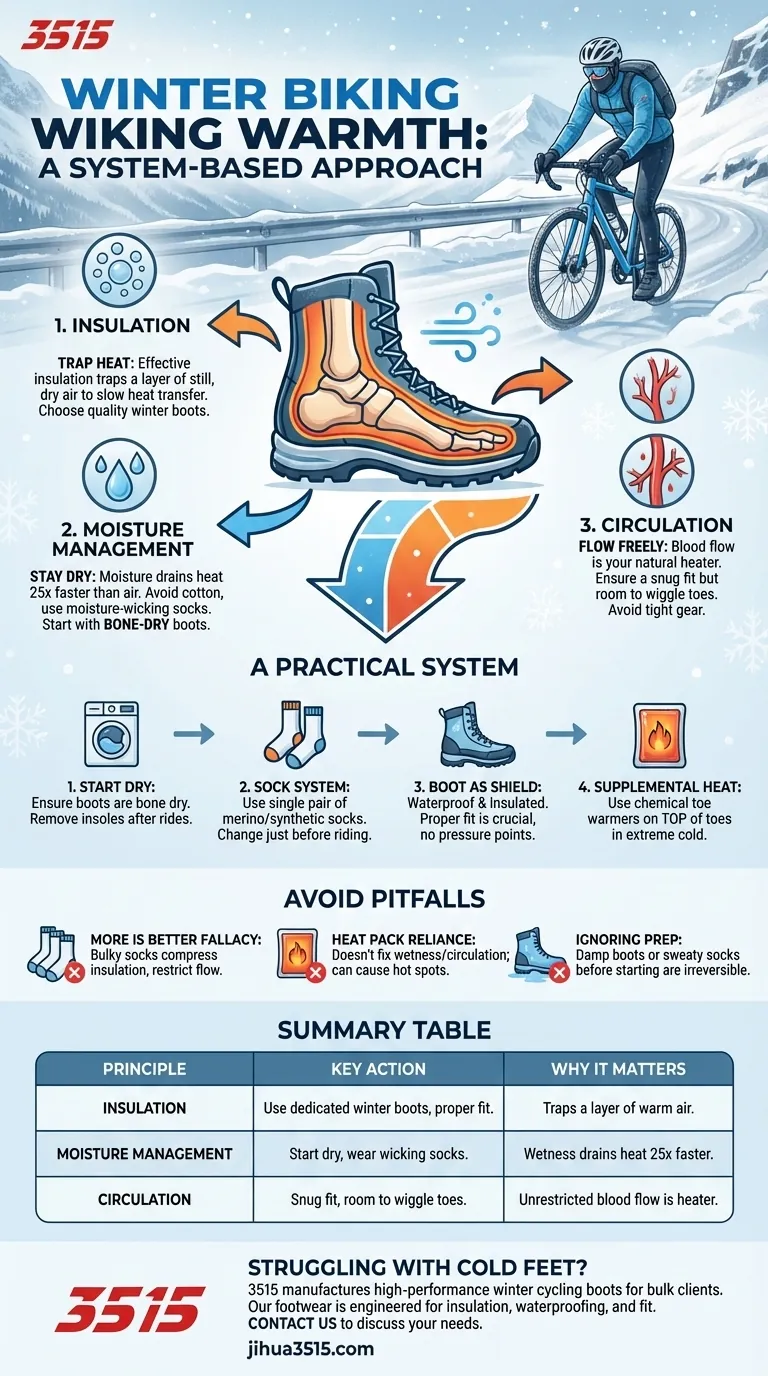
Effective insulation works by trapping a layer of still, dry air. This trapped air slows the transfer of heat from your feet to the cold environment. High-quality winter boots are designed specifically to create and protect this layer of air.
Principle 2: Moisture Management
Moisture is the primary enemy of warmth. Water conducts heat away from your body about 25 times faster than air. Whether from external snow and slush or internal sweat, any moisture inside your boot will rapidly drain heat and leave your feet freezing.
Principle 3: Circulation
Your body’s natural heating system is blood flow. Your feet are the furthest extremity from your heart, making them vulnerable. Anything that restricts blood flow—such as boots that are too tight or multiple pairs of bulky socks—will prevent warm blood from reaching your toes, making them cold regardless of your insulation.
A Practical System for Winter Cycling
Applying these principles involves a series of deliberate steps before and during your ride. Each step builds on the last to create a robust defense against the cold.
Start with a Dry Foundation
Your boots must be bone dry at the start of every ride. Even a small amount of residual moisture will turn cold and sabotage your efforts. Remove insoles after each ride to allow the entire boot to air out, or use a gentle boot dryer.
Choose the Right Sock System
Avoid cotton socks at all costs, as they hold moisture against the skin. Opt for a single pair of high-quality merino wool or synthetic socks that are designed to wick sweat away from your feet.
If you drive to your biking destination, wear different, lighter shoes for the drive and change into your cycling socks and boots just before you ride. This prevents your feet from sweating in a warm car, which introduces moisture before you even start.
The Boot as Your Primary Shield
Your winter cycling boot is your main line of defense. It should be both waterproof and insulated. A proper fit is crucial; it must be snug enough to prevent heel lift but have enough room in the toebox for you to wiggle your toes freely, ensuring good circulation.
When to Use Supplemental Heat
Chemical toe warmers or "hot shots" should be seen as a tool for extreme cold, not a crutch for poor preparation. Apply them to the top of your sock over your toes, not underneath. This prevents them from creating uncomfortable pressure points and interfering with your pedal stroke.
Understanding the Trade-offs and Pitfalls
Achieving warm feet requires avoiding common mistakes that can paradoxically make the problem worse.
The "More is Better" Fallacy
Wearing two or more pairs of socks is one of the most common mistakes. This bulky layering often compresses the sock material, eliminating its ability to trap air. More critically, it can make the boot too tight, severely restricting the blood flow necessary to keep your feet warm.
Over-reliance on Heat Packs
While useful, heat packs do not solve underlying problems like wet socks or poor circulation. They can also create intense hot spots while other parts of your foot remain cold and can potentially mask the early warning signs of serious issues like frostbite.
Ignoring Pre-Ride Preparation
The battle for warmth is often won or lost before you even get on the bike. Starting a ride with damp boots or socks that are already sweaty from a warm car ride creates an almost impossible situation to reverse once you are exposed to the cold.
Tailoring Your Strategy to the Conditions
Your approach should adapt to the specific challenge of the day. Use the conditions to guide your gear choices.
- If your primary focus is on mildly cold, dry days (above 0°C / 32°F): A quality wool sock paired with a windproof boot cover over your standard cycling shoes is often sufficient.
- If your primary focus is on freezing, damp conditions: Your dedicated, fully waterproof winter boots are essential. Ensure they are completely dry and pair them with a single, high-quality wicking sock.
- If your primary focus is on deep cold (well below freezing): This is the time to add a chemical toe warmer on top of your sock and ensure no part of your ankle is exposed between your tights and your boot.
By actively managing insulation, moisture, and circulation, you can turn cold feet from a ride-ending barrier into a complete afterthought.
Summary Table:
| Principle | Key Action | Why It Matters |
|---|---|---|
| Insulation | Use dedicated winter boots with proper fit. | Traps a layer of warm air around your feet. |
| Moisture Management | Start with bone-dry boots and wear wicking socks. | Wetness drains heat 25x faster than air. |
| Circulation | Ensure a snug fit with room to wiggle toes. | Unrestricted blood flow is your body's heater. |
Struggling with cold feet on your winter rides? As a large-scale manufacturer, 3515 produces a comprehensive range of high-performance winter cycling boots for distributors, brand owners, and bulk clients. Our footwear is engineered with the principles of insulation, waterproofing, and optimal fit in mind to keep your customers riding comfortably all season.
Contact us today to discuss your footwear needs and discover how our production capabilities can deliver the warmth and performance your market demands.
Visual Guide
Related Products
- Premium Insulated Safety Boots and Shoes for Wholesale & Bulk Orders
- Factory Direct Wholesale Rain Boots Durable Waterproof & Fully Customizable
- Durable Waterproof Rain Boots | Custom Manufacturer for Wholesale & Brands
- Wholesale Waterproof Tactical Boots Custom Suede & High-Traction Soles
- Heavy-Duty Waterproof Nubuck Safety Boots Safety Shoes for Bulk Supply
People Also Ask
- What are the recommended insulation ratings for mild winter conditions? A Guide for Active & Stationary Workers
- How does insulation thickness correlate with temperature ranges? A Guide to Choosing the Right Warmth
- What insulation level is needed for severe cold and stationary work? 1200g or Higher is Essential
- What safety advantages do insulated boots offer beyond warmth? Dielectric Protection & Superior Grip
- How does fleece lining contribute to the warmth of insulated boots? Trapping Air for Superior Cold Protection