The origins of the Chukka boot are shrouded in a mix of sporting legend and military history, primarily centering on the British presence in India. While the name is undeniably derived from the "chukka"—a seven-minute period of play in a polo match—historians generally categorize the boot's inception into three distinct theories: they were worn during active gameplay, they were designed to resemble existing riding footwear like Jodhpurs, or they served as comfortable recovery footwear for players after the match.
The specific origin story you choose—whether active sport, aesthetic imitation, or leisure—matters less than the result: the Chukka was born as a bridge between the rigid utility of military gear and the casual comfort required by off-duty athletes.
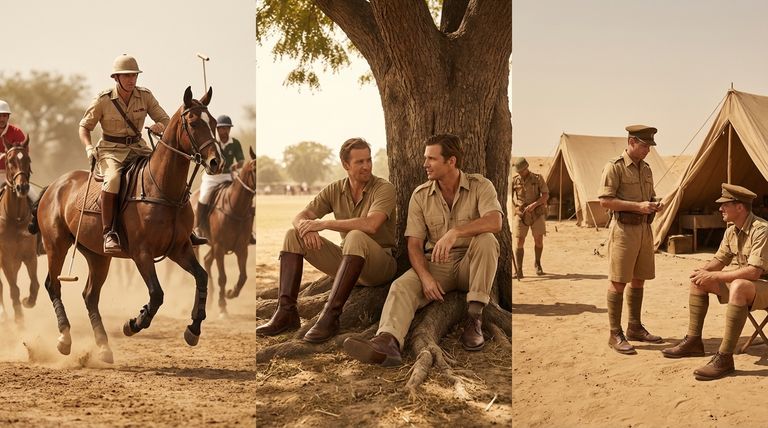
The Three Origin Theories
Theory 1: The Active Gameplay Hypothesis
One theory suggests that Chukka boots were originally worn by polo players during actual matches.
However, historical evidence for this is scarce and technically debated. Given the low ankle height of a Chukka, it would offer significantly less protection and support than traditional tall riding boots, making it a risky choice for the intensity of competitive polo.
Theory 2: The Aesthetic Derivative
This theory posits that Chukkas were not worn for the sport itself, but were created to resemble the functional footwear of the players.
In this context, the Chukka is seen as a modified version of the Jodhpur boot. It captured the equestrian aesthetic appreciated by the British upper class and military officers but was adapted for general wear rather than riding.
Theory 3: The Post-Game Leisure Standard
The most widely accepted theory is that Chukkas were worn by players exclusively off the field.
After a grueling match, players would swap their restrictive, knee-high riding boots for these ankle-high alternatives. They provided the comfort of a sneaker with the durability of a boot, perfect for the leisurely strolls and social gatherings that followed the games.
From Polo Fields to Global Icons
The Military Catalyst
Regardless of which polo theory is correct, the boot's global dominance was secured by the British Army.
Soldiers stationed in colonial India observed the durability and comfort of the style worn by polo players. They adopted the design, adapting it for the harsh terrains they faced.
The World War II Expansion
The style gained significant prominence during World War II.
Specifically associated with the British Army's North African campaign, the boots became a staple in the Western Desert. This era solidified the boot's reputation for versatility, transitioning it from a piece of sporting equipment to a rugged military asset, and eventually, a civilian staple.
Distinguishing the Design
The Essential Silhouette
To be considered a true Chukka, the boot must be ankle-high.
It is defined by a minimalist design featuring an upper constructed from two parts, each cut from a single piece of leather. The "quarters" (the back pieces) are sewn directly on top of the "vamp" (the front piece).
The Lacing System
The lacing is perhaps the most critical identifier.
Chukkas feature an open lace design with only two or three pairs of eyelets. This specific construction allows for a looser, more comfortable fit compared to the tight lacing of a combat or dress boot.
Understanding the Trade-offs
Support vs. Comfort
The very features that make the Chukka comfortable create its primary limitation: ankle stability.
Because the boot is cut low (at the ankle) and features an open lacing system with few eyelets, it does not provide the rigid support of a full hiking or combat boot. It is designed for "leisurely strolls" and urban terrain, not for traversing unstable, rocky ground.
Material Durability vs. Maintenance
Traditional Chukkas often utilize suede or nubuck.
While these materials offer immediate comfort and a sophisticated texture, they are less water-resistant than treated full-grain leather. They require dedicated maintenance to prevent staining, making them less ideal for wet climates unless specifically treated.
Making the Right Choice for Your Goal
Whether you are drawn to the history or the aesthetic, the Chukka is a versatile tool for the modern wardrobe.
- If your primary focus is formal versatility: Choose a leather variation with a thinner sole to pair seamlessly with chinos or dressier trousers.
- If your primary focus is casual comfort: Opt for a suede upper with a crepe sole, paying homage to the original desert-ready adaptations of the 1940s.
The Chukka boot endures because it successfully balances the relaxed nature of a slipper with the utilitarian structure of a boot.
Summary Table:
| Origin Theory | Key Idea | Likelihood |
|---|---|---|
| Active Gameplay | Worn during polo matches | Low (limited ankle support) |
| Aesthetic Derivative | Designed to resemble riding boots | Moderate (style adaptation) |
| Post-Game Leisure | Worn off-field for comfort | High (most widely accepted) |
Step into History with Quality Footwear
As a large-scale manufacturer, 3515 produces a comprehensive range of durable and stylish footwear for distributors, brand owners, and bulk clients. Whether you need classic Chukka boots or other types of shoes and boots, we combine historical inspiration with modern manufacturing excellence to deliver products that meet your customers' demands for comfort, style, and durability.
Let’s collaborate to bring premium footwear to your market. Contact us today to discuss your production needs!
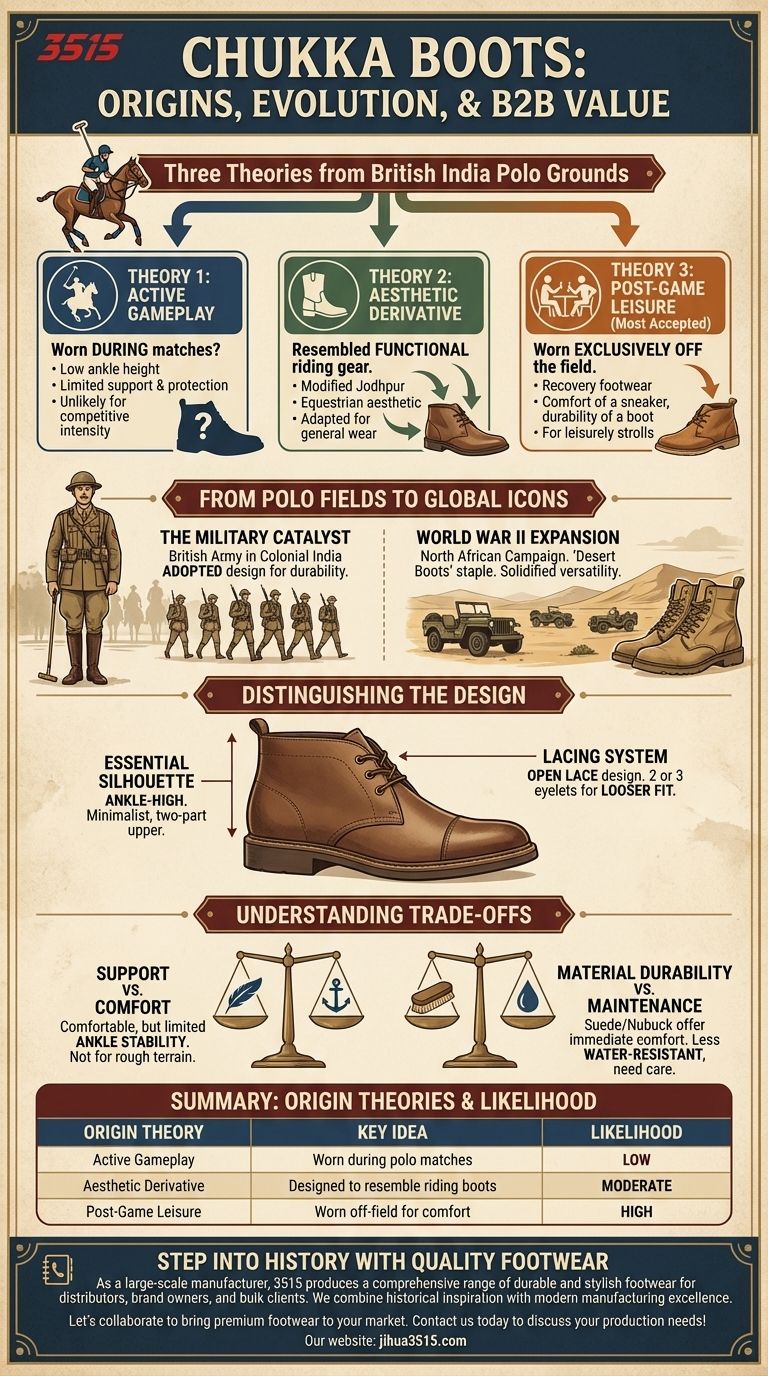
Visual Guide
Related Products
- Durable Spiked Camouflage Boots Wholesale & Factory Production
- Wholesale High-Traction Camo Boots - Custom Manufacturer for Brands
- High-Traction Suede Tactical Boots Wholesale & Custom Manufacturing
- Durable Leather High-Ankle Tactical Boots for Wholesale & Custom Manufacturing
- Premium Wholesale Tactical Style Safety Shoes Boots with Quick Lacing
People Also Ask
- How does boot height affect waterproofing? Choose the Right Height for Ultimate Protection
- What are the best types of shoes for different gardening conditions? Find Your Perfect Match.
- What role does camouflage play in hunting boots? It's More Than Just a Pattern
- What should you look for to ensure boots are fully waterproof? The Essential 2-Part System
- How does boot construction affect waterproofing? The Science Behind Truly Dry Feet