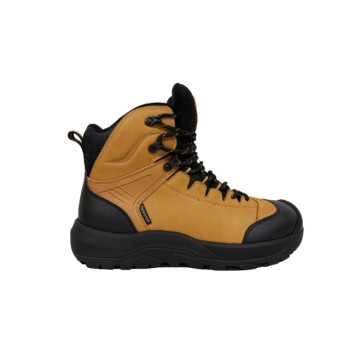
For winter cycling, your three primary footwear options are booties (also called overshoes), waterproof socks, and dedicated winter-specific cycling shoes. Each option offers a different balance of warmth, water resistance, and cost, allowing you to choose the right tool for the conditions you face.
The core decision isn't just about keeping your feet warm, but about choosing a system that best balances insulation, water protection, and breathability for your specific climate and riding intensity.
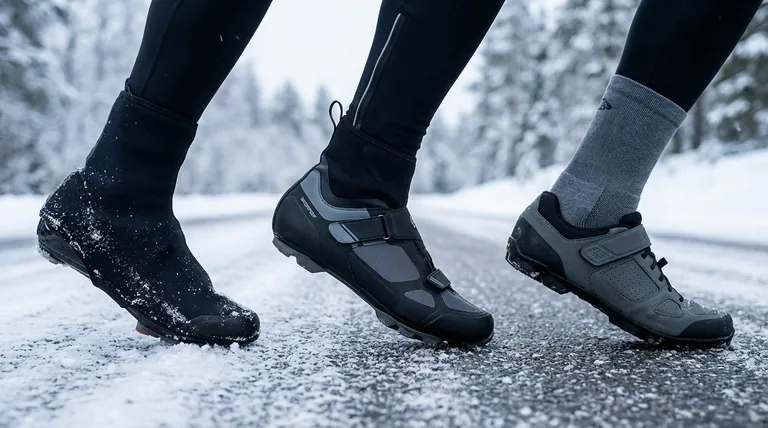
Why Standard Cycling Shoes Fail in the Cold
Your summer cycling shoes are engineered for the exact opposite of what you need in winter. Understanding their limitations is key to choosing the right cold-weather solution.
Engineered for Ventilation
Standard road or mountain bike shoes are designed with vents and breathable mesh panels. Their primary job is to keep your feet cool by allowing air to circulate and sweat to evaporate.
The Wind-Chill Factor
This excellent ventilation becomes a major liability in the cold. Moving air rapidly strips heat from your feet, a phenomenon known as wind chill, making them feel much colder than the ambient temperature.
Ineffective Insulation
The thin materials used in summer shoes offer virtually no insulation. Once they get cold, your feet get cold, and it's nearly impossible to warm them back up mid-ride.
A Breakdown of Winter Footwear Systems
Each of the three main options addresses the failures of summer shoes in a different way. Let's analyze them.
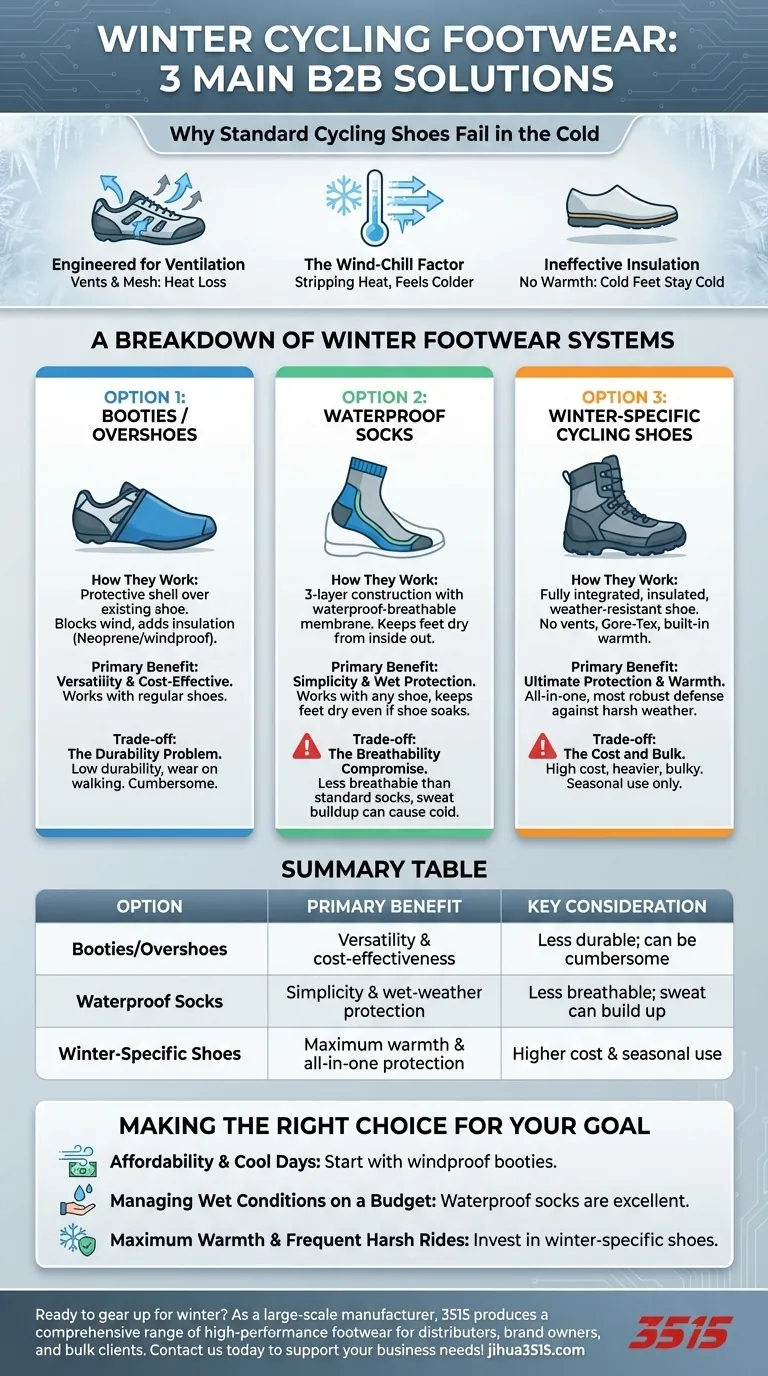
Option 1: Booties / Overshoes
Booties are fabric covers that go over your existing cycling shoes. They are arguably the most common and versatile solution.
How They Work A booty acts as a protective shell. It blocks the wind from penetrating your shoe's vents and provides a layer of insulation. Most are made from neoprene (like a wetsuit) or similar windproof and water-resistant materials.
Primary Benefit: Versatility You can use them with your regular cycling shoes, making them a cost-effective upgrade. Different booties offer varying levels of insulation and waterproofing, so you can own a couple of pairs for different conditions.
Option 2: Waterproof Socks
This is the simplest approach, focusing on keeping your feet dry from the inside out.
How They Work Waterproof socks use a three-layer construction: a durable outer layer, a waterproof-breathable membrane in the middle, and a comfortable inner layer. They prevent water from reaching your skin.
Primary Benefit: Simplicity They work with any shoe and are less bulky than booties. If your shoes get soaked, your feet remain dry, which is critical for staying warm.
Option 3: Winter-Specific Cycling Shoes
These are fully integrated, insulated, and weather-resistant shoes designed from the ground up for cold and wet conditions.
How They Work Winter shoes eliminate vents and use materials like Gore-Tex for a waterproof-breathable barrier. They have built-in insulation and often feature a high ankle cuff to seal out drafts and water.
Primary Benefit: Ultimate Protection This is the warmest and most protective option. By integrating all the features into one package, they provide the most robust defense against harsh weather with no fuss.
Understanding the Trade-offs
No single solution is perfect for every rider or condition. Being aware of the downsides is crucial for making an informed decision.
Booties: The Durability Problem
The biggest drawback of booties is their lack of durability. Walking in them, even short distances, can quickly wear holes in the fabric under the sole. They can also be cumbersome to put on and take off.
Waterproof Socks: The Breathability Compromise
While they keep external water out, waterproof socks are less breathable than standard wool socks. On intense rides or milder days, your feet can get damp from sweat, which can eventually lead to coldness.
Winter Shoes: The Cost and Bulk
The most significant barrier to winter-specific shoes is their high cost. They are also bulkier and heavier than standard shoes and represent a dedicated piece of kit you can only use for a few months of the year.
Making the Right Choice for Your Goal
Your ideal solution depends on your local climate, budget, and how much you plan to ride through the winter.
- If your primary focus is affordability and versatility for cool, windy days: Start with a good pair of windproof booties to use with your current shoes.
- If your primary focus is managing wet conditions on a budget: Waterproof socks are an excellent, simple solution to keep your feet dry even when your shoes get soaked.
- If your primary focus is maximum warmth and protection for frequent, harsh winter riding: Investing in dedicated winter-specific cycling shoes provides the most reliable and comfortable experience.
Ultimately, choosing the right footwear is about removing a major barrier to riding, enabling you to stay comfortable and consistent through the coldest months.
Summary Table:
| Option | Primary Benefit | Key Consideration |
|---|---|---|
| Booties / Overshoes | Versatility & cost-effectiveness | Less durable; can be cumbersome |
| Waterproof Socks | Simplicity & wet-weather protection | Less breathable; sweat can build up |
| Winter-Specific Shoes | Maximum warmth & all-in-one protection | Higher cost & seasonal use |
Ready to gear up for winter? As a large-scale manufacturer, 3515 produces a comprehensive range of high-performance footwear for distributors, brand owners, and bulk clients. Whether you need durable booties, advanced waterproof socks, or fully integrated winter cycling shoes, our production capabilities ensure quality and reliability for any climate. Let's discuss how we can support your business needs — contact us today to get started!
Visual Guide
Related Products
- Premium Insulated Safety Boots and Shoes for Wholesale & Bulk Orders
- Wholesale Durable Camouflage Canvas Shoes with High-Traction Cleated Rubber Sole
- Premium Suede Sport Safety Shoes for Wholesale & Bulk Orders
- Advanced KPU Athletic Safety Shoe with Steel Toe Cap Anti-Slip Rotary Lacing System
- Lightweight Breathable Sneakers with Wet-Traction Grip for Wholesale & Private Label
People Also Ask
- What are the recommended insulation ratings for mild winter conditions? A Guide for Active & Stationary Workers
- How does insulation thickness correlate with temperature ranges? A Guide to Choosing the Right Warmth
- What insulation level is needed for severe cold and stationary work? 1200g or Higher is Essential
- What safety advantages do insulated boots offer beyond warmth? Dielectric Protection & Superior Grip
- How does fleece lining contribute to the warmth of insulated boots? Trapping Air for Superior Cold Protection